How to Check Cage-Free Egg Claims in India
 TBH Editorial
A hen doesn’t get more space just because the carton costs more. If you’re paying extra for cage-free eggs in India, you deserve evidence, not a reassuring illustration.
The difficulty is that food-safety licences, welfare certificates and farm photographs answer different questions. Brands can place them together until we assume they mean the same thing.
Start with the hen’s housing, then follow the claim through the farm, certificate and packet in your hand.
Key Takeaways
- Cage-free means hens aren’t kept in cages. It doesn’t automatically mean outdoor access, better nutrition or protection throughout their lives.
- Check the farm identity, certification scope and batch traceability together. An FSSAI licence or QR code alone doesn’t verify housing conditions.
- Treat delivery listings as purchasing leads, not welfare endorsements. Verify the exact product before paying a premium.
A credible claim should survive a few ordinary questions. You shouldn’t need to become a poultry auditor to get basic answers.
What Cage-Free Eggs Actually Promise
Movement inside a barn matters
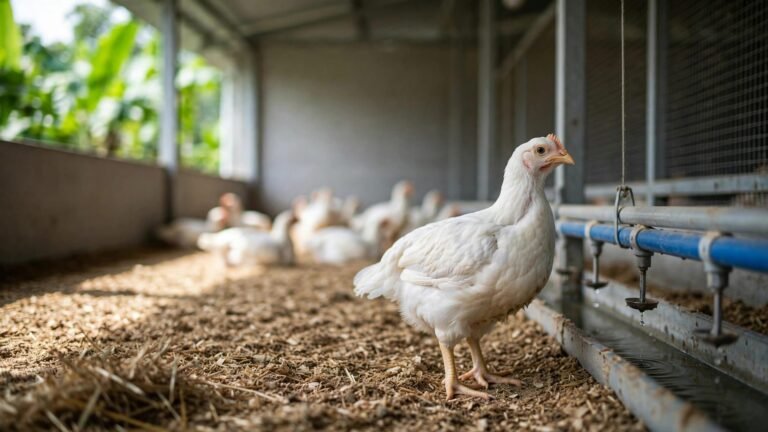
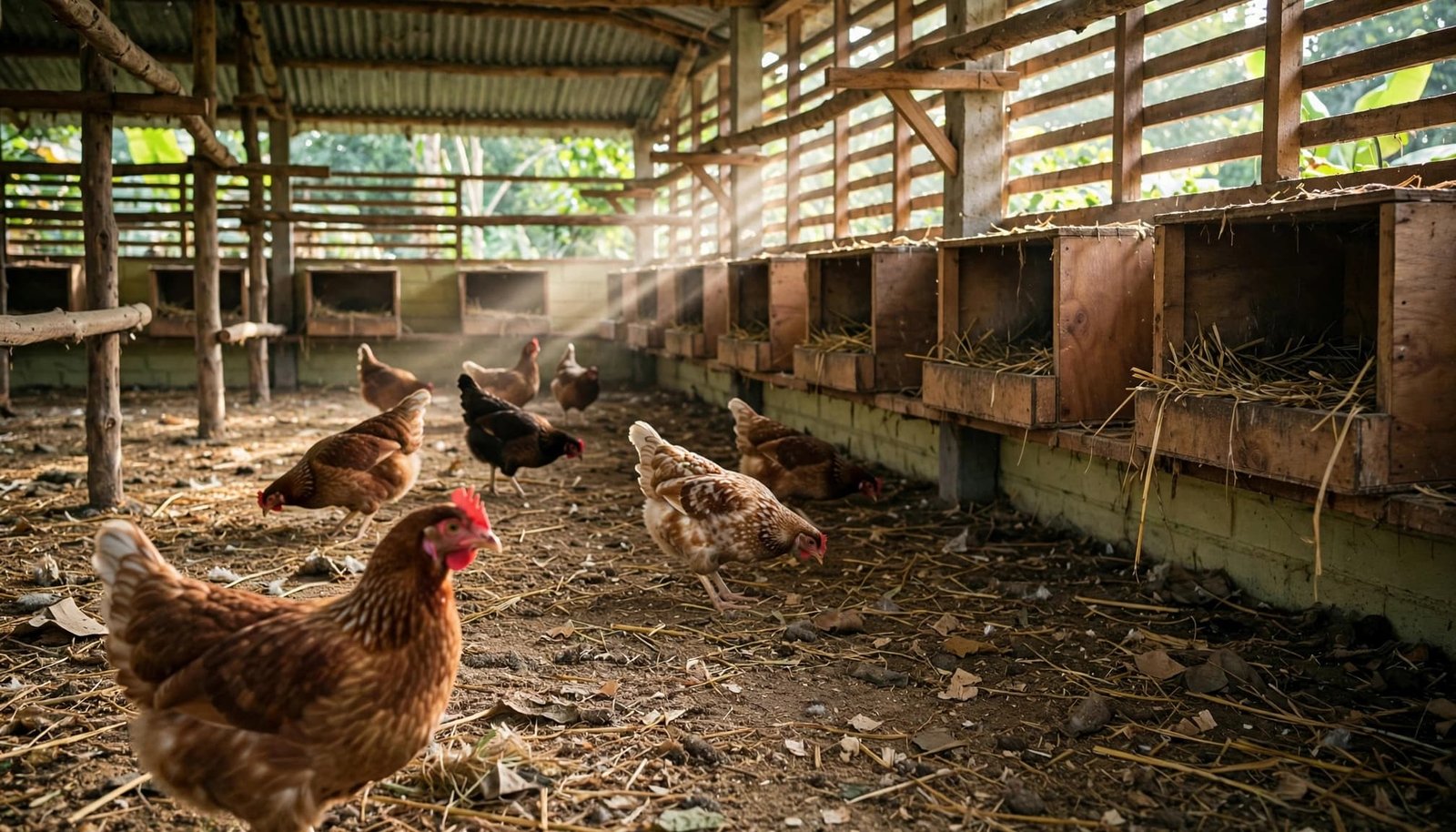
In conventional battery cages, hens live in enclosures that restrict movement and natural behaviour. Cage-free eggs come from laying hens that can move around a shared indoor space.
Well-managed housing systems provide litter for scratching and dust bathing, nests for laying, and perches for resting. These features support behavioural needs beyond eating and producing eggs.
But removing cages doesn’t prevent overcrowding, heat stress or poor flock management. Cage-free housing can still be part of large-scale factory farming, and conditions vary by farm. Ask about stocking density, ventilation, injuries and mortality records. Open-floor housing needs competent care, especially during Indian summers.
Outdoor access is a separate claim
Cage-free hens can spend their entire lives indoors. Free-range eggs make a separate claim about outdoor access, and conditions depend on the standard used.
The Humane League’s explanation of egg housing systems distinguishes these categories. Treat “cage-free” and “free-range” as different promises.
Brown eggs, orange yolks, “country eggs” and “farm fresh” don’t prove a particular housing system. Shell colour mainly reflects the hen’s breed, while yolk colour is strongly influenced by feed.
A photograph of hens on grass still leaves an unanswered question: does it show the flock producing this particular carton?
What India’s Rules Can Verify
FSSAI licensing doesn’t certify welfare
An FSSAI licence concerns the food business and its regulatory obligations. It doesn’t certify animal welfare or provide a cage-free certificate.
FSSAI’s Advertising and Claims Regulations require claims to be truthful, meaningful, unambiguous and not misleading. Food companies must follow these general requirements, but they don’t establish a dedicated cage-free certification system.
Likewise, an antibiotic-residue test answers a different question from a housing audit. Useful evidence can still be evidence for the wrong claim.
Ask the seller which standard supports the words “cage-free” and who checks compliance.
Cage regulation isn’t a cage ban
The Prevention of Cruelty to Animals (Egg Laying Hens) Rules, 2023 address colony enclosures, including conventional cages.
The published text specifies at least 550 cm² per bird for new farms or replacement cages. It also sets 1 January 2029 for existing egg producers to adopt its guidelines.
These provisions regulate cage housing rather than abolish it. A producer’s claim of compliance with Indian animal-welfare rules therefore doesn’t establish cage-free production.
For procurement contracts or legal decisions, check the Gazette notification and any subsequent amendments or court orders. A summary of the 2023 text cannot establish today’s enforcement position.
Follow the Claim Through the Supply Chain
Match the certificate to the product
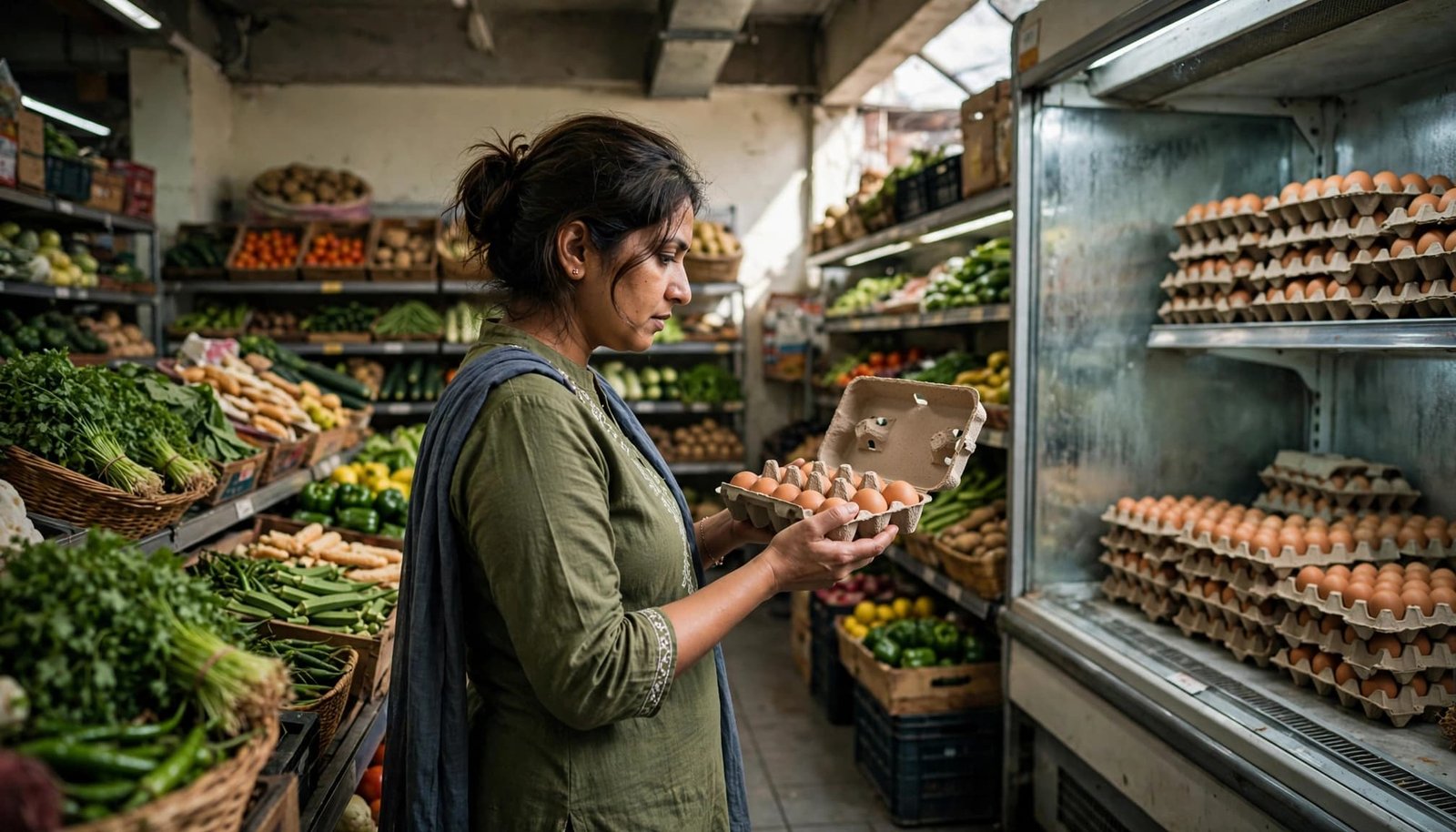
Check the carton for the exact claim, producer or packer identity, batch or lot details, and any certifier name or mark. A brand may sell several egg lines with different sourcing arrangements.
Compare those details with the brand’s published standard and farm information. If it displays Certified Humane, check the certifier’s current directory and confirm the certificate covers the relevant farms, packing facilities and product lines.
Ask for a current certificate or written confirmation of status. Check its scope and validity, including the housing system and quality standards it covers. Food companies may source from several farms, so certification for one farm doesn’t automatically cover every product line.
A marketing claim alone isn’t independently verified certification. Transparency also means the seller can explain how the certificate relates to the product.
The name on a certificate may differ from the brand name. The seller should be able to explain that relationship.
For institutional buyers, ask how certified and uncertified eggs remain separated during collection, packing and distribution.
Test what the QR code reveals
Scan the packet before assuming the code provides traceability. Does it open a batch record, a farm page or a generic advertisement?
Useful records identify the producer, batch or lot, relevant packing information and source farm. Where several farms supply a brand, ask how your batch connects to one of them.
QR codes can organise evidence. They can’t independently prove that hens weren’t caged, and a logo alone isn’t proof either.
I’d send this short request:
“Which farm supplied this batch, what cage-free standard do you follow, who audits the claim, and is the certification current?”
Keep the response alongside a photograph of the carton. That gives you something concrete to compare when the next delivery arrives.
Indian Brands: Useful Leads, Different Evidence
Abhi Eggs provides certification and traceability leads
Abhi Eggs describes its cage-free production and says its farm and packing unit are Certified Humane-certified. The company also says QR codes on its packages link to its farm in Ravulapalem, Andhra Pradesh.
Certified Humane’s company listing names Abhi Foods and includes cage-free and free-range product lines. Check the specific product and current certification status before relying on the claim.
The company reports availability in Delhi NCR and Chennai, and lists Blinkit, Zepto and Swiggy Instamart as sales channels. These are company-reported leads, not confirmation of current stock in your postcode.
Before ordering, check the delivery location, product title and carton photographs.
Kegg Farms makes a producer-level claim
The company advertises “100% Cage-Free Farming” and describes open-floor housing, nesting boxes, perches, litter and traceability.
These details give you useful questions to pursue. They remain the producer’s own representations, and the evidence here doesn’t establish third-party cage-free certification or coverage of every product.
Ask which farm supplies your carton and what independent checks support the claim.
Don’t treat the lack of certification as an automatic verdict against smaller egg producers. A producer without certification may have good practices, but still owes buyers enough evidence to assess them.
Check the Price Without Buying a Health Halo
Compare the delivered cost per egg
A six-egg carton and a larger tray aren’t comparable until you calculate the unit cost. Divide the amount paid, including delivery, by the number of eggs.
Then check egg size or weight information, usable shelf life and the seller’s damaged-egg policy. A subscription discount matters less if deliveries exceed what your household uses.
For Delhi NCR and Chennai, compare postcode-specific listings on the same day. Promotions, delivery charges and stock change too often for a single national price to be reliable.
The premium should buy a substantiated housing claim. Expensive packaging doesn’t tell you how much reaches the farmer.
Nutrition needs its own evidence
Cage-free eggs aren’t automatically higher in nutritional value. Feed, hen age, breed and other production conditions influence egg composition.
Researchers have compared egg composition across housing systems, including fatty acids, cholesterol and vitamins A and E. Those findings don’t guarantee a nutritional advantage for every cage-free product.
For omega-3 eggs, ask for the amount per egg or per 100 grams, along with the testing behind the claim.
Welfare and nutrition require separate checks. You can value reduced confinement without inventing a health advantage to justify the purchase.
Ask What the Welfare Label Leaves Out
A housing certificate has a defined scope. Ask what it says about hatcheries, male chicks, beak treatment, veterinary care, transport and hens at the end of their laying lives.
Some questions may fall outside the standard. That limitation should be clear, not hidden behind the word “humane”; a housing claim alone can’t rule out animal cruelty.
We face similar limits with animal welfare behind dairy labels. A claim about one production practice can lead us to assume an animal’s whole life is protected.
Environmental claims need a separate evidence trail. Cage-free housing alone doesn’t establish lower emissions, responsible feed sourcing or safe manure management. Climate literacy means recognising that housing conditions and ecological impact require different assessments.
Sustainable farming claims, including a farm’s circular-economy story, need scrutiny. If manure becomes fertiliser, ask where it goes and how handling protects nearby water and residents.
Systemic change requires consumer demand to reward these practices and food companies to fund them. Budgets are needed for farmer training, veterinary support, audits and record-keeping. A premium carton without those investments gives us little reason to expect lasting improvement.
Frequently Asked Questions
What should an office or restaurant ask its supplier?
Food companies, offices and restaurants should ask suppliers to document what share of current egg purchases is cage-free. Request the reporting period and supporting evidence too. A future commitment isn’t evidence of today’s purchasing.
Check whether the policy covers shell eggs, liquid eggs and egg ingredients. Put requirements into contracts and invoices rather than relying on a sustainability webpage.
Research on Indian poultry producers’ cage-free transition examines the support producers need. Buyers should pair sourcing demands with practical transition support.
What if I can’t verify an affordable option?
You don’t have to pay more for an unsupported claim. Ask the seller for evidence, consider another supplier, or reduce egg purchases.
Plant-based living offers another route: besan chilla or tofu bhurji can replace some egg-based meals without a welfare certification question.
Everyday mindfulness here means making a decision you can explain. It doesn’t require treating every grocery trip as a test of moral purity.
Make Your Next Purchase Accountable
The carton is the beginning of the evidence trail. Accountable egg producers connect a credible cage-free claim to an identifiable farm, a clear standard and supporting records.
We can recognise reduced confinement while asking harder questions about the animal’s whole life. Better housing deserves recognition; unsupported reassurance doesn’t deserve a premium.
Before your next order, ask for the source farm and current certification details. Give your money a reason to trust the claim.