How to Choose the Best Reforestation Projects: Verified Impact Vs. Just Planting Trees
-
by
 Saket Sambhav
 - No Comments on How to Choose the Best Reforestation Projects: Verified Impact Vs. Just Planting Trees
A lot of tree-planting projects sound great on paper.
You see big claims. Big numbers. Big smiles in photos.
But here’s the real question: will those trees still be alive a year from now?
That’s the part many people skip.
If you want to support reforestation, don’t stop at “trees planted.” Look at what happens after the planting day. Good projects are not about the photo. They are about survival, care, and honest follow-through.
Key Takeaways
- Don’t be impressed by big numbers alone: “Thousands of trees planted” means very little if most of them die.
- Mangroves are worth paying attention to: They store a lot of carbon and protect coastlines, but they have to be planted in the right place.
- Ask for proof: Good projects should show where the work happened, not just talk about it.
- Look for real transparency: It should be clear where your money goes and what it actually does.
Why “trees planted” is not enough
A project can plant a huge number of trees and still fail.
Why? Because planting is the easy part.
Keeping trees alive is the hard part.
If the land is damaged, the water flow is wrong, or the species is a bad match for the area, those saplings may not make it. That means the project looks good in a fundraiser but does very little in real life.

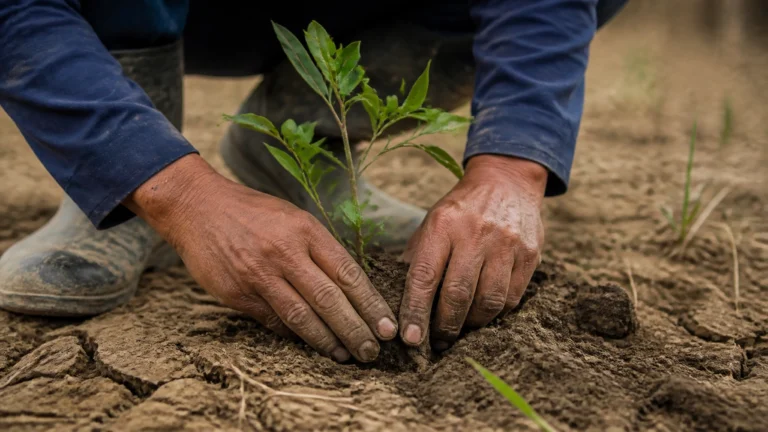
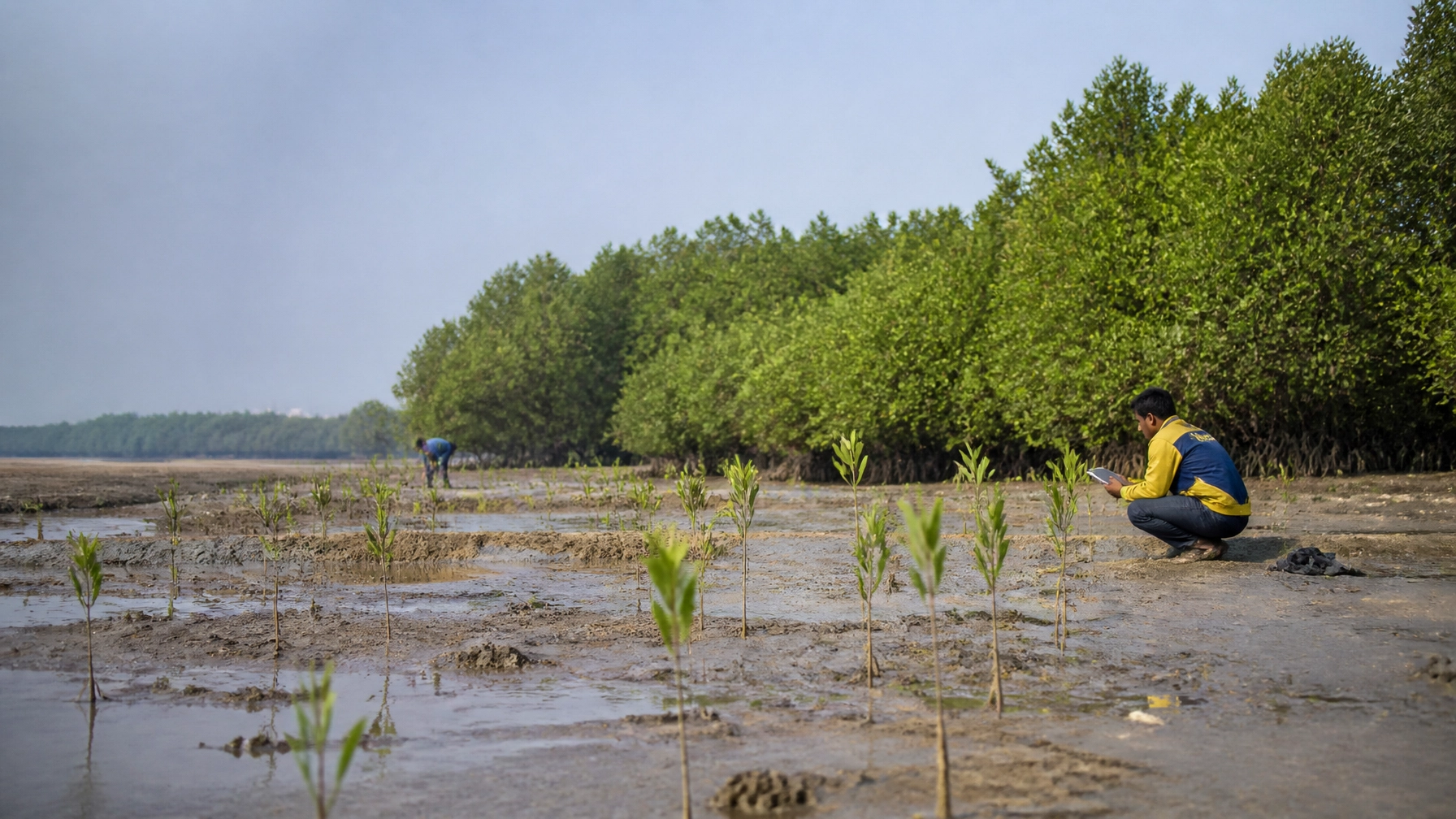
Close-up view of mangrove planting in wet sediment, where water flow and survival matter more than big planting claims.
Image credit: AI-generated via Marblism.
A better question is simple: what is the survival rate?
If the organization cannot tell you how many trees lived, that is a red flag.
A living tree matters more than a dead sapling added to a press release.
Good reforestation is not just planting. It is checking the site, choosing the right species, caring for the area, and tracking what survives. That’s what makes the difference.
Why mangroves matter so much
Mangroves are one of the smartest places to focus.
They do more than look green on a map. They help store carbon. They protect coastlines. They support wildlife. And they help communities living near the shore.
But mangroves are not “plant anywhere” trees.
They need the right tidal flow. They need the right kind of wet, salty ground. If the water movement is blocked, the planting can fail fast. That’s why mangrove work has to be done carefully. If you want the deeper version of that, read Why Mangrove Planting in India Fails Without Tidal Flow.

Manual mangrove restoration in a tidal zone, where careful placement gives each sapling a real chance to survive.
Image credit: AI-generated via Marblism.
If the water system is broken, the project is in trouble before it even starts.
That is why the best mangrove projects pay attention to the land and water first. They do not just arrive, plant, and leave. They work with local knowledge. They plant carefully. They come back and check what happened.
That is the difference between something real and something that just looks good online.
Why proof matters
A lot of non-profit reporting is too vague.
You donate. Then you get a few nice photos and a feel-good update.
That is not enough.
If a group says they are restoring forests, they should be able to show where the work happened and what was done there. If you want to dig further into that issue, read Non-Profit Transparency Secrets Revealed.
At The Better Human™ Life Foundation, we try to make that simple. When work happens in the field, it should be traceable. You should be able to see more than a polished story. You should be able to see actual proof.

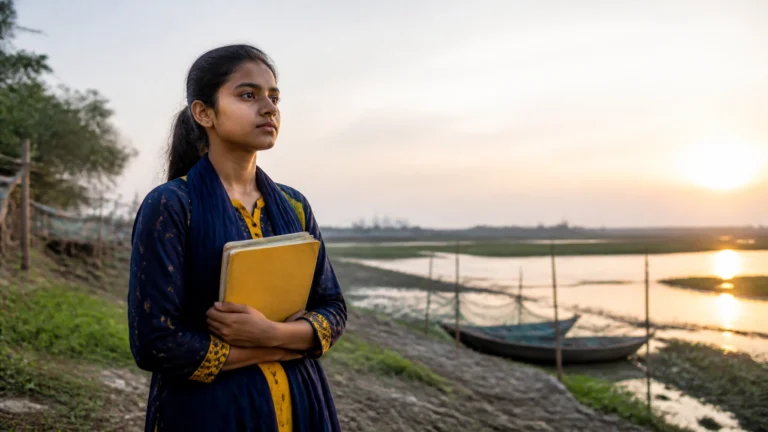
Field verification at a reforestation site, where location-based proof helps donors check what really happened on the ground.
Image credit: AI-generated via Marblism.
Geo-tagged tracking helps with that.
In plain English, it means the project can show the actual location of the work. That matters because it gives you something real to check. It moves the conversation from “trust us” to “here, see for yourself.”
How to choose a project without getting fooled
If you are deciding where to give, keep it simple.
Ask basic, honest questions.
Where is the project?
What species are being planted?
Who is doing the work?
How many trees survived?
Can they show proof?
And if you also want to make changes in your own life alongside supporting field work, read 5 Steps to Lower Your Ecological Footprint and Beat Eco-Anxiety.
Use this framework to compare projects:
| Metric | Green Theater | Verified Impact |
|---|---|---|
| Primary Goal | Maximize tree count for PR. | Maximize ecosystem survival and health. |
| Reporting | Static photos and general tallies. | Geo-tagged data and live tracking. |
| Transparency | Admin fees leak into 20-40% of funds. | 100% of funds go directly to the field. |
| Focus | “Any tree anywhere.” | Targeted species (like mangroves) in critical zones. |
| Follow-up | None. The photo is the goal. | Multi-year monitoring of survival and biomass. |
If a group cannot tell you what happened after planting day, be careful.
That usually means the headline matters more than the outcome.
Moving toward real action
If you want your support to matter, choose projects that do the boring but important stuff well.
They plan carefully.
They plant the right species.
They monitor survival.
They show proof.
And they are clear about where the money goes.
That is why a project like Mission Seed Sundarbans matters. It is not about making tree planting look inspiring for a day. It is about doing the work in a way that can be tracked and checked.
In short: don’t fund the photo. Fund the follow-through.
The world does not need more environmental theater. It needs honest work that lasts.
Frequently Asked Questions
Why are mangroves better than regular trees for carbon?
Mangroves are excellent at storing carbon, especially in the soil around their roots. That means they can hold a lot of carbon for a long time, not just in the wood above ground.
What is geo-tagged impact data?
It is location-based proof. A project attaches map coordinates to the work so people can see where it happened instead of just taking someone’s word for it.
Why do so many reforestation projects fail?
Because planting is only the first step. Projects fail when they use the wrong species, ignore water conditions, or never come back to check survival.
How does The Better Human Life Foundation ensure 100% transparency?
The model is simple: founders cover operational costs, so contributions go straight to field work. The work is then backed up with trackable reporting so people can see what actually happened.