
Dark Oxygen and the Risk of Breaking the Sea Floor
 Saket Sambhav
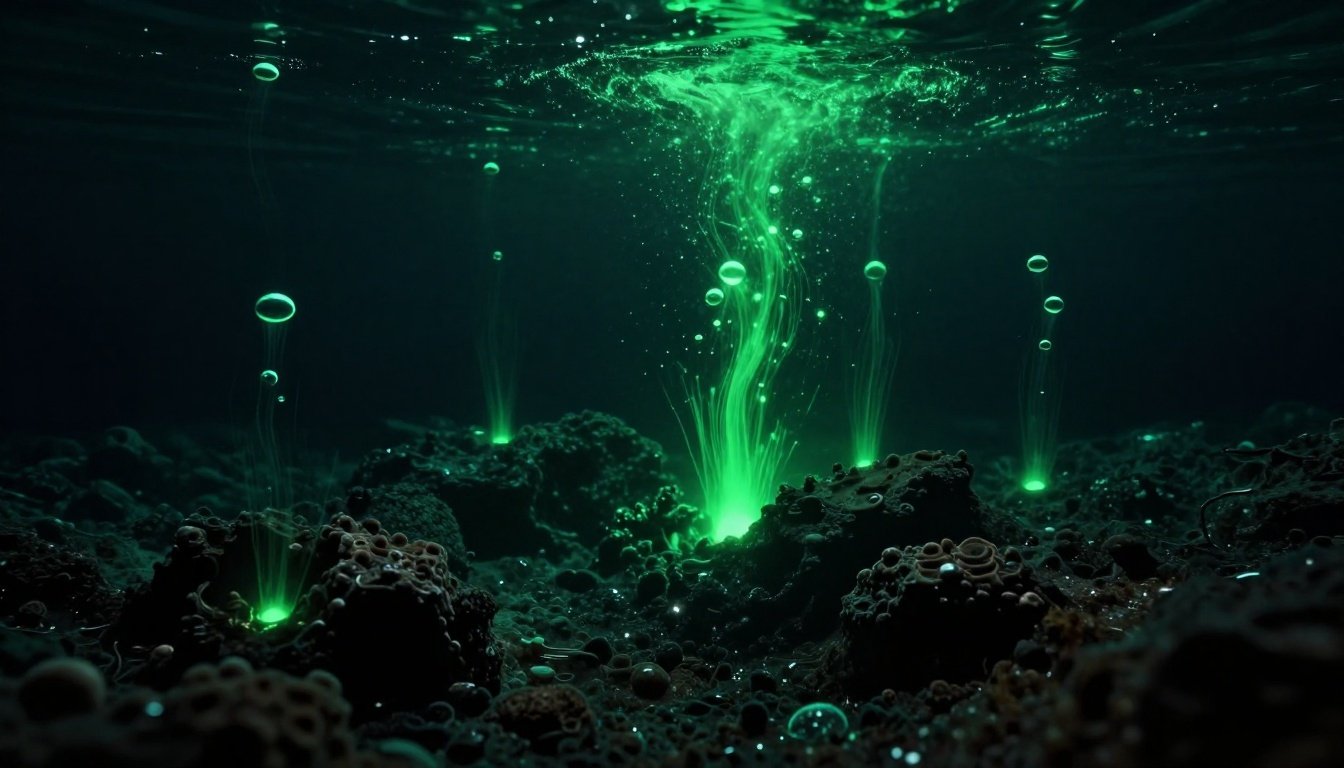
Oxygen rising from the sea floor, in total darkness, sounds like a mistake. No sunlight, no photosynthesis, no oxygen, that’s the rule most of us carry around in our heads.
Then a 2024 study suggested that parts of the deep seabed might be producing oxygen anyway.
That matters far beyond marine trivia. It could change how we think about deep-sea life, mining, and the risk of tearing up an ecosystem we still barely understand.
As of today, the claim is exciting, disputed, and unfinished. That makes the story more urgent, not less.
What dark oxygen is, and why the finding shocked scientists
The idea is simple enough to say and hard to accept. Oxygen may be appearing on the abyssal sea floor without light.
The 2024 study linked that possibility to polymetallic nodules in the Pacific, where oxygen levels reportedly rose over time in experiments.
If true, that jars with the basic story we learn early, oxygen mostly comes from photosynthesis.
As of 2026, there is no settled proof that this is happening across the deep ocean. There is a provocative signal, a published paper, and a serious argument about what that signal means.
How oxygen is usually made on Earth
Most oxygen on Earth comes from photosynthesis. Plants, algae, and cyanobacteria use sunlight to split water and build sugars. Oxygen is the spare output.
The deep sea doesn’t get that solar input. Sunlight fades out long before the abyssal plain.
Down there, there is pressure, cold, sediment, microbes, and metal-rich crusts, but no daylight.
So when oxygen shows up in darkness, scientists have to ask a blunt question: what process is doing the work?
Why polymetallic nodules became part of the story
Those nodules are now at the centre of the debate. They are dark, lumpy deposits rich in metals such as manganese, nickel, cobalt, and copper.
Some researchers think their surfaces may create tiny electrical gradients, almost like natural batteries, which could help split seawater and release oxygen.
That is still a proposed mechanism, not a proven one. But it is why the nodules matter so much.
They may be more than mineral stockpiles. They may be active pieces of deep-ocean chemistry, as described in the 2024 Nature Geoscience paper.
Why the science is still contested in 2026
This is where a lot of people get lazy. A disputed result is not a failed result. It is a result under pressure. And pressure is how science earns TRUST.
As of June 2026, dark oxygen remains unproven and heavily challenged.
Critics say the reported oxygen increases may come from contamination, trapped water, instrument drift, or other experimental artefacts.
Some also question whether the proposed chemistry makes thermodynamic sense in those conditions.
What the critics say went wrong
The strongest objection is brutally ordinary. An oxygen reading does not automatically mean oxygen was produced there. If a chamber, sensor, or sample carries residual oxygen, the numbers can mislead. If the instrument behaves oddly under deep-sea conditions, the whole claim can wobble.
That does not prove the study is wrong. It proves the evidence still needs stress-testing. The difference matters. Science is not a morality play where one paper wins and everyone else goes home.
What scientists want to test next
The next move is better fieldwork, not louder opinions. Researchers involved in the original work have said they want more seafloor missions, improved landers, tighter controls, and repeatable measurements in real ocean conditions.
That is exactly what should happen.
If the signal is real, it should show up again under cleaner methods. If it disappears, the claim shrinks. Either way, knowledge gets sharper.
A useful summary of that ongoing push for further testing appears in Northwestern’s report on the discovery.
Why disturbing the sea floor could have bigger consequences than we think
Now for the part that should make leaders sit up. Even if dark oxygen turns out to be weaker than first claimed, the warning still lands.
We do not understand this system well enough to bulldoze it with confidence.
The deep sea is not empty floor space. It is habitat, chemistry, microbial exchange, carbon cycling, and slow biological time.
In business terms, this is a classic case of asymmetric risk. The upside is speculative and commercial. The downside may be ecological, irreversible, and missed until too late.
That is not efficient. It is reckless accounting with nature off the balance sheet.
Deep-sea mining and the race for minerals
Companies and governments want polymetallic nodules because they contain metals used in batteries and electronics.
On paper, that can look like climate progress. In practice, it can become the same old extractive story wearing a green tie.
Seabed scraping, sediment plumes, and habitat disruption do not become ethical because the end product sits inside an electric car.
A low-carbon future still fails if it is built on blind destruction. Decarbonisation without ecological discipline is not transition. It is rebranding.
What we risk losing before we even understand it
This is the ethical core. If you do not know what a habitat does, you do not get to call it expendable.
When the map is incomplete, tearing up the terrain is not innovation.
The deep seabed may host species found nowhere else. It may also support chemical processes we have not measured properly yet.
Dark oxygen could be part of that story, or it could be a clue pointing to something else.
Either way, destruction moves faster than science. Once a seabed system is damaged, there is no quick reset button, no easy pilot programme, no neat quarterly fix.
The deep sea is not a write-off
Whether dark oxygen is fully proven or still contested, the lesson is the same. Do not trash a system whilst the science is unfinished.
That is not bold leadership. It is ignorance with funding.
People who talk about ethics, efficiency, and the future need to act like they MEAN it.
Radical accountability starts where convenience ends, in what you fund, what you consume, and what damage you excuse because it happens far away. If you refuse to live that double life, Join the Better Human Project.