
Why Construction Waste Recycling in India Keeps Breaking Down
 TBH Editorial
A city can’t call itself modern if yesterday’s buildings end up in tomorrow’s lakebed. Across India, demolition and renovation debris rises faster than the systems meant to sort, move, and reuse it.
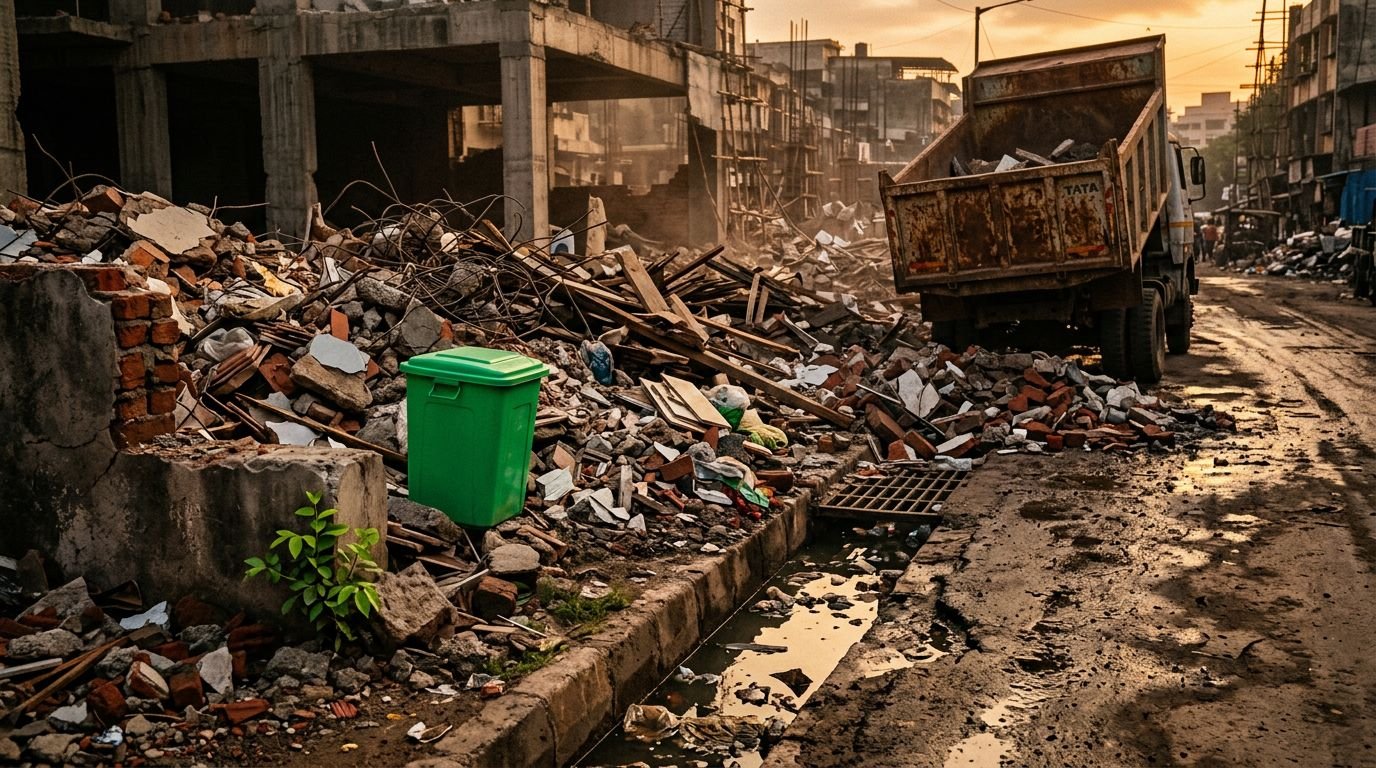
You can see the gap in blocked drains, roadside mounds, and trucks that unload where nobody is meant to look. That is why construction waste recycling in India keeps breaking down. The problem is not a lack of crushing machines alone. It is a chain of weak decisions, weak data, and weak accountability.
The breakdown starts on the building site
Most construction waste does not become waste at the recycling plant. It becomes waste the moment a site treats everything as one dirty pile.
That usually happens because demolition is priced for speed. Contractors want fast clearance, low transport cost, and minimal delay. So concrete, brick, plaster, steel, tile, wood, soil, and plastic often get loaded together. Once mixed, each material loses value. Concrete can become aggregate when it is clean. Steel can be recovered when it is separated. Timber and fixtures can be reused when they are removed early and stored well.
Small urban sites make this harder. Many buildings sit on tight plots with little room for separate bins. House owners may not know the disposal rules. Subcontractors come and go. By the time a truck arrives, nobody wants a debate about sorting.
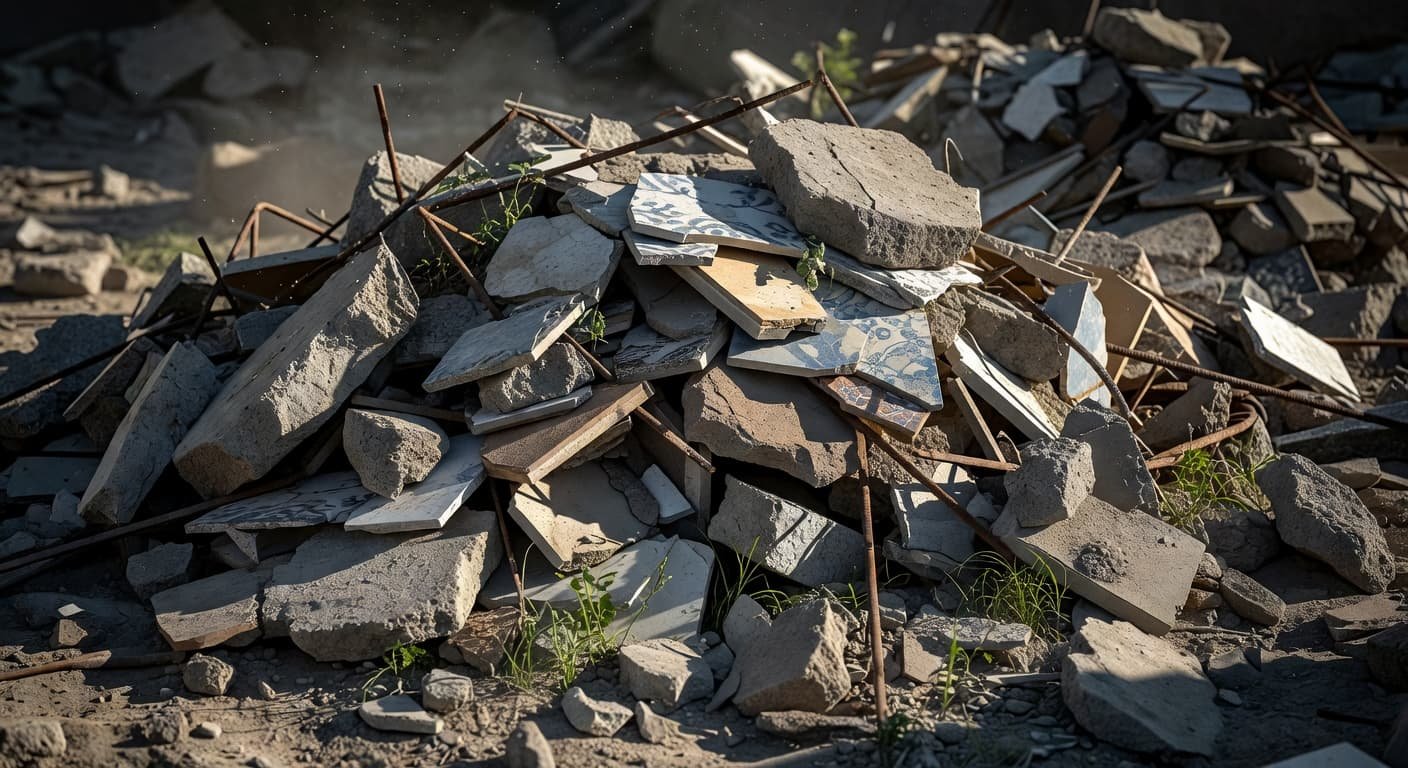
The result is mixed waste, and mixed waste is expensive to recycle. Recyclers then spend more on labor, screening, and rejection handling. Some loads are too contaminated to process at all. Others can be used only for low-grade applications, which cuts revenue. A system that starts dirty stays inefficient all the way down the chain.
When debris stays mixed, dumping stays cheaper than recycling, and the whole system bends toward the cheaper choice.
This is why the problem is not only technical. It is also contractual. Most project documents still reward quick clearance, not clean recovery. Site managers are judged on pace. Transporters are judged on turnaround time. Nobody gets rewarded for keeping materials usable.
So the first failure is simple and hard to fix: the market still treats rubble as something to remove, not something to manage. Until that changes, every later step carries the cost of the first shortcut.
Rules exist, but enforcement rarely reaches the curb
India already has rules for construction and demolition waste, and newer targets have pushed the issue back into public view. Still, a rulebook cannot watch a truck at midnight.
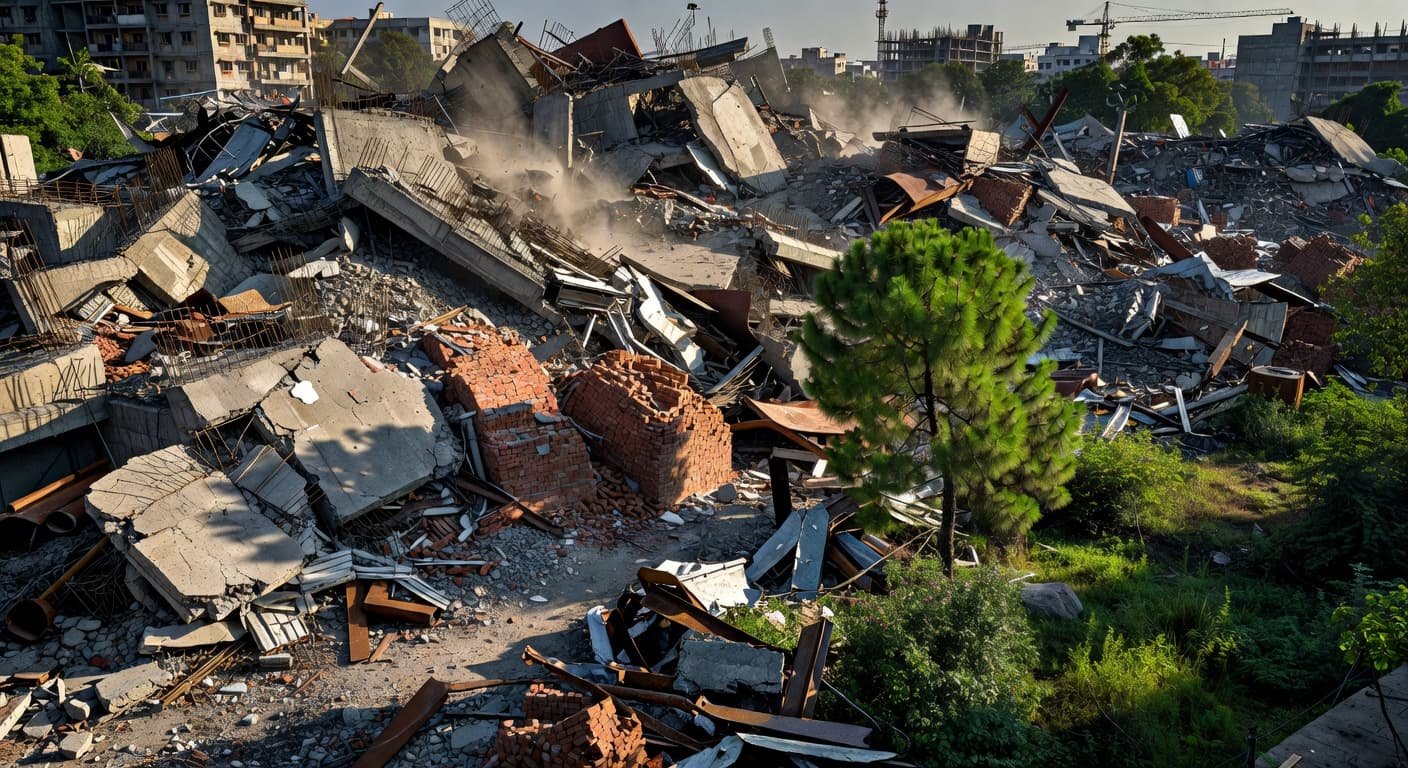
Recent reporting and field analysis point to the same pattern. Waste is dumped, not sorted, and often not tracked well. Illegal disposal remains common near riverbanks, wetlands, lakes, and open land. Many cities still lack enough recycling plants or easy collection systems, so lawful disposal can take more time and money than a quick illegal unload.
Enforcement is also uneven. Municipal teams are often understaffed. Penalties may exist on paper, yet collection is weak. In many cases, responsibility is blurred. Is the owner liable, the builder, the transporter, or the ward office that failed to monitor the route? When accountability is split four ways, it often disappears.
This table shows where the system tends to fail:
| Step | What should happen | What often happens |
|---|---|---|
| At the site | Waste is sorted and recorded | Mixed debris is loaded in a hurry |
| In transit | Trucks go to approved facilities | Loads are diverted to open land or water edges |
| At city level | Volumes are tracked and penalties are enforced | Data stays patchy and violations go unpunished |
| In the market | Recycled products are specified and bought | Buyers default to virgin material |
The biggest blind spot is data. If a city does not know how much debris it creates, where it goes, and what percentage is recovered, planning turns into guesswork. Collection points get placed badly. Plant capacity lags behind need. Illegal dumping remains easy to deny.
Meanwhile, honest operators pay more. They sort. They transport farther. They try to comply. Bad actors move faster and often cheaper. That is a perverse incentive, and it keeps the system tilted toward failure.
Recycling plants can’t thrive on dirty inputs or weak demand
Even when debris reaches a formal recycler, the business case is shaky. A plant needs predictable volume, cleaner material streams, and steady buyers. Too often, it gets the opposite.
Loads arrive contaminated with soil, plaster, plastic, or household trash. Supply is irregular because collection is inconsistent. Transport costs are high because approved facilities may sit far from dense building zones. Then the recycler faces another problem: many buyers still do not trust recycled construction products.
That distrust shapes the whole market. Engineers worry about quality variation. Procurement teams stick to old specifications. Public tenders often fail to require recycled aggregates, blocks, or pavers, even where the use case is safe and established. So the recycler does the hard work of processing material, then struggles to sell it at a price that keeps the operation stable.
Research on barriers to circular economy practices in Indian construction points to the same obstacles, coordination gaps, weak standards, cost concerns, and fragmented supply chains. A separate study on challenges for circular economy implementation echoes that diagnosis. The barriers are not hidden. They are repeated, measurable, and familiar.
This is where the language of the circular economy can turn hollow. Circular systems do not run on goodwill. They run on contracts, standards, testing, and procurement. If public agencies and large builders do not buy recycled products, recovery plants cannot plan ahead. Without that certainty, they cannot build sustainable business models.
Virgin materials also look cheaper than they truly are. Quarry damage, dust, land use, water stress, and long truck routes often sit outside the invoice. Recycled material, by contrast, carries its processing cost in plain sight. The market then punishes the cleaner option for being honest about its price.
So the supply side and the demand side fail together. Dirty inputs reduce quality. Weak demand reduces revenue. Then policymakers point to low uptake as proof that recycling is not ready, when the real problem is that the rules never gave it a fair market.
The ecological cost hides in plain sight
Construction rubble often gets treated as inert, as if a broken wall becomes harmless once it leaves the site. That assumption is wrong.
When debris is dumped on low-lying land, it changes drainage patterns. During heavy rain, water that once spread, soaked in, or moved through a channel can back up into streets and homes. When rubble covers soil, it hardens surfaces that already struggle with heat. Dust drifts into nearby houses, schools, and shops. Fine particles settle on leaves and weaken whatever green cover remains.
The ecological impact is larger than most project budgets admit. Dumping on lake edges and wetlands chips away at habitat. Broken masonry and soil fill can erase the shallow, messy spaces where insects, amphibians, and small birds survive. In growing cities, those edge spaces matter because urban biodiversity often hangs on fragments, not grand reserves.
A broken wall does not disappear. It often returns as dust, flood risk, and habitat loss.
This is also a public health issue. Neighborhoods near informal dump zones live with blocked drains, sharp debris, more truck traffic, and poorer air. Children play near piles that should never be there. Workers sort through dangerous loads with little protection. The burden falls hardest on people with the least power to relocate or complain.
Better climate literacy helps people connect these dots. A dump site is not only ugly. It can be a heat island, a flood trigger, and a habitat break. That local awareness matters because people defend what they can name.
At the personal level, plant-based living and everyday mindfulness can reduce a person’s footprint. Still, neither can stop a truck from filling a wetland with rubble. That takes public systems, legal pressure, and community oversight. For readers who care about grounded repair work, Explore Our Active Missions to see how on-the-ground efforts around habitat restoration, urban biodiversity, and climate literacy can create visible community impact.
The informal sector already recovers value, but carries the risk
India’s recovery system is not built only by formal plants. It already depends on labor that policy often ignores.
Before a truck leaves a site, workers often remove what still has resale value. Steel, cables, doors, window frames, sanitary fittings, tiles, and timber can all move into reuse or scrap markets. That activity saves material, lowers demand for virgin inputs, and keeps some waste out of dump sites. In plain terms, the informal sector already does part of the recycling job.
Yet the system gives these workers the highest risk and the least recognition. Sorting mixed debris means dust exposure, cuts, crush hazards, and unstable income. Many workers have no protective gear. Few get formal training. Fewer still appear in city waste plans as partners worth designing around.
That is a policy mistake. Informal recovery networks know which materials hold value, which neighborhoods generate reusable stock, and how price signals move through the salvage trade. If cities treat them only as leakage or disorder, they lose knowledge that could improve both recovery rates and enforcement.
A fairer model is possible. Municipal contracts could connect licensed aggregators, salvage dealers, and recyclers. Shared sorting yards could reduce on-site chaos. Transparent buying rates could cut exploitation. Basic safety rules could be enforced where material is actually handled, not only at the formal plant gate.
Right now, the system acts like a sieve with the wrong holes. High-value metals and fixtures find buyers. Low-value mixed masonry, plaster, and dust fall through to the public, which then pays through dumping, clogged drains, and lost land. That split makes the city poorer even when some private recovery happens.
If India wants better construction waste outcomes, it needs to stop treating workers as an afterthought. A recycling chain is only as fair as the people lifting, sorting, and inhaling its failures.
What real systemic change would look like
Systemic change is less glamorous than people expect. It looks like sorted bins, trip records, boring audits, and procurement clauses that people cannot wriggle out of.
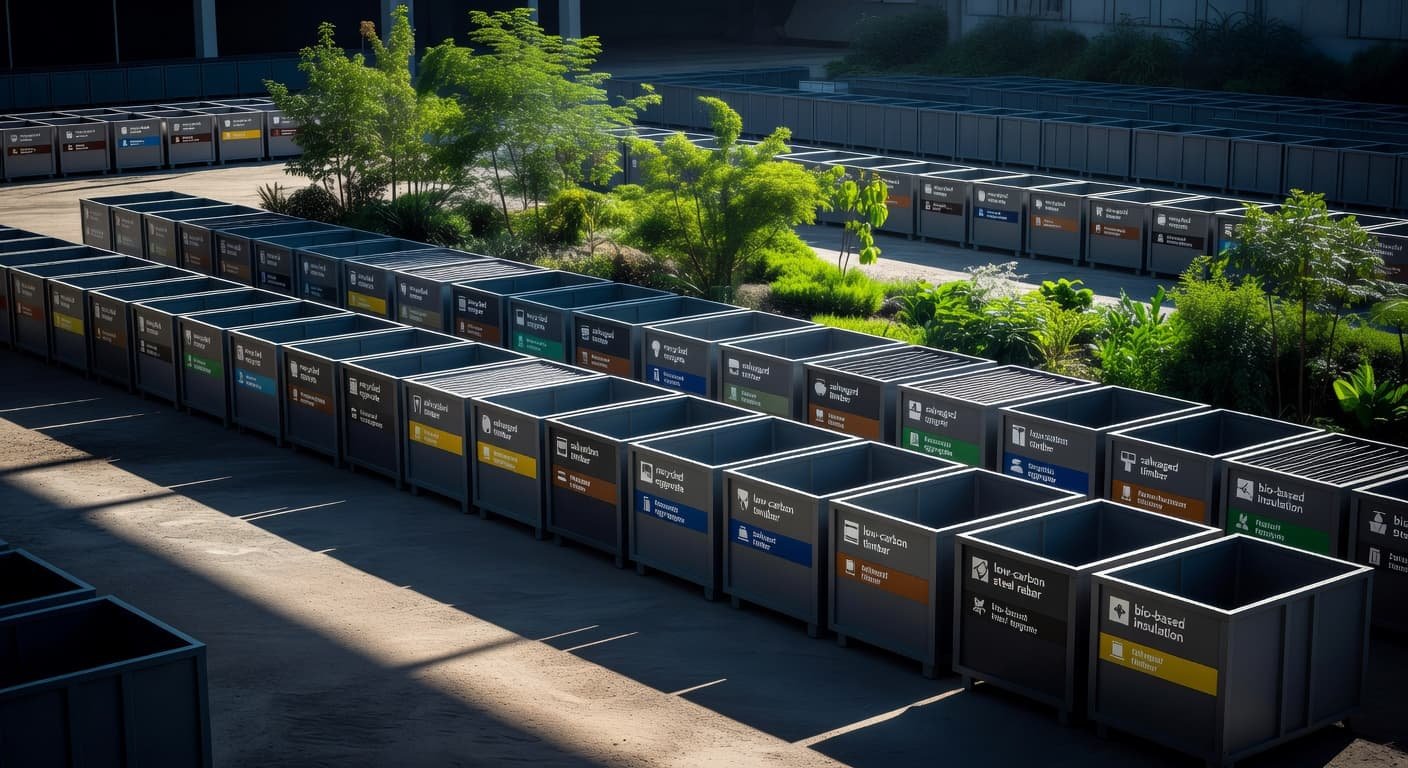
The fix starts before demolition. Every permit should include a waste estimate, a sorting plan, and an approved destination. Projects above a certain size should lodge a refundable deposit that is returned only after documented disposal or recycling. For smaller sites, ward-level collection points can reduce the excuse that legal disposal is too far away.
Then the data gap has to close. Trucks need digital trip logs. Facilities need weighbridge records. Municipal dashboards should publish how much waste was generated, where it went, how much was recycled, and which violations were penalized. Once disposal becomes visible, evasion gets harder.
Demand matters just as much. Public agencies should require approved recycled material in roads, pavers, non-structural blocks, and other suitable applications. That creates a floor under the market. It also tells private buyers that recycled products are normal, not experimental. Research in this analysis of circular economy adaptation in construction points back to the same issue: quality management and adoption need to move together.
Design choices also shape waste long before a building comes down. Modular systems, reusable formwork, and selective dismantling can preserve value. Material passports and reuse inventories can help larger projects recover components instead of crushing everything by default. None of that removes the need for enforcement, but it cuts the waste stream at the source.
Most of all, incentives need a reset. If contracts reward only speed, waste will stay mixed. If landfilling and illegal dumping remain cheaper than compliance, formal recyclers will keep losing ground. If recycled products have no guaranteed buyers, the circular economy stays a conference slogan.
India does not need a perfect model before it acts. It needs joined-up governance, cleaner material flows, and markets that stop treating disposal as the cheap option. Until then, construction waste recycling will keep failing for reasons that are entirely predictable.
Conclusion
A city reveals its values in what it leaves behind. If rubble keeps sliding into wetlands, roadside plots, and drains, the problem is larger than recycling technology. It is an accountability failure built into contracts, enforcement, and public buying.
The path forward is not mysterious. Sort waste at the source, track every load, support the workers already recovering value, and create steady demand for recycled material. When that chain works, rubble becomes a resource. When it doesn’t, the cost lands on neighborhoods, water bodies, and the living systems cities depend on.