Urban Heat Island in India: Why Trees Alone Fail
 TBH Editorial
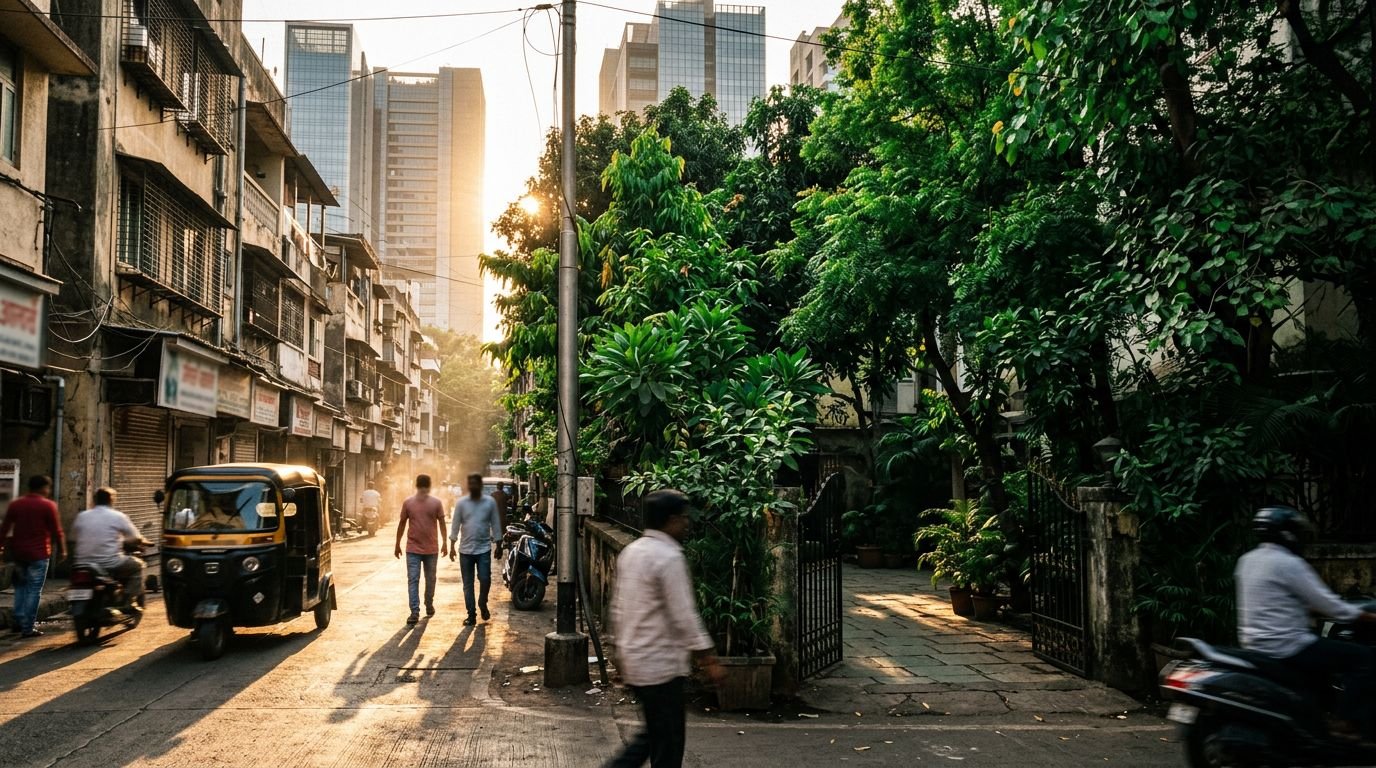
Walk from a shaded block into a lane boxed in by concrete at 3 pm in May, and the air can feel heavier within seconds. That jump is part of the urban heat island in India, where rapid urbanization significantly alters local microclimates. In these built-up areas, the UHI intensity represents a measurable temperature gap between the city center and its cooler rural surroundings. As temperatures climb, this phenomenon contributes to severe heat stress for residents, who must navigate the reality that cities stay much hotter than undeveloped land.
Many city campaigns answer this challenge with plantation drives. Trees matter, but they cannot cancel the heat trapped by asphalt, glass, traffic, air-conditioner exhaust, and poor street design. To effectively cool Indian cities, the real test is whether planners can change the systems that keep producing heat.
Key Takeaways
- Planting is not a complete solution: While trees are essential for cooling, they cannot effectively counter heat trapped by dense concrete, asphalt, and industrial waste heat without broader structural changes.
- Shift from quantity to survival: Many city plantation drives prioritize sapling counts over long-term maintenance, leading to high mortality rates and failing to create the mature canopy cover needed for real temperature reduction.
- Urban heat is a systemic inequality: Heat stress disproportionately impacts low-income neighborhoods and outdoor workers; cooling strategies must be treated as critical public infrastructure rather than optional aesthetic improvements.
- Integrated cooling is essential: True relief requires a multi-layered approach, including cool roofs, reflective pavement, better building design, and water-sensitive planning, all working in tandem with the urban forest.
Trees help, but they can’t carry the whole load
Trees cool streets in two main ways. First, they cast shade. Second, they release moisture through their leaves, a process known as evapotranspiration, which actively cools the surrounding air. On a scorching day, a mature canopy can make the difference between a walkable footpath and a punishing one.
That part is true, and it matters. The problem starts when cities treat that truth like the whole story.
In many Indian cities, plantation drives count saplings, not shade. A sapling represents a future possibility, but it is not a cooling system this summer. Young trees need years to build a canopy substantial enough to lower temperatures. Meanwhile, increasingly intense heat waves are hitting harder, longer, and earlier, putting immense pressure on these young plants.
While many planners rely on remote sensing data and the Normalized Difference Vegetation Index, or NDVI, to track progress, these metrics can be misleading. They show green cover, but they often fail to capture the nuances of the Surface Urban Heat Island effect, where asphalt and concrete trap heat far beyond what vegetation can offset. Green infrastructure must be viewed as a complex network rather than just a collection of individual plants.
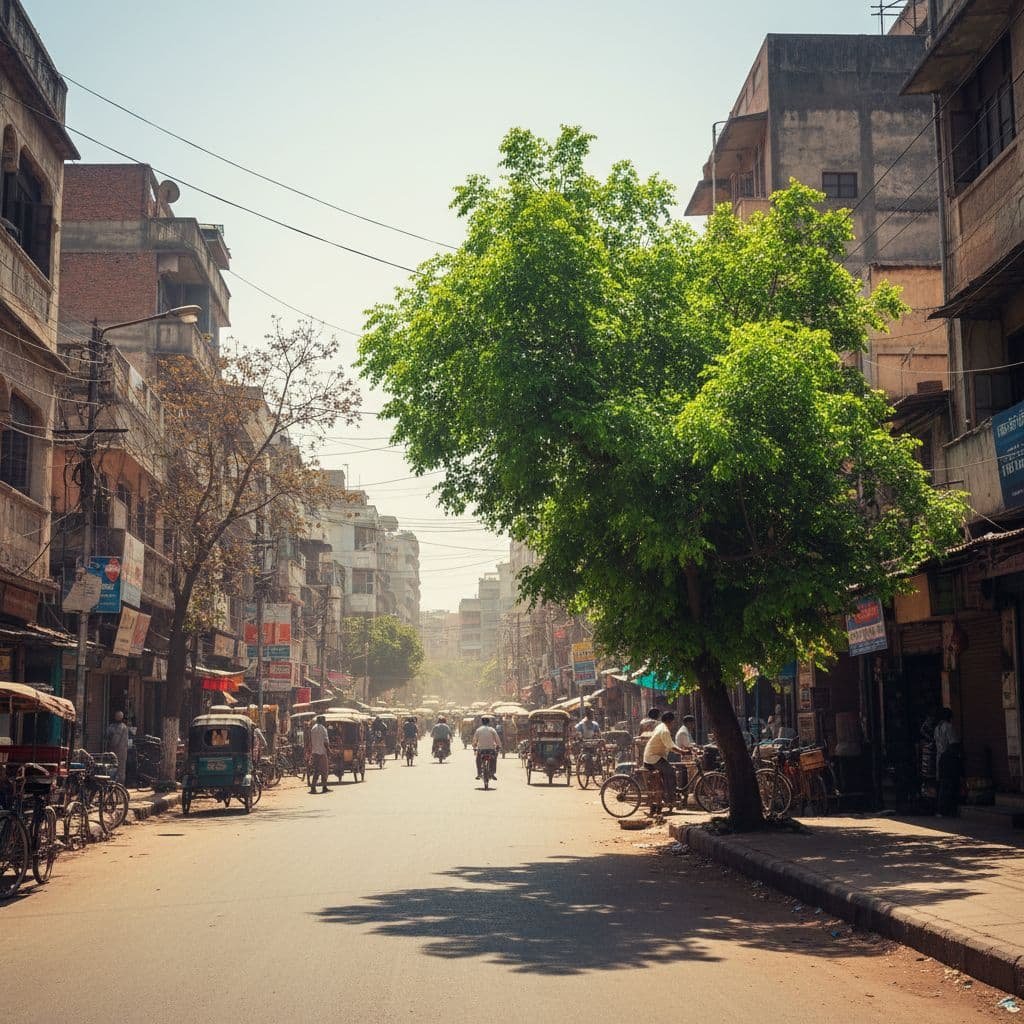
Space is another limit. Dense neighborhoods often lack the open ground required to scale these solutions. Sidewalk pits are tiny, roots get trapped by concrete, and overhead wires force aggressive pruning. In many places, a lone surviving tree must fight for life between parked bikes, broken paving, and dust.
Water is a bigger issue than many campaigns admit. During the hot, dry stretches of the year, new trees require consistent care and soil protection. Without that, mortality rates rise. Even when saplings survive, they may stay stunted because the soil is compacted, polluted, or sealed by development.
A city doesn’t cool because it planted trees. It cools when shade, surfaces, water, and transport all change together.
So yes, plant trees. But do not mistake tree planting for a complete heat plan. When leaders rely solely on planting, the public gets a photo-friendly action while streets remain dangerously hot after sunset.
Concrete realities behind the urban heat island in India
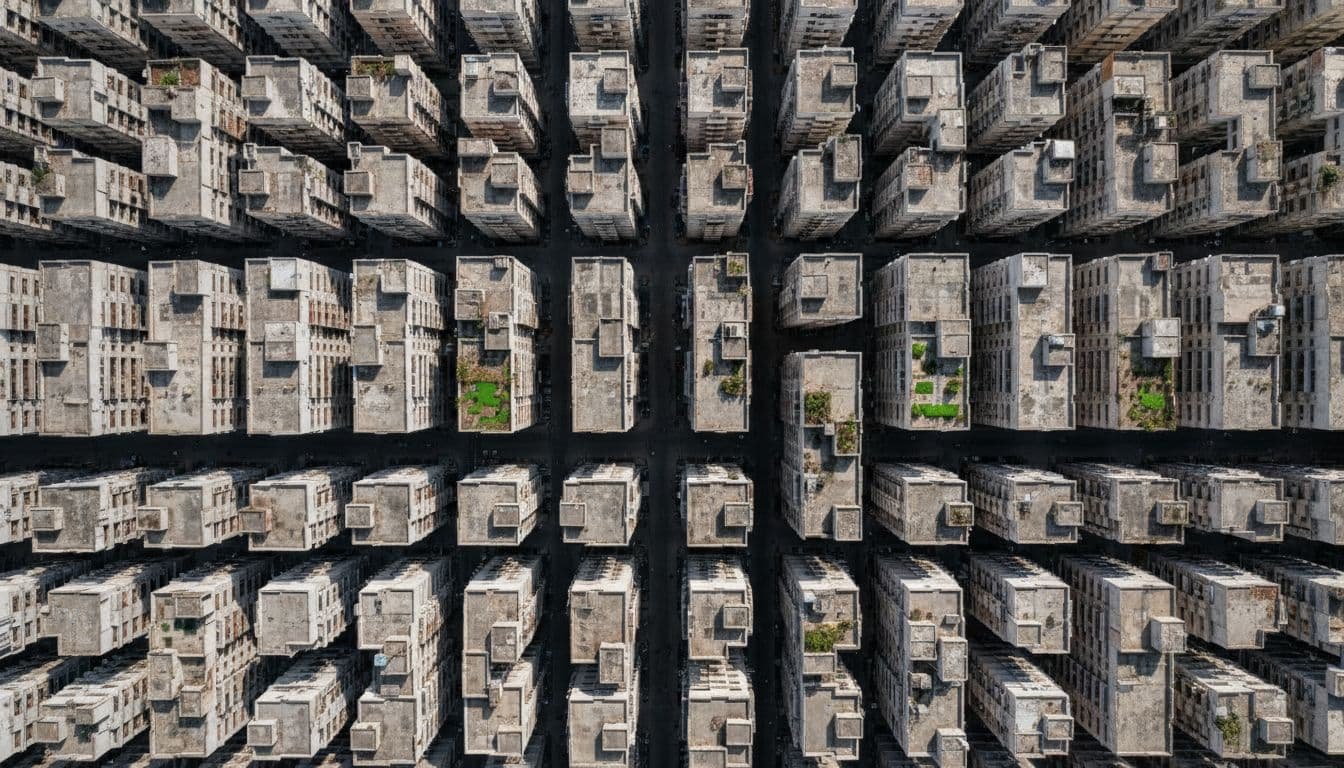
Urban heat builds because cities store and produce heat all day, then release it slowly at night. When we examine Land Surface Temperature from satellite data, we see how dark roofs and asphalt absorb sunlight, while concrete walls trap it. These building materials often have a low albedo, meaning they absorb more solar radiation than they reflect. Narrow streets further block airflow, while glass facades concentrate radiation in ways that disrupt the local climate. Beyond the physical structure, anthropogenic heat from traffic, factories, generators, and air-conditioners adds a constant thermal load to the environment.
A systematic review of urban heat drivers in India points to the same pattern across many Indian cities: structural LULC changes, dense construction, and the loss of vegetation stack together to exacerbate the heat. While satellites measure high Land Surface Temperature readings, residents often feel the effects of a rising atmospheric UHI, where the actual air temperature remains stiflingly high. In other words, the problem is deeply structural.
Nighttime is where this gets dangerous. Rural land cools faster after sunset, but cities often do not. Built surfaces keep releasing stored heat, so people start the next day without relief. For outdoor workers, bus commuters, older adults, children, and people in top-floor rooms, that lost recovery time is brutal.
Air-conditioners add a problematic feedback loop to this cycle. They cool the indoors for those who can afford them, but they dump heat outside. This contributes to a massive increase in energy consumption, as one building’s comfort raises street-level temperatures for everyone else. This is why the urban heat island is not only a climate issue. It is also an infrastructure and equity issue.
Older research on urbanisation and greening in Indian cities made a similar point years ago: passive cooling design, climate-specific planting, and better materials can reduce indoor heat and energy demand. Yet many new developments still favor hard surfaces, sealed plots, and low-shade layouts. The result is predictable. Cities become heat reservoirs.
Why plantation drives keep falling short
Most plantation drives fail for ordinary reasons, not mysterious ones. The wrong species get planted, maintenance budgets run out, and agencies fail to coordinate. Contractors often count pits and saplings, then move on. By the next summer, the site frequently looks abandoned.
A recent report on a heat-map plantation programme described exactly this kind of gap. The mapping existed, but the follow-through did not. Maintenance was irregular, staff capacity was weak, and residents ended up doing some of the watering themselves. That is not a durable public heat strategy. When it comes to effective urban planning, these systemic oversights often result in poor outcomes for residents.
Species choice matters, too. A tree that thrives in one climate can struggle in another. A decorative species may survive, but it often offers a thin canopy and little habitat value. When planners ignore local rainfall, soil, and water stress, survival rates drop. This is especially problematic in neighborhoods with high NDBI values, where dense, heat-trapping concrete leaves little room for survival without intentional care. Even worse, some urban greening plans prefer tidy-looking species over those that actually provide dense shade and support urban biodiversity.
Recent research on urban forests in Indian cities also warns that climate and water conditions matter. In hot, dry places with limited water, planners cannot assume all tree strategies cool equally well. Site design, species choice, and water availability change the final outcome. To succeed, these areas require more robust mitigation strategies that account for long-term ecological viability rather than just immediate aesthetic goals.
Then there is the politics of visibility. A one-day planting event looks active and hopeful, while a five-year maintenance plan looks boring. However, heat reduction lives in the boring part. It lives in pruning schedules, soil volume, wastewater reuse, canopy audits, and survival checks after three summers.
Without climate literacy, public debate gets stuck at symbolism. People see green saplings and assume the city is responding. Meanwhile, the thermal reality at street level barely shifts.
The hottest blocks are usually the most unequal
Heat does not spread evenly across a city. Affluent neighborhoods often have older trees, larger plots, and better ventilation. In contrast, low-income areas, informal settlements, and dense rental zones are defined by impervious surfaces that absorb and radiate heat, preventing any natural cooling effect. These areas typically feature tin roofs, narrow lanes, little shade, and poor access to water.
That difference shapes health and daily life. It dictates the realities of time, money, sleep, and safety. A worker who spends hours on a motorbike, at a market stall, or on a construction site experiences severe heat stress in a way an office employee may never fully see. Children in overheated classrooms lose focus, while older adults struggle through long nights. Women often carry extra heat exposure through cooking, caregiving, and water collection.
This is where the public health impacts of urban design become personal. When cities remove wetlands, pave over soil, and erase local tree cover, the damage does not stay in a policy file. It settles in the body. Heart strain rises, dehydration worsens, productivity drops, and medical risks grow.
Shade, then, is public infrastructure. It should be planned like drainage, roads, and electricity. Yet, cities often treat it like an optional amenity.
Systemic change starts by admitting that the urban heat island India faces is not a lifestyle problem. People cannot meditate their way out of a heat trap built by land use, road design, and weak housing rules. Personal care matters, but the hottest neighborhoods need material change in the built environment to survive.
What actually cools a city
Cities cool faster when various mitigation strategies are layered together. Trees are one part of that stack, but they perform most effectively when paired with high-performance surfaces, optimized building designs, and integrated planning. Scientists now use numerical modeling to simulate these effects, relying on tools like the WRF model to analyze how specific interventions impact local temperatures. By leveraging an urban canopy model, planners can predict how different layouts provide street-level relief, helping cities build resilience against the growing threats of climate change.
This comparison highlights how different interventions work together:
| Measure | What it tackles | Why it matters now |
|---|---|---|
| Mature street canopy | Direct sun and surface heating | Shade lowers pavement and walking heat, but it requires time to grow |
| Cool roofs and reflective coatings | Indoor heat gain from rooftops | These lower indoor temperatures quickly, helping to reduce overall energy consumption |
| Shaded bus stops, footpaths, and markets | Human exposure at street level | Built shade protects residents immediately, even before newly planted trees mature |
| Permeable soil and water-sensitive design | Surface heat and soil moisture | These support tree survival and promote passive evaporative cooling |
| Better public transport | Traffic heat and air pollution | Less congestion means less waste heat and lower thermal stress |
| Heat action plans | Health risk during extreme heat | Governance saves lives while long-term physical retrofits are being implemented |
The biggest lesson is simple. Cooling is not a single project. It is a network.
The same review cited earlier notes that Ahmedabad’s Heat Action Plan improved preparedness and helped lower heat-related deaths. That matters because heat policy cannot stop at urban design. Cities also need public alerts, school rules, hospital readiness, worker protections, and cooling access for people who do not control their housing.
Material choices and urban geometry also matter significantly. A roof can turn into a heat plate by noon, while a road can keep radiating heat long after dark. Therefore, cool roofs, lighter pavements, shaded facades, and ventilation corridors often deliver faster gains than symbolic plantation targets.
This is also where the circular economy enters the discussion. Cities that reuse water, recover materials, reduce wasteful construction, and design for lower energy demand produce less heat over time. The point is not only recycling; it is reducing how much excess heat the city manufactures in the first place.
Beyond planting, build accountability into the plan
A serious heat plan has metrics that people can feel and verify. How much canopy survives after three summers? Which school routes have continuous shade? Which bus stops protect waiting passengers? India’s current bus stop shade standards often fail to provide the thermal protection commuters need during peak summer. Which wards have the worst nighttime temperatures? How much roof area has been cooled? Those numbers matter more than event-day attendance. To track this progress accurately, Indian cities should utilize remote sensing data to audit canopy survival and identify heat hotspots in real time.
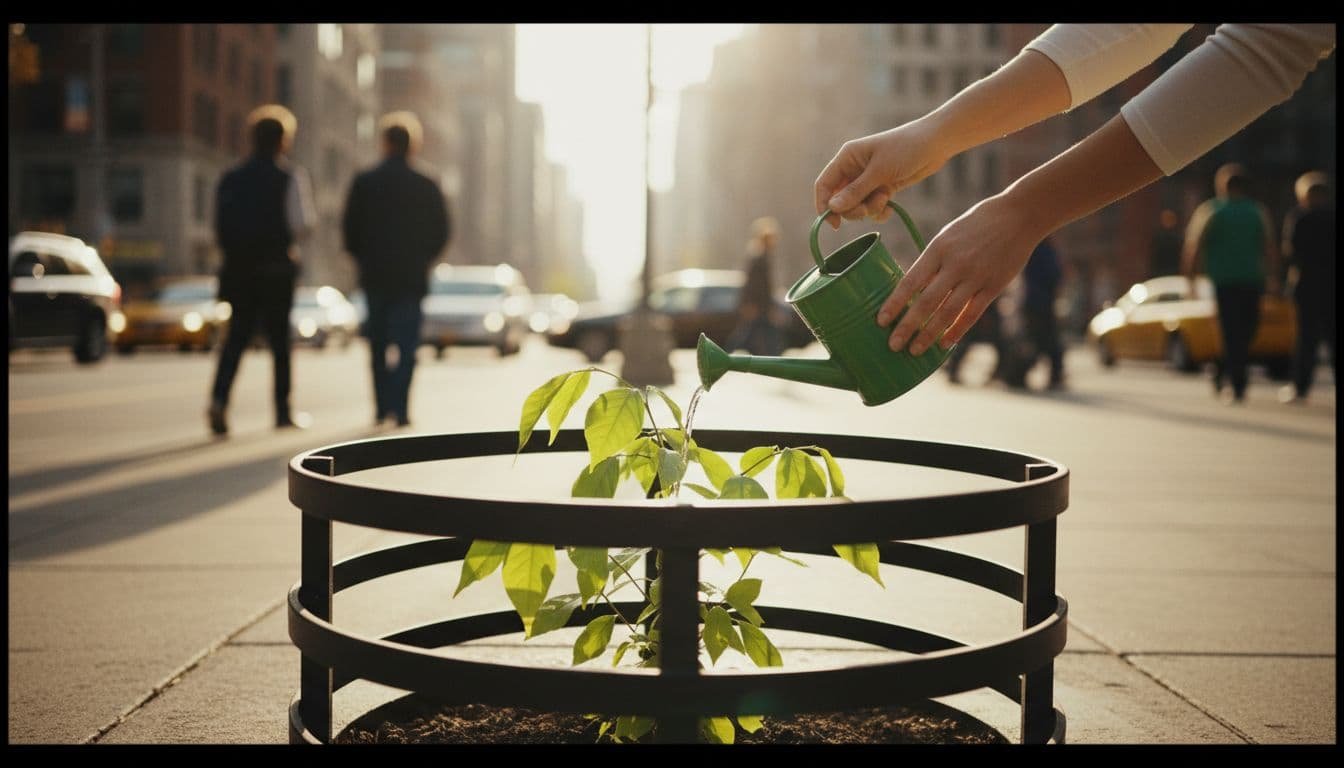
Care also has to be funded. Cities need line items for watering, mulching, pruning, and replacing failed trees. They need urban planning departments that share data instead of passing blame. They need contracts based on survival and canopy growth, not on how many saplings were planted before monsoon season.
Business has a role here, but it should be practical. Sustainable business models can support cool-roof retrofits, shaded delivery hubs, worker rest spaces, and treated greywater for landscaping. A serious company can reduce local heat stress around its sites. A photo-op plantation day is not enough.
Personal choices still count, although they have limits. Plant-based living can lower household emissions, and everyday mindfulness can make people more attentive to water use, neighborhood shade, and local care for public trees. Yet those choices do not replace public works, building rules, or labor protections. They work best when they feed civic pressure, not when they excuse government failure.
The same is true for urban biodiversity. Native canopy, healthy soil, bird habitat, and pollinator patches make cities more livable. They also build public attachment to local green space. When people see a tree as shade, habitat, and shared infrastructure, maintenance becomes easier to defend.
If you want examples of on-the-ground work that links urban biodiversity with climate literacy, outcome tracking, and local community impact, Explore Our Active Missions. Tangible projects matter because they show what accountability looks like beyond announcements.
Frequently Asked Questions
Why are trees not enough to cool down Indian cities?
Trees provide shade and cooling through evapotranspiration, but they cannot compensate for the massive amounts of heat stored by concrete and asphalt or the waste heat generated by air conditioners and traffic. Furthermore, many saplings planted in urban environments fail to survive due to poor maintenance, compacted soil, and lack of water.
How does the urban heat island affect nighttime temperatures?
Unlike rural areas that release heat quickly after sunset, cities act as heat reservoirs. Building materials like concrete absorb solar radiation during the day and release it slowly at night, preventing the city from cooling down and depriving residents of crucial thermal recovery time.
What are some effective alternatives to just planting trees?
Effective cooling requires layering strategies such as installing cool roofs, using reflective coatings on pavements, and designing buildings for better natural ventilation. These structural changes, when paired with shaded public transit and water-sensitive urban design, offer faster and more significant temperature relief than new saplings alone.
Why is the urban heat island considered a social equity issue?
Heat exposure is not distributed equally; affluent areas often have more mature canopy cover and space, while lower-income neighborhoods are typically dense, paved over, and lack adequate ventilation. This disparity means the most vulnerable populations suffer the worst health impacts, including heart strain and heat-related exhaustion, due to their living environments.
Conclusion
The hot street tells the truth faster than any plantation press release. Trees help, but they cannot cool cities that keep adding dark surfaces, trapped heat, waste heat, and unequal exposure. As we face the escalating challenges of climate change, it is clear that addressing the Surface Urban Heat Island requires more than just saplings.
What Indian cities need most is systemic change. Reducing UHI intensity demands comprehensive mitigation strategies that integrate mature canopy cover, cool roof initiatives, shaded public spaces, efficient public transport, and water-aware design. Until these pieces move together within a unified urban plan, the urban heat island effect will continue to intensify long after the sun goes down.