
Digital Product Passports: What Indian Exporters Should Do Now
 TBH Editorial
The next barrier to EU market access is no longer just about tariffs or trade agreements. It is now tied to your ability to prove compliance with the Ecodesign for Sustainable Products Regulation.
If you export finished goods or components from India, digital product passports are no longer a far-off policy idea. They are rapidly becoming a practical buyer requirement and, for an increasing number of sectors, a mandatory compliance standard. Exporters who adopt digital product passports early will position themselves as reliable, organized partners. Those who wait will likely be seen as falling behind.
TL;DR: A digital product passport acts as a comprehensive digital ID for your goods, often linked by a QR code or similar scannable tag. For Indian exporters, the primary challenge is not the technical implementation of the code itself, but rather the verification behind it. This includes gathering precise data on raw materials, country of origin, compliance certifications, repairability, and recycling documentation, as well as maintaining a robust system to ensure that information remains accurate over time.
What digital product passports mean for Indian exporters
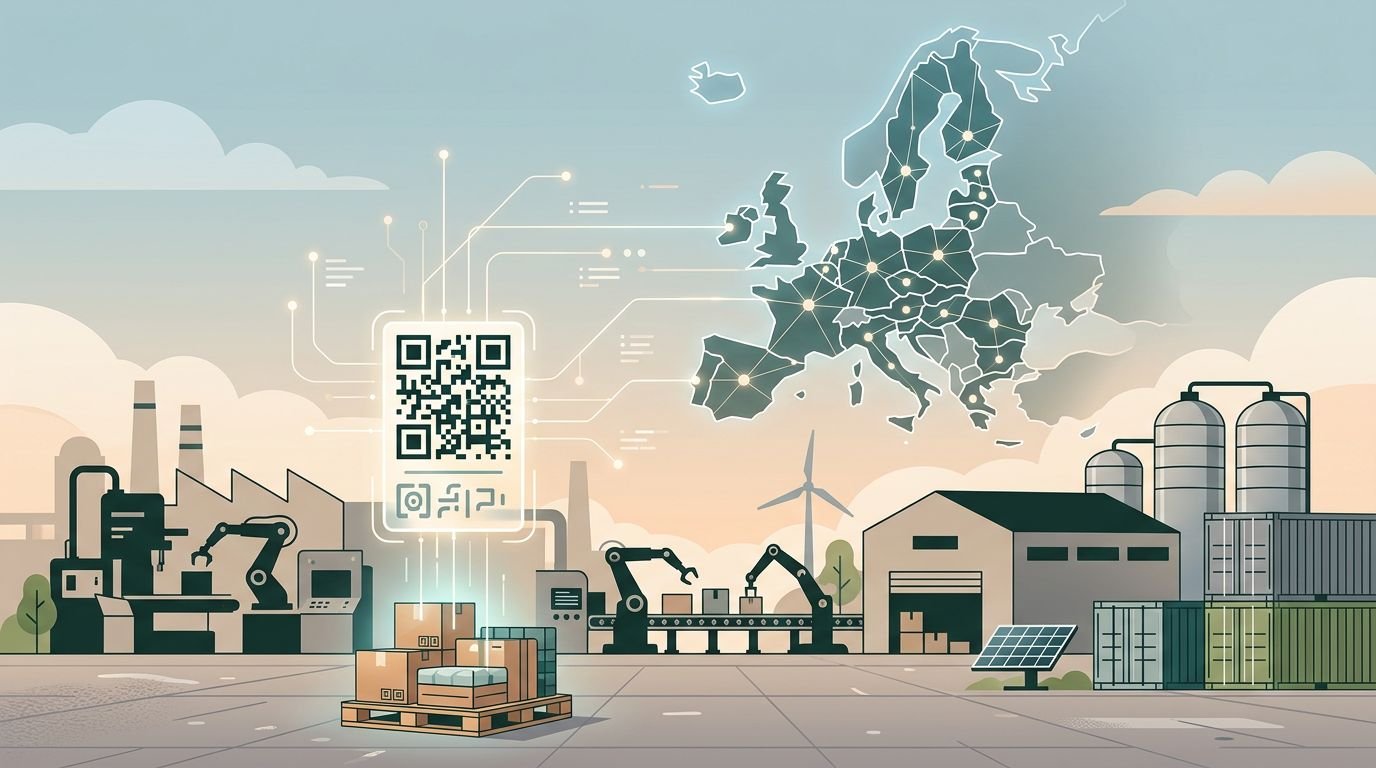
Think of digital product passports as a digital file that travels with your goods. These passports serve as a key component of the European Green Deal, aiming to foster a circular economy by ensuring transparency across the entire product lifecycle. They hold detailed information on materials, sourcing, manufacturing processes, safety certifications, repair and maintenance guidance, and end-of-life guidance.
This initiative is driven by the Ecodesign for Sustainable Products Regulation (ESPR), which is a core pillar of the EU Circular Economy Action Plan (CEAP). Under the ESPR, the EU will issue delegated acts to define specific technical requirements for different product categories. Each item will be linked to a unique product identifier accessed via a physical data carrier, such as QR codes or RFID tags.
For Indian exporters, it is vital to recognize that these rules extend far beyond goods manufactured within Europe. If your product falls into a covered category and enters the EU market, these requirements apply to you. This short explanation of how the EU passport will work in practice provides further insight into these upcoming standards.

Who should pay attention now? Start with exporters in the textile industry, as well as those managing a battery passport for energy storage solutions. Other key sectors include electronics, furniture, and construction products. If you supply parts into these chains, you are also involved. Because the goal is to promote a circular economy, these digital product passports do not distinguish whether you sell direct to a retailer, through an importer, or as an OEM supplier. If your data is missing, the compliance burden will eventually reach your doorstep.
There is another reality to consider. Your EU buyer may demand passport-ready data well before the law formally mandates it for your specific category. Large brands are working backwards from the CEAP requirements and the battery passport standards to ensure their supply chains are ready. They will likely send questionnaires down the line to ensure the textile industry and other sectors are prepared to track items effectively.
The visible part is the QR code or data carrier. The hard part is building trust in the data behind it.
The hard part is data, not the label
Many businesses hear the term digital product passports and think it is just a simple labelling project. In reality, it is a complex data governance initiative under the Ecodesign for Sustainable Products Regulation that happens to have a label attached.
A high quality digital product passport depends on clean, structured, and retrievable records. This involves gathering data on material composition, supplier declarations, test reports, and the specific carbon footprint of your goods. You also need to include repair details, recycled content claims, and clear end-of-life guidance for the consumer. A PDF buried in an inbox will not suffice.
This is where exporters often get stuck. Supplier data lives in fragmented spreadsheets, quality files sit in isolated systems, and procurement teams often lack visibility into sub-tier sources. Improving supply chain transparency is essential here, and some firms are even exploring blockchain technology to create an immutable record. When sustainability teams are asked to verify a green claim, they often lack the evidence required to avoid accusations of greenwashing. That is because the problem is systemic; most firms have the data, but it is not centralized, standardized, or assigned to a clear owner.
A quick way to spot your gaps is to map the data you need for one product line.
| Data area | Likely source inside the business | Common gap |
|---|---|---|
| Materials and components | Procurement, product design, supplier documents | Inconsistent names and versions |
| Country of origin and traceability | Suppliers, shipping records, purchase orders | Missing sub-tier visibility |
| Compliance and safety records | QA, testing labs, certification files | Documents not linked to SKU level |
| Repair, recycling, end-of-life info | Product team, after-sales, sustainability team | Information never written in a usable format |
The pattern is obvious. The issue is rarely a total lack of data. Instead, it is fragmented information. The digital product passports you create will be judged by whether your claims can be backed up with verifiable evidence. Robust traceability is the backbone of this process, as it allows you to prove your environmental impact across the entire product lifecycle.
By tracking these metrics accurately, you contribute to a genuine circular economy rather than just performing a marketing exercise. If you state recycled content, you need proof. If you report on environmental impact, it must match your product records. If you cannot substantiate a claim, do not include it. The exporters who prioritize data integrity will be the ones who thrive in a circular economy, while those who ignore the necessity of deep traceability will invite unnecessary compliance risks.
Build a readiness plan before buyers set the deadline
You do not need a giant software project to start preparing for digital product passports. You need a disciplined pilot.
Start with one product family that is exposed to EU demand or likely to be covered early under the Ecodesign for Sustainable Products Regulation. Pick a SKU group with real sales volume, not the easiest sample in the cupboard. That gives you a fair test for long-term traceability.
Then work through five steps.
- Map the minimum data set. List what you already hold, what sits with suppliers, and what does not exist yet. You must capture data regarding material composition and proof of sustainable production. Keep it practical, as you will eventually need to track the environmental impact across the entire product lifecycle.
- Assign one owner. Not a committee. One owner. Compliance, sustainability, quality, or product management can lead, but someone must be accountable for data completeness. This person ensures your digital product passports are accurate and ready for audit.
- Clean the product master. Fix naming, SKU logic, version control, and document links. Consider implementing a PIM system and aligning your data structures with GS1 standards to ensure interoperability. If the same zipper or resin appears under three names, your digital product passports become a guessing game.
- Push requirements into supplier communication. Ask for standardised declarations, not free-form replies. Add data expectations into onboarding, purchase terms, and vendor reviews. Remember that your physical data carrier, such as RFID tags or QR codes, must point directly to the unique product identifier mandated by the upcoming delegated acts.
- Test retrieval, not storage. It is not enough to collect files. Can your team pull the right evidence within minutes when a buyer asks? If you cannot verify the unique product identifier via the chosen data carrier immediately, the system is not ready to support a circular economy.
This is also the point where many exporters overbuild. They start shopping for flashy tools before cleaning the basics. Bad move. A controlled spreadsheet, a disciplined shared repository, or a well-set-up ERP process can be enough for a pilot. Software helps later. Messy ownership does not.
Keep one eye on product scope as well. Public explainers such as this guide on which products it affects and how to prepare are useful because they remind exporters that not every category is finalised yet. That uncertainty is not a reason to wait. It is a reason to start with the data foundations that will matter across categories anyway.
If you are an Indian manufacturer selling to multiple EU buyers, build once and adapt. Do not create five different evidence packs for five customers unless the product genuinely differs. Standardisation saves pain.
Questions to ask your EU buyers and suppliers now
Many exporters wait for the formal regulation text, but they often forget the market reality. Your buyers are already preparing for the circular economy, and they will likely move before the law strictly mandates it.
Ask your EU customer four blunt questions. Which product lines do they expect to become passport-relevant first? What specific fields do they require from suppliers to meet ESPR requirements? Who will host the final digital product passports? Finally, will they require a formal Declaration of Conformity to be included within the passport structure?
The answers will tell you whether you are dealing with a buyer who has a clear strategy or one who is simply passing the regulatory headache down the line.
You must also ask your suppliers blunt questions regarding supply chain transparency. Can they identify the precise material origin? Do they hold declarations at the batch, component, or company level? Can they update records when product composition changes? If your partners go quiet when you ask these questions, they will not be ready to support your long-term goals.
For cross-border responsibility, current trade guidance is essential. This overview of trade obligations for covered products explains a point many exporters miss: the manufacturer, or a named representative, must build and hold the passport data, while importers are expected to verify that a valid passport exists. To ensure compliance, you must confirm that the data carrier and the unique product identifier are correctly applied at the manufacturing stage.
This changes the internal conversation within your business. Digital product passports are not just a sustainability issue. They touch sales, sourcing, compliance, and product development. Improving traceability and monitoring the product lifecycle requires an integrated approach. Many firms are now exploring blockchain technology to secure data and improve supply chain transparency, especially when verifying metrics like the carbon footprint. If one department treats these digital product passports as someone else’s project, the documentation will be late before it even exists.
Frequently Asked Questions
Are digital product passports mandatory for all Indian exports to the EU?
Currently, requirements are being phased in by specific product category, starting with high-impact sectors like batteries, textiles, and electronics. While not every product requires a passport today, the scope is expanding rapidly under the Ecodesign for Sustainable Products Regulation. It is best to treat this as an inevitable market standard rather than a niche compliance task.
Do I need specialized blockchain software to manage my product data?
No, you do not need complex technology to begin your preparation. Most exporters can start by cleaning their existing internal data, centralizing records, and establishing clear ownership within their teams. Once your data structures are standardized and verifiable, you can evaluate whether blockchain or other specialized tools are necessary for your specific supply chain needs.
What happens if my EU buyer asks for data before my product category is regulated?
This is a common business reality where market demand often precedes formal legislative deadlines. If a major buyer requests compliance-ready data, treating it as an urgent priority will strengthen your partnership and give you a competitive advantage. Proactive readiness ensures you won’t be caught off-guard or excluded from supply chains as brands consolidate their vendors based on transparency criteria.
Can my EU importer handle the digital product passport requirements on my behalf?
While importers have a responsibility to verify that a passport exists, the manufacturer is typically responsible for generating and maintaining the underlying data. As an Indian exporter, you must ensure that your technical documentation and unique product identifiers are accurate from the point of origin. Relying on an importer to create this data for you often leads to compliance gaps and a lack of control over your own product information.
The smart move is to start before you’re forced to
Digital product passports are being introduced by product group, but the broader export lesson is already clear. Under the Circular Economy Action Plan, or CEAP, data discipline is becoming a fundamental requirement for market access.
Indian exporters do not need to panic, but they must stop treating product information as a collection of disconnected files. These requirements are a core component of the European Green Deal, designed to move industries toward a circular economy. To prepare, start with one product line, one owner, one clean data model, and supplier inquiries that prioritize evidence over promises.
As the ESPR regulation evolves, digital product passports will act as the primary mechanism for verifying sustainable production practices. By focusing on the environmental impact throughout the entire product lifecycle, businesses can substantiate their green claims with verifiable data. Whether you are contributing to active missions or building internal habits, the goal is to shift toward a circular economy that values transparency. Ultimately, mastering sustainable production and ensuring full data traceability are now essential steps for any exporter looking to secure long-term success in the European market. By proactively reducing your environmental impact now, you stay ahead of the CEAP requirements and position your brand as a leader in the global transition.