

BRSR Data Requests: A Practical Guide for Small Suppliers
 TBH Editorial
TL;DR
- If a large customer asks for ESG numbers, don’t treat it like routine admin. It is tied to their reporting, and sometimes to external assurance.
- Start with records you already have, bills, meter readings, waste slips, HR registers, safety logs, and licences.
- Put one person in charge of the response, even if they collect data from five others.
- If a figure is estimated, say so. A clean estimate is safer than a made-up “exact” number.
- Build a monthly habit now. The second request usually comes quicker than the first.
That email from a big customer is not harmless paperwork. It is often the first sign that BRSR data requests have reached your end of the supply chain.
For many MSMEs, this feels unfair. You are shipping product, chasing payments, fixing machines, and now someone wants water, waste, injury, and energy numbers by Friday. Still, this is manageable if you treat it like operations, not theatre.
The trick is simple: know why the request came, know what data you already have, and reply in a way that is honest and usable.
Why these requests are landing on your desk now
Large listed companies in India are under rising pressure to report real sustainability data, not glossy promises. Under BRSR Core, that pressure now extends into the value chain. If you supply a major buyer, you may be asked for information even if your own business is not directly regulated by SEBI.
The direction is clear. Based on the latest rollout, top 500 listed companies are in scope for FY 2025-26, and this widens to top 1,000 in FY 2026-27. For value-chain reporting, buyers focus on suppliers and distributors that make up a large share of purchases or sales, often the top 75 per cent. For the top 250, value-chain disclosures attract tighter checks. That is why procurement teams, sustainability leads, and auditors are suddenly calling.
If you want the formal background, SEBI’s guidance note on BRSR sets the base logic, and this plain-English BRSR Core summary for listed companies explains why the demand is cascading towards MSMEs.
Here’s the uncomfortable bit. You may not be legally required to file BRSR yourself, but your customer still needs your data. If you cannot respond, they may rate you as high-risk, ask for site visits, or shift future volumes elsewhere. No drama, just procurement reality.
That sounds heavy, but it also means something useful. Small suppliers who can provide basic, believable data are easier to keep in the approved vendor pool.
What buyers usually ask for, and where the numbers sit
Most BRSR-related questionnaires are not asking for grand statements. They want numbers, dates, and proof.

In practice, buyers usually ask across five areas: energy, water, waste, people, and compliance. Some will also ask whether you are an MSME, whether you have an Udyam registration, or whether you qualify as a small producer in their procurement reporting. This matters because listed companies often track how much they buy from MSMEs and local suppliers. This short guide on value-chain action items under BRSR Core is useful because it shows the sort of supplier classification and purchase mapping buyers are trying to build.
This quick table is the reality on the ground.
| Area | Common request | Where to pull it from | Useful proof |
|---|---|---|---|
| Energy | Electricity, diesel, LPG, generator fuel, renewable share | Utility bills, fuel invoices, DG logbook | Bills, invoices, meter photos |
| Water | Municipal water, borewell use, tanker use, discharge, reuse | Water bills, tanker slips, pump logbook | Bills, slips, logs, permits |
| Waste | Scrap, hazardous waste, disposal route, recycler details | Waste register, sale invoices, vendor manifests | Manifest copies, recycler certificate |
| People and safety | Headcount, women employees, training, lost-time injuries | HR register, payroll, attendance, incident log | Muster roll, payroll summary, accident register |
| Compliance and identity | Udyam status, licences, notices, local sourcing | Statutory file, purchase records, compliance register | Udyam certificate, licences, closure proof |
The main takeaway is boring, and that’s good. Most of this data already exists somewhere in your business. It is scattered, not missing.
If a number is estimated, label it as estimated and state the basis. That builds more trust than pretending it is exact.
One more thing matters here: boundaries. If you have two factories and only one supplies the buyer, say that. If the data covers April to March, do not mix it with calendar-year numbers pulled from another sheet. Half of the trouble in BRSR data requests comes from mismatched periods, sites, or units.
Build a light system before the next questionnaire arrives
Nobody wants another spreadsheet. But one decent spreadsheet beats ten frantic email chains.

Start with ownership. One person should coordinate the response. In a small unit, that could be the factory manager, finance head, EHS officer, or even the founder. The point is not job title. The point is that one person knows which version is current, which figures are pending, and which documents back them up.
Next, set up one monthly capture sheet. Keep it plain. Record energy by source, water intake, waste by type, headcount, injuries, and major compliance events. Add one column for where the number came from, bill number, register name, vendor slip, meter photo, anything traceable. That small column saves hours later.
Then build an evidence folder. One folder per financial year, one sub-folder per month, and clear file names. Buyers with assurance needs will ask for proof. The idea of collecting data in-year and keeping evidence packs is also stressed in this BRSR assurance readiness guide. You do not need fancy software on day one. You do need order.
A few habits make a big difference:
- Use the same unit every month, kWh, litres, tonnes, headcount.
- Lock the reporting period, monthly, quarterly, or annual, and stick to it.
- Save source files before anyone edits totals into a summary sheet.
- Keep one note on methodology, even if it is simple.
If you are missing emissions data, do not panic. Many suppliers begin by sharing electricity and fuel consumption first, then let the buyer convert that into emissions if their template allows it. Ask. A lot of buyers prefer usable raw data over a shaky emissions number copied from the internet.
How to respond without overpromising or freezing up
The worst reply is silence. The second worst is sending numbers you cannot explain.
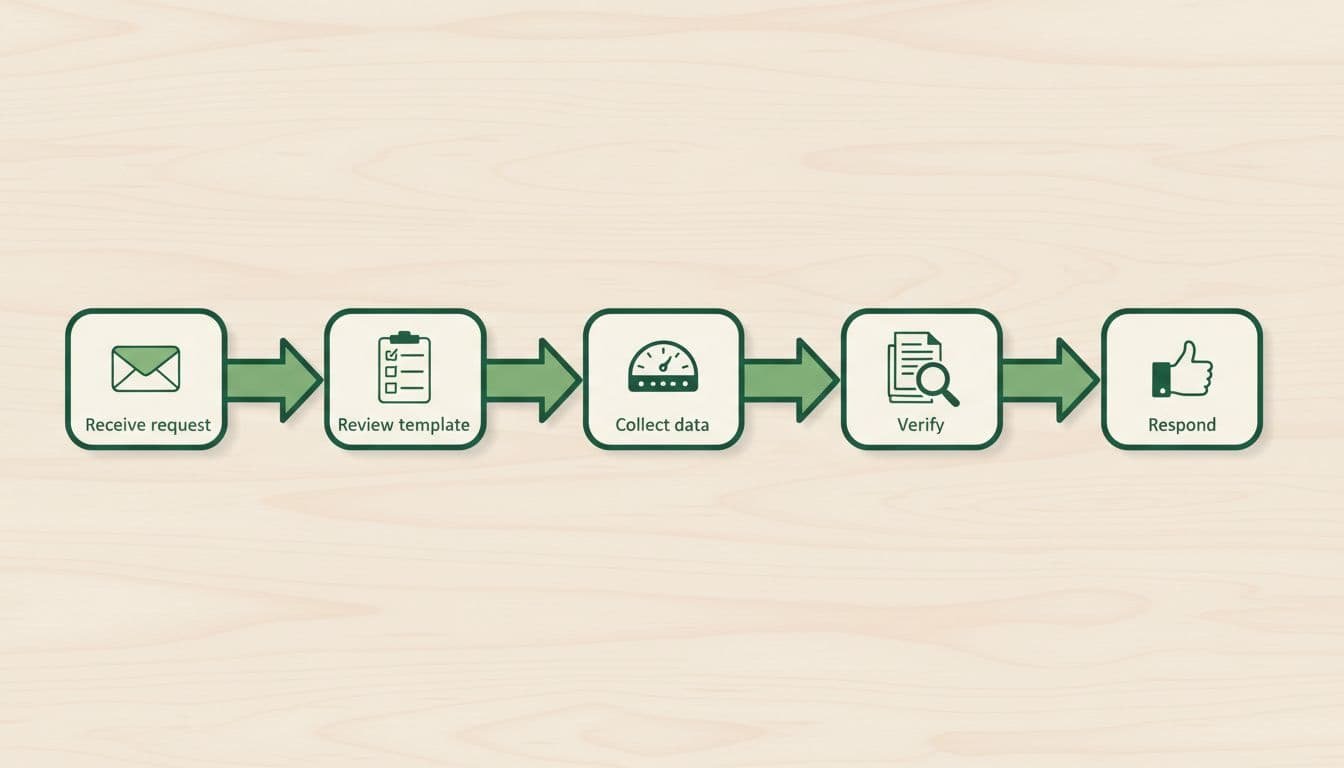
Reply quickly, even if you do not have everything. Confirm receipt. Ask the buyer which sites, which period, and which definitions apply. Terms like “renewable energy”, “hazardous waste”, “permanent employee”, or “local supplier” can vary across templates. That is not nit-picking. It is basic accuracy.
If a field is not tracked today, say “not currently tracked” and add what you can provide instead. For example, if you do not measure wastewater recycling as a percentage, you might still share monthly water purchases, borewell use, and discharge records. That gives the buyer something real to work with.
This is where small suppliers often hurt themselves. They assume the buyer wants polished answers, so they round numbers, combine sites, or fill blank cells with guesses. Bad move. Buyers are under their own pressure. What they want is data they can defend.
A simple response flow works well:
- Read the full request once before collecting anything.
- Mark each question as available, partly available, or not tracked.
- Gather source documents first, then fill the template.
- Check period, site, units, and totals before sending.
- Save the submitted version and any assumptions used.
If the deadline is unrealistic, ask for a short extension and explain what is pending. Most buyers would rather get a complete response on Monday than a broken one on Friday.
You should also expect this to become more common, not less. This overview of how BRSR Core affects supply chains makes that point clearly. Once a buyer starts collecting supplier data, they rarely stop after one cycle.
The good news is plain. After the first round, the work drops sharply if you captured the right evidence and kept your notes.
The strongest answer is a believable one
You do not need a full ESG department to handle BRSR data requests well. You need routine, one owner, one monthly log, and numbers you can trace back to real records.
Big buyers are not asking for perfection. They are asking whether your data can be trusted enough to sit inside their reporting. That is a lower bar than many suppliers fear, and a higher bar than guesswork can cross.
Good sustainability reporting should connect to action, not paperwork alone. If that matters to you as well, you can Contribute to Active Missions.