Chlorine Residual Test for Indian Apartment Drinking Water
 TBH Editorial
A clear glass of water can still hide a broken system.
Your apartment may receive municipal water, tanker water, borewell water, or a rotating mix of all three. By the time it reaches your kitchen tap, it has travelled through pumps, pipes, underground tanks, overhead tanks, valves, and somebody else’s maintenance decisions. A tap-level free-chlorine reading shows whether measurable disinfectant remains at one outlet and one time.
It isn’t proof that the water is microbiologically or chemically safe. But it can turn “the water seems fine” into a question your housing society or facility manager must answer.
Why a chlorine residual test matters at the consumer end
Chlorine is added to drinking water to kill many disease-causing organisms and leave a small protective amount, called a chlorine residual, after treatment. It acts as a germicide only with suitable concentration, pH, low turbidity, and contact time. That remaining protection matters because water can pick up contamination after leaving the plant.
India’s regulatory standards, including IS 10500, specify a minimum free residual chlorine value of 0.2 mg/L at the consumer end for chlorinated supplies. This isn’t a universal requirement for every unchlorinated borewell or tanker source. The consumer end means the tap where people fill bottles, cook rice, make tea, and prepare infant food. See the IS 10500 drinking-water standard before accepting a vague claim that a building’s water is “within range.”
A consumer kit must also identify whether it measures free chlorine or total chlorine. Those results aren’t interchangeable.
A test checks the last mile, not only the source
A clean report from a municipal treatment plant cannot prove every apartment tap is safe. Chlorine can decline through the distribution system because of heat, sediment, rust, organic matter, dirty tank walls, and long storage times.
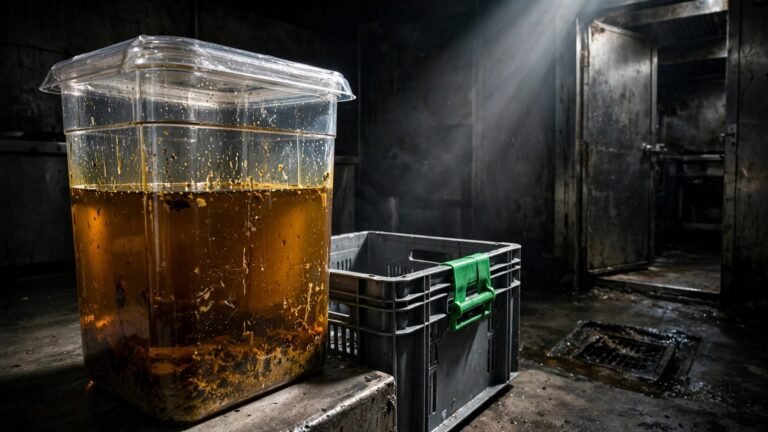
That is why consumer-end testing matters. A tank may look harmless from outside, yet dust, silt, biofilm, or a loose lid can consume the chlorine meant to protect residents.
A chlorine reading is evidence about one moment and one outlet. It is not proof that every tap, tank, or pipe in the building is safe.
Chlorine is a barrier, not a perfume
A strong chlorine smell isn’t a sign of superior water quality. It can mean the water was heavily dosed, or that chlorine is reacting with compounds already present in the supply.
The goal isn’t to make water smell like a swimming pool. The goal is a measured residual, hygienic storage, and records that hold the people managing the system accountable.
How chlorine moves through drinking-water treatment
Water treatment plants may add chlorine at more than one point during drinking water treatment. The details vary with the source water and treatment design. The basic purpose is consistent: disinfect water before distribution and retain some protection as it moves through the network.
Pre chlorination happens before later treatment stages
Pre chlorination means chlorine is added early in the treatment process, before filtration. It can help control biological growth and oxidise some substances in raw water.
But early dosing has a trade-off. Chlorine can react with natural organic material and create disinfection by-products. Good treatment isn’t about adding more chemical. It’s about managing source-water quality, filtration, dose, and time.
Post chlorination protects water after filtration
Post chlorination happens after major treatment stages, although not every plant uses both dosing points. Chlorine may be added before water enters a clear well or contact tank, where holding time allows it to work.
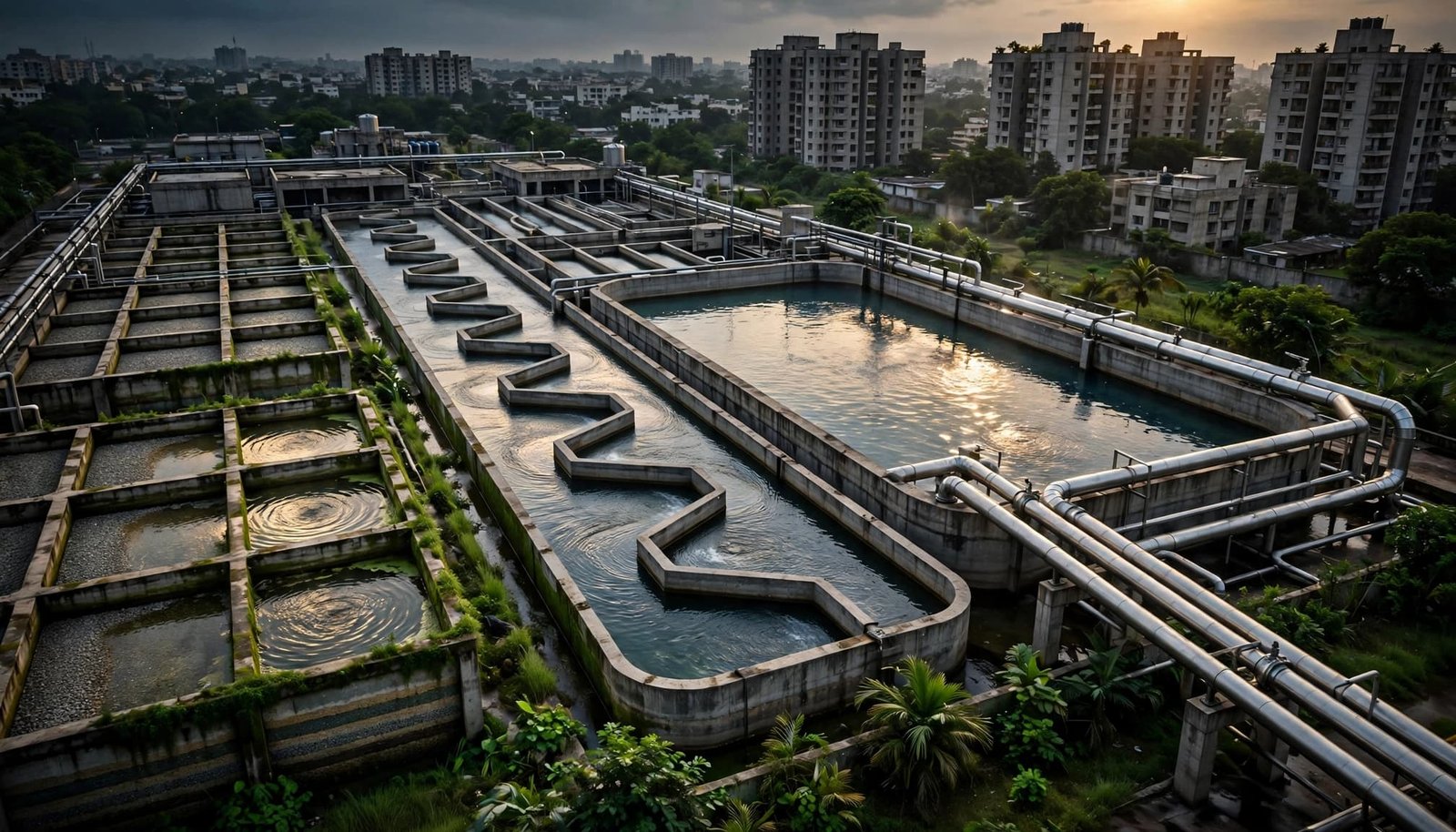
The World Health Organization links chlorine’s disinfection potential to contact time, pH, turbidity, temperature, and free chlorine concentration. A plant can dose chlorine correctly, then lose that protection in a neglected apartment storage tank or later in the distribution system.
That is the hard truth. Water safety has to survive the route between source and glass.
How to perform a chlorine residual test at home
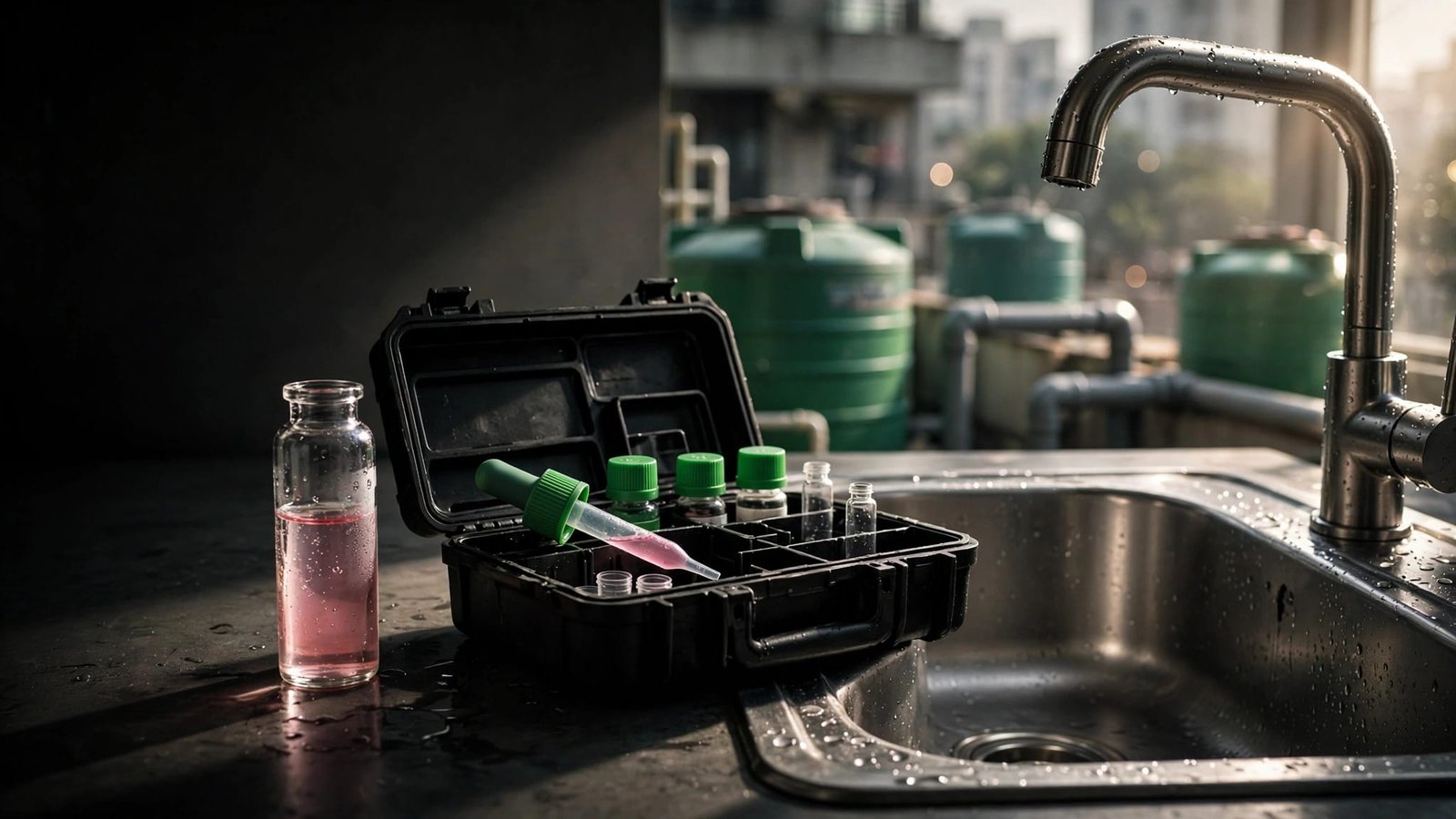
A rapid test kit can screen apartment water in minutes. Most field test kits use a reagent that changes the sample’s colour, while laboratory testing follows a defined method.
For a formal report, use a laboratory that follows the applicable method. IS 3025 Part 26 covers residual chlorine sampling and testing for water and wastewater. For routine resident checks, a rapid test kit is a practical first step.
Choose a kit that measures free residual chlorine
Check the pack before you buy it. You need a kit that measures free chlorine residual and gives readings in mg/L or ppm. In water, 1 ppm is approximately equal to 1 mg/L.
Free chlorine residual is the uncombined disinfectant available immediately. Total chlorine includes free chlorine plus combined chlorine, such as chloramines. DPD procedures differ for free and total chlorine, so check the method and reagent supplied.
A rapid test strip can provide a quick semi-quantitative screen, but it may be less precise than a properly used DPD colour comparator or photometric method. A quantitative rapid test should provide a numerical mg/L or ppm result and a stated range. Don’t treat strip, comparator, and analyzer results as interchangeable without checking the instructions.
Avoid strips or meters with no instructions, no range, no expiry date, and no explanation of what they measure. A calibrated photometer is different from a simple visual comparator, even though both are analyzers. Don’t buy an instrument intended only for process water unless the manufacturer confirms it is suitable for drinking water.
Collect a sample that answers the right question
Use the cold-water tap your household uses for drinking or cooking. Don’t sample from a bathroom tap merely because it is nearby.
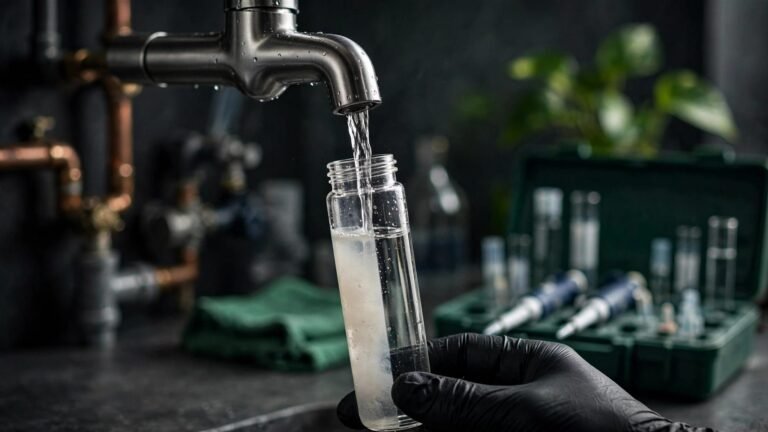
Let the tap run briefly until the water temperature stabilises. This reduces the chance that you are only measuring water that sat in the tap fitting overnight. Use the supplied clean vial, rinse it with the sample water if instructed, then collect the required volume.
For on site detection at the tap, test immediately after collection. Record the time, location, water source, and result. Strips and colour comparison can be affected by lighting, expiry dates, and user interpretation.
If your building has multiple sources, test them separately:
- Test the kitchen tap in at least two flats on different floors.
- Test water at the tank outlet if the committee can access it safely.
- Record tanker deliveries, borewell use, rain events, and tank-cleaning dates.
Add reagent and read it without delay
Follow the manufacturer’s instructions exactly. Use the specified reagents, sample volume, mixing method, and waiting time before comparing the colour.
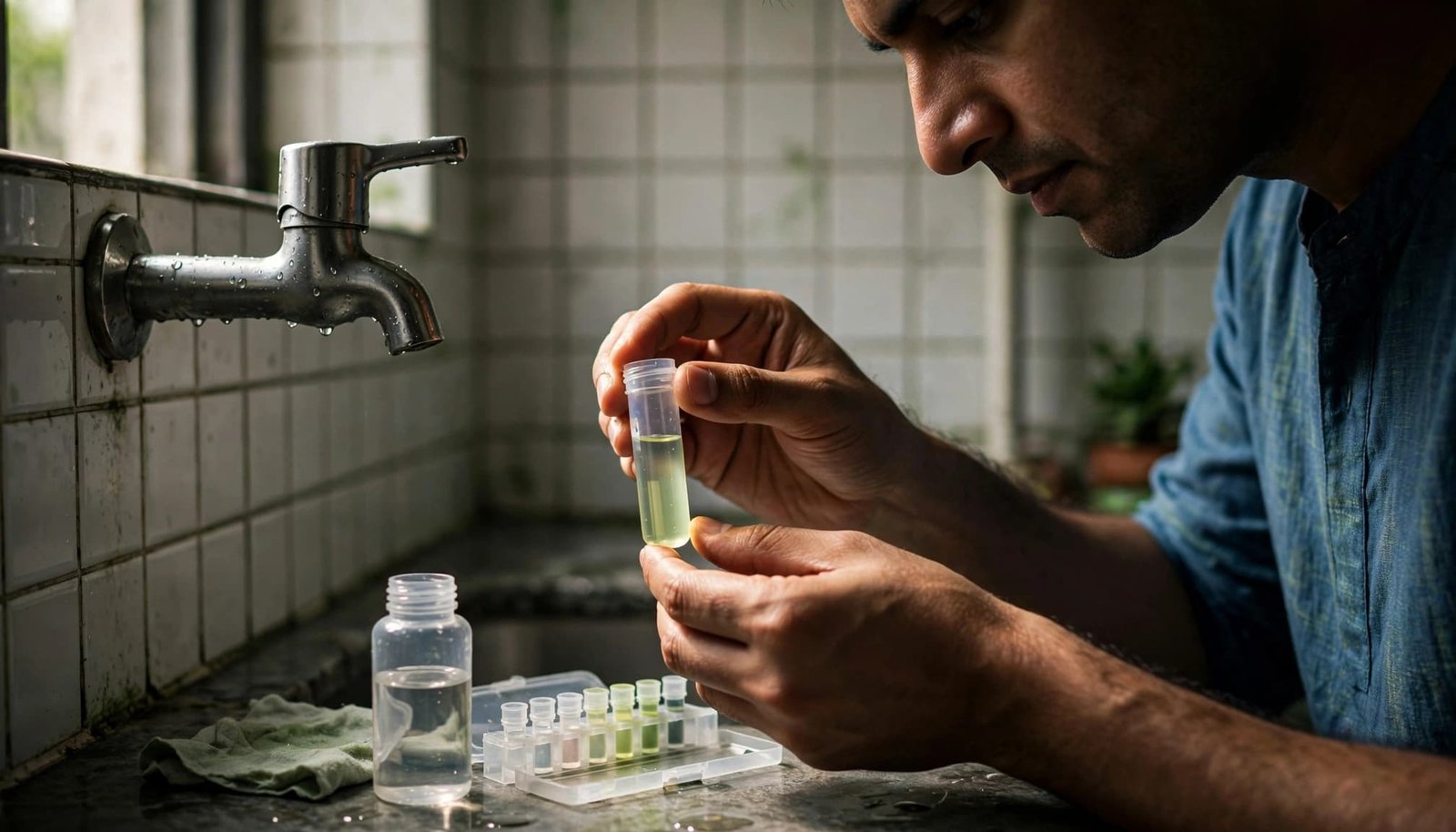
Chlorine dissipates. A sample tested half an hour after collection may not show what was present at the tap. Take a photo of the result beside your written date, time, flat number, tap location, water source, and result.
The Indian Housing Services guide to chlorine testing also points to the 0.2 mg/L consumer-end benchmark under IS 10500.
Reading your chlorine residual result without panic
One chlorine residual test should lead to a sensible next action, not an argument in the residents’ WhatsApp group.
When the reading is below 0.2 mg/L
If chlorinated water shows less than 0.2 mg/L free residual chlorine at the tap, repeat the test with a fresh kit. Test a second flat and, where safely accessible, the source point. If the result remains low, ask the managing committee for source, tank-cleaning, chlorination, and microbiological-test records.
Persistently low chlorine residual can mean chlorine was consumed before reaching your flat. It can also mean the building uses an unchlorinated source. Either way, investigate, especially after flooding, sewer overflow, tanker delivery, or reports of stomach illness.
Don’t pour bleach into an apartment tank. Product strengths differ, tank volumes vary, and guessing can make the problem worse. If needed, booster chlorination should be designed and verified by a qualified water professional.
When the reading is around the expected range
A reading at or above 0.2 mg/L at the consumer end is a useful sign for chlorinated water. However, one tap represents only one point in the building’s distribution system. It doesn’t prove that tanks, pipes, or the water are safe.
A single reading also can’t replace microbiological and chemical testing when contamination is suspected. Clean tanks, covered access points, intact pipework, and proper records still matter.
WHO guidance often uses 0.2 to 0.5 mg/L as a distribution-system range. Its process guidance says effective disinfection can require at least 0.5 mg/L after 30 minutes of contact time at pH below 8. These are treatment conditions, not a tap target for residents to chase. Check the applicable BIS guidance for the relevant water source and use.
When the result is unusually high
A harsh smell, strong taste, or unexpectedly high result needs a prompt repeat test and a documented response from the water manager. Ask whether the building recently disinfected a tank, changed suppliers, or adjusted its chlorination process.
If the result is extreme or unexplained, obtain the manager’s clearance before normal drinking use. The responsible party should retest, explain the result, and follow an approved correction process. Don’t accept “it will settle” as a plan.
What chlorine testing cannot tell you
A chlorine residual test provides only a narrow view of water quality. It measures a disinfectant residual, not every danger that may be present in drinking water.
It cannot confirm all microbes are gone
Free chlorine can control many bacteria and viruses under the right conditions. But a free-chlorine result does not prove that dose, pH, turbidity, or contact time were adequate. It also doesn’t show that every outlet in the building has the same result.
It is not enough assurance against Cryptosporidium, which is relatively resistant to chlorine compared with many bacteria and viruses. Filtration, ultraviolet treatment, or other validated barriers may matter where that risk is present.
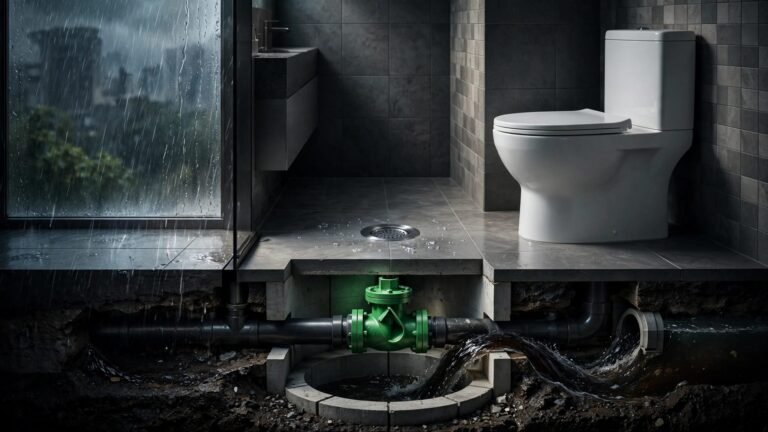
If water is muddy or sewage-smelling, follows flooding or a sewer overflow, or is linked to repeated illness reports, escalate the concern. A low or absent residual after a chlorinated supply, or a major source change, also warrants association-level investigation and microbiological testing. Boiling may reduce many infectious risks during an emergency, but it doesn’t remove metals or other chemical contaminants.
It cannot identify chemicals, metals, or by-products
A free-chlorine result cannot detect E. coli, viruses, lead, arsenic, fluoride, nitrate, pesticides, PFAS, or other contaminants. Neither can a TDS meter. These tools answer different questions.
Borewell, tanker, municipal, and other source water supplies can require different laboratory panels. If a building relies on borewell or tanker water, request a source-specific panel from a capable laboratory, preferably one accredited by NABL for the relevant scope.
Chloramines are a form of combined chlorine and need to be distinguished from free chlorine. Disinfection by products form when chlorine reacts with organic compounds in source water. A field residual result cannot identify those compounds or diagnose either problem.
Apartment water safety needs records, not reassurance
Water quality is a systemic issue in miniature. The failure may involve a tanker operator, contractor, unclean tank, weak oversight, or a committee that never asks for reports.
Build a simple water record
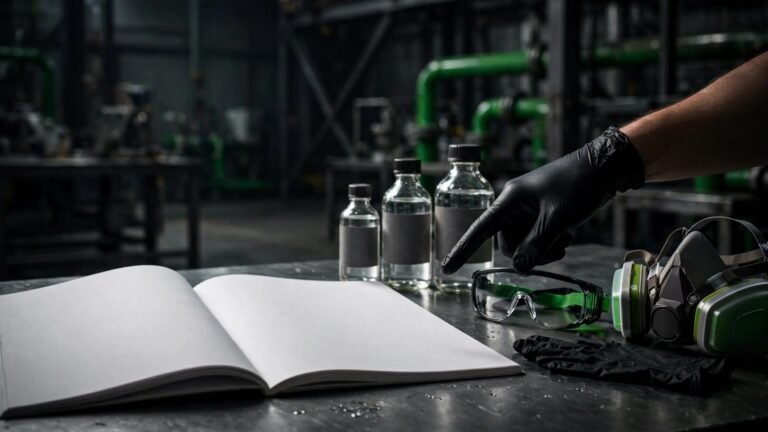
Keep source details, tanker deliveries, tank-cleaning and disinfection dates, tap-test photographs, and laboratory reports in one shared folder. Record the test kit brand, expiry date, flat and floor tested, resident complaints, pipe repairs, and corrective actions.
Test several flats on different floors when possible. Comparing results helps show whether a problem is local to one tap or affects the building-wide supply.
This is everyday mindfulness with teeth. You are not obsessing over a glass of water. You are checking whether a shared service is being maintained.
Connect household safety to public accountability
Residents should submit dated results to the association or facility manager and request a written response. If results remain concerning, arrange independent microbiological and chemical testing, especially after complaints, repairs, or suspected contamination.
If the manager does not act, contact the local water authority or public-health office. Keep copies of every report, message, invoice, and response so the escalation has a clear record.
Water management also connects household decisions with wider public accountability. For a wider look at how stormwater drains turn rivers toxic, start with the routes pollution takes after it leaves private premises. Better systems begin with evidence, follow-up, and clear responsibility.
Key Takeaways
- A tap free-chlorine check shows whether disinfectant remains at that outlet; it does not prove the water is fully safe.
- For chlorinated water, IS 10500 sets a consumer-end benchmark of at least 0.2 mg/L free residual chlorine.
- Test promptly with a kit designed for free chlorine, not total chlorine, then record the time, outlet, source, and reading.
- A low residual needs repeat testing and an investigation into tanks, pipes, source changes, and chlorination.
- Chlorine testing cannot detect E. coli, lead, arsenic, fluoride, nitrate, or other chemical hazards.
Frequently Asked Questions
How often should an apartment test chlorine residual?
Test after tank cleaning, a tanker or source change, flooding, pipe work, unusual odour, or illness reports. The association should use a risk-based testing schedule, rather than assume one universal monthly interval is required. Record results from different flats and floors to identify where residual chlorine disappears.
What’s the difference between free chlorine and total chlorine?
Free chlorine is the active disinfectant remaining in water. Total chlorine includes free chlorine and combined chlorine, such as chloramines. Use the test type specified by the laboratory or applicable WHO, BIS, or public-health guidance.
Can I test water after an RO purifier?
Yes, but test the incoming kitchen supply too. Activated carbon can remove chlorine, so a low or zero result after filtration may be expected. A post-RO result can’t assess the apartment’s incoming water supply or its protective residual.
What should I do after a low or unexpectedly high result?
Repeat the test promptly and check another outlet, preferably on a different floor. Notify the apartment association and request treatment, tank-cleaning, and testing records. If the result remains unusual, arrange appropriate laboratory testing. Don’t self-dose storage tanks based on one reading.
Does a chlorine smell mean water is unsafe?
Not automatically. Smell alone can’t show the free chlorine level, whether chloramines are present, or whether other contaminants exist. TDS and one chlorine result aren’t safety certificates. Test the water and ask for the building’s treatment and maintenance records.
The water question worth asking
This tap check won’t fix weak pipes, dirty tanks, or poor oversight. Record the result, date, water source, and outlet where you collected it.
Ask who manages that water and request the association’s response. If the pattern persists, seek independent testing. One result starts maintenance and investigation, but it doesn’t prove the whole apartment system is safe.
For a separate way to support accountability, Explore Our Active Missions and support community work linking climate literacy, cleaner habitats, and visible public accountability. This work isn’t a scientific source for your water result.