Ventilation After Pest Control in India: A Safe Home Plan
 TBH Editorial
The smell leaving a room is not a safety certificate. Ventilation after pest control is about moving contaminated indoor air out, following the product instructions, and refusing to guess when children or pets are involved.
Most people hear a simple return instruction and move on. That’s understandable. But different pest control methods don’t create the same risk.
A safer return starts with identifying the pest control treatment and assessing the infestation’s severity. You should also know whether the provider found or treated entry points.
Key Takeaways
- Re-entry time depends on the product, application area, drying time, airflow, and written instructions—not on a universal two-to-four-hour rule.
- Start ventilation only after the provider confirms it is safe, then create a path for air to move outside using opposite windows, doors, and outward-facing exhaust fans.
- Keep children, pets, fish tanks, food, and drinking water protected, and clean food-contact surfaces without automatically removing treated residual applications.
- Headache, dizziness, coughing, wheezing, vomiting, confusion, or trouble breathing can indicate exposure; leave for fresh air and seek urgent medical help when symptoms are severe.
Re-entry time begins with the treatment, not the clock
A two-to-four-hour waiting period is a prompt to check the label and written instructions, not a universal promise. The re-entry time for a pest control treatment depends on the product, application area, amount used, and airflow. Drying time and the severity of the infestation also matter.
Before the team leaves, ask for the product name, active ingredients, treatment locations, entry points, and cleaning instructions. Ask for written return instructions, too. “Chemical spray” is not enough information.
India’s Central Insecticides Board is part of the formal system for pesticide regulation. That doesn’t make a vague verbal assurance from a pest control professional acceptable in your living room.
Residual sprays, gels and spot treatments
For a residual indoor spray, stay out until the treated areas are dry and the room has been aired as instructed. The product is meant to remain on cracks, skirting boards, and pest routes after the carrier liquid evaporates.
Gel baits and crack-and-crevice applications usually create less airborne exposure than a whole-room spray. Still, keep them beyond the reach of children and pets. Don’t wipe them away because they look untidy.
Fogging and fumigation need stricter caution
Fogging releases fine droplets into room air. Fumigation can involve gases and belongs to a different safety category altogether. Neither treatment should be treated like a quick ant spray near the sink.
Don’t enter a fumigated home early to “open a few windows.” Wait for the operator’s written clearance and follow the stated ventilation period. If they won’t give one, don’t accept the job.
A room can smell normal before it is ready for re-entry. A dry floor also does not clear that treatment. The label and written instructions decide.
Create a real exit route for treated indoor air
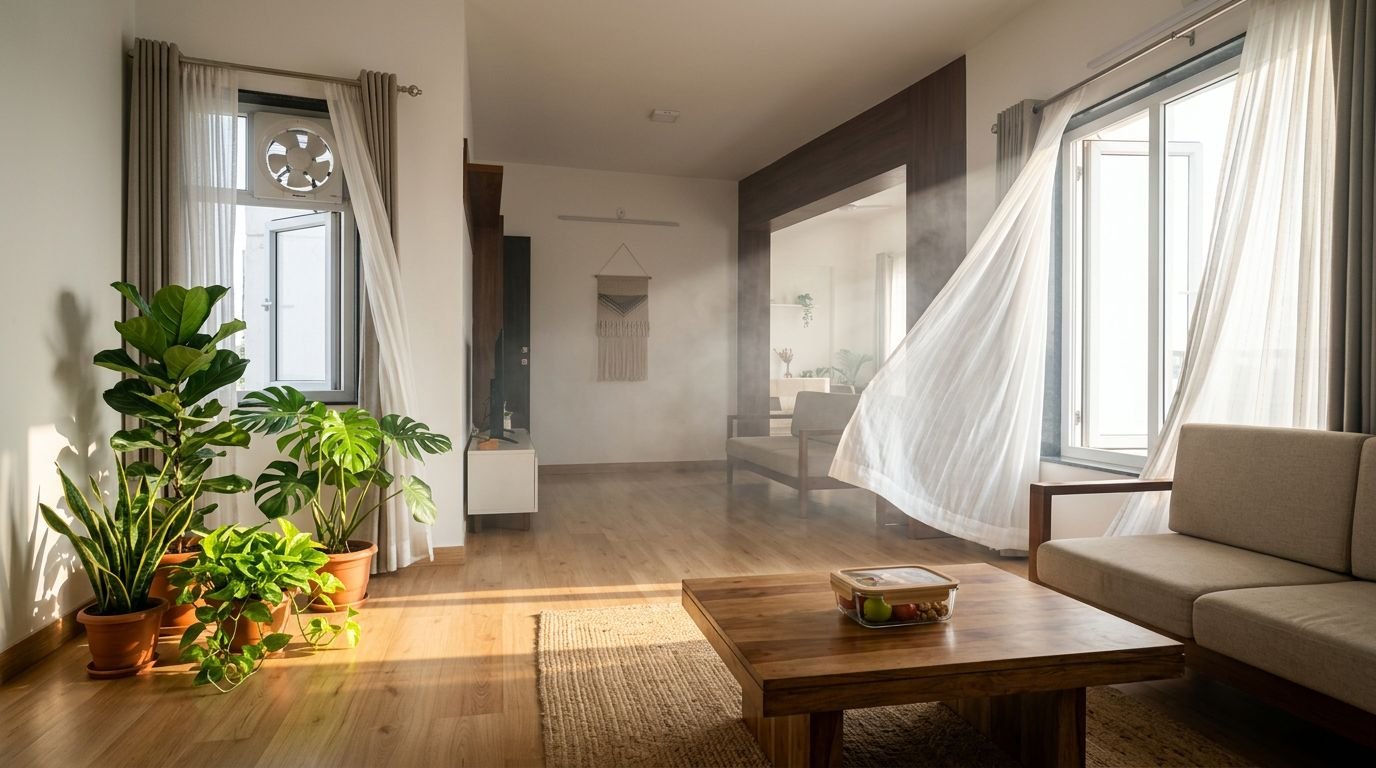
One open window helps, but it isn’t a ventilation plan. Air circulation needs a controlled path in and a path out. Otherwise, a ceiling fan may only keep moving the same air around your face.
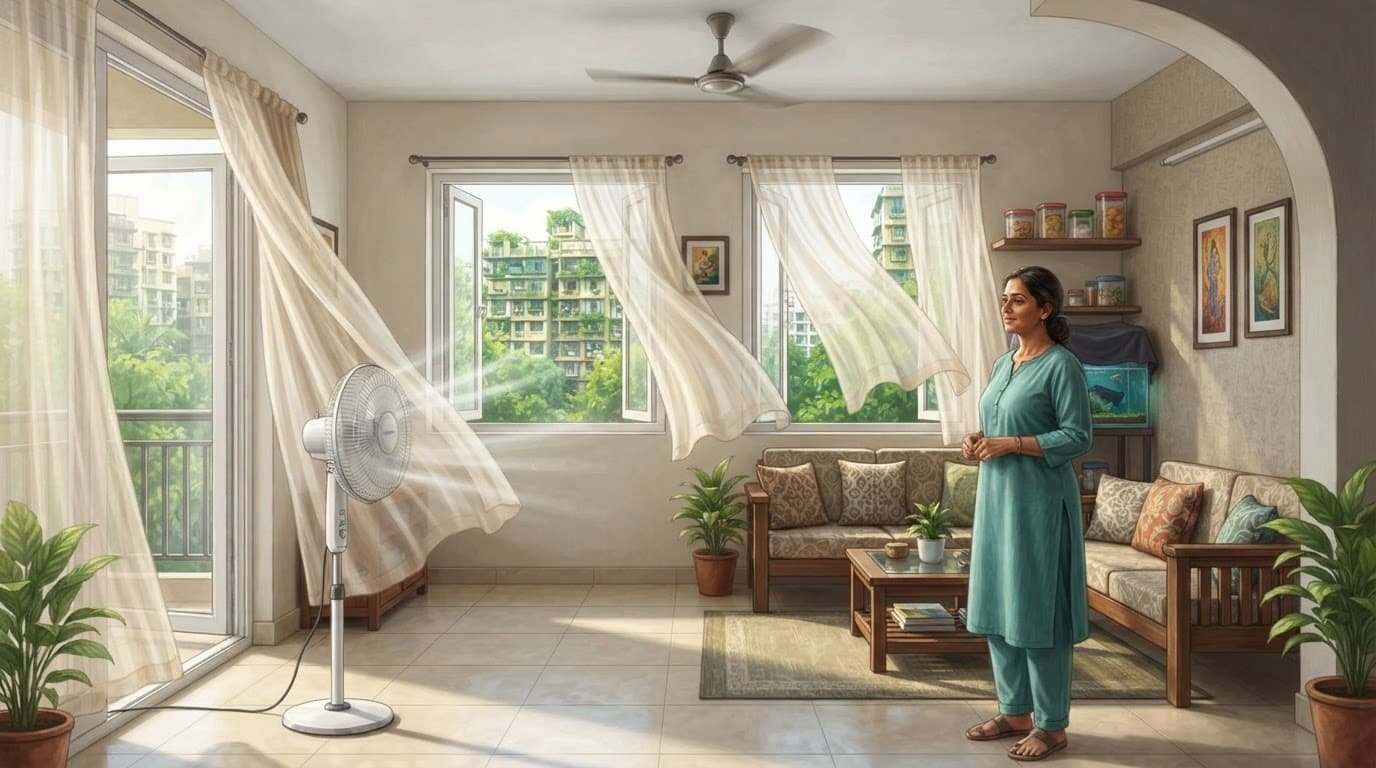
Begin only after the provider confirms that the pest control treatment is safe and ventilation can start. Open windows and doors on opposite sides of the flat where possible. In a Mumbai high-rise, that may mean a balcony door and a bedroom window. In a compact Delhi flat, it may mean opening the front door only while you supervise, paired with a rear window.
Set up cross-ventilation, not a chemical whirlpool
Place a standing fan near an open window or balcony door, facing outward. Its job is to push indoor air outside, not blow across wet applications on skirting boards.
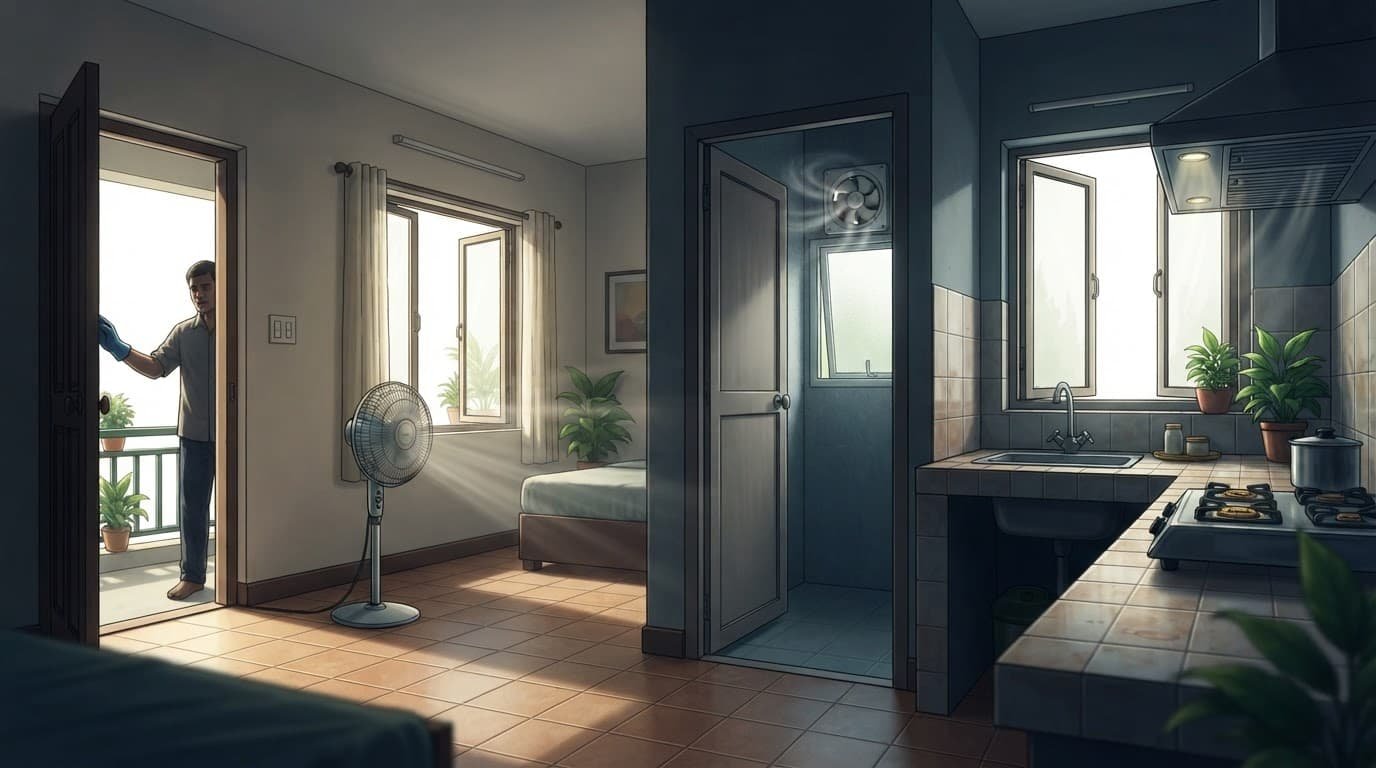
Use kitchen chimneys and bathroom exhaust fans if they vent outdoors. Keep interior doors open so air can move through the home. Then close rooms that were not treated, especially if you want to limit exposure.
If road dust, construction work, or heavy traffic pollution is raging outside, don’t throw open every window facing the source. Choose the cleanest available airflow route to protect indoor air quality, then use an exhaust route to pull treated air out.
Ventilate each room for its actual use
A room-by-room check avoids the common mistake of airing the hall while leaving the bedroom stale.
- Open bedroom windows and keep the door ajar, then check that mattresses, pillows, and toys were not directly sprayed.
- Run the kitchen exhaust, then wipe food-preparation surfaces before cooking.
- Turn on the bathroom exhaust fan, especially after cockroach or drain treatments.
- Keep doors to treated storage spaces open only when you can supervise children and pets.
The point is simple: air must leave the home, not circle inside it.
Children, pets and lungs that react faster
I wouldn’t gamble on “probably fine” after a pest control treatment when a toddler crawls on the floor or a cat licks its paws. Small children spend more time near treated edges, touch more surfaces, and put their hands in their mouths.
Follow the provider’s written re-entry conditions for the full waiting period before children or indoor pets return. Then sweep or vacuum loose debris and dead insects before they enter the treated area. As part of these safety precautions, keep them away from baseboards, bait stations, and treated cracks.
Protect food, water, pets and fish tanks
Food, utensils, toothbrushes, infant bottles, and drinking water should be removed or tightly covered before treatment. Afterward, clean food-contact counters, dining tables, and exposed utensils according to the product instructions before using them.
Fish tanks need a separate plan before anyone sprays. Pet safety includes fish tanks. Tell the pest control professional about aquariums, indoor ponds, and bird cages before treatment, preferably during booking. Don’t improvise by wrapping a tank in plastic for hours or switching off filters without specific instructions. The goal is to stop pesticide droplets from entering water while still protecting the animals’ oxygen and temperature needs.
Know when it is a health problem
Fumes and odors can be unpleasant. Headache, dizziness, nausea, eye or throat irritation, coughing, or skin burning may indicate chemical exposure. Leave the area for fresh air and seek further assessment.
Wheezing, chest tightness, repeated vomiting, confusion, fainting, seizures, or trouble breathing need urgent medical help. Call 112 or local emergency services. Take the product label, invoice, or a photo of the container with you.
Never rush into a sealed, treated room to rescue someone if you suspect heavy exposure. Emergency responders need the right protection too.
Clean food-contact surfaces, not the treatment away
Cleaning treated surfaces after a pest control treatment is a balancing act. You need clean counters and safe eating areas without removing the intended residual application too soon.
Wipe food-contact surfaces, dining tables, and sink edges according to the label. Wash exposed utensils and children’s toys. Use clean water and ordinary household methods, rather than deep cleaning the whole home, unless the label says otherwise.
Leave treated edges alone for now
Don’t mop treated skirting boards, wall cracks, behind appliances, or known insect routes automatically. Leave them undisturbed until the product label or technician gives different directions. The remaining product may contain intentional residual chemicals, but that doesn’t mean every residue is harmless.
India’s pesticide regulation framework makes one point clear: product approval and intended use matter. “Natural,” “herbal,” or “odourless” are not safety instructions.
More pest activity doesn’t always mean failure
You may see more cockroaches, ants, or silverfish after treatment because they are leaving disturbed hiding places. Don’t panic-spray over the professional application. That can add exposure and interfere with the treatment.
If pest activity continues, note where you see it and ask the provider whether a continuing infestation needs inspection. A responsible provider should explain what remains normal, set a follow-up timeline, and inspect or seal entry points instead of recommending panic-spraying.
Fans, ACs and purifiers: what they can and can’t do
A ceiling fan cools skin. It doesn’t remove pesticides, dust, or vapours from a sealed room. Most split air-conditioners work the same way. They mainly recirculate indoor air.
Keep AC off during the treatment if the provider instructs it. Afterward, ventilate with outside airflow first. Once the room is cleared and dry, clean or replace filters if there is visible dust or if the service team advised it.
Use exhaust fans before comfort settings
A bathroom exhaust, kitchen chimney, or outward-facing portable fan can help move treated indoor air outside. Use it after the room is cleared and the treatment is dry.
A ceiling fan can run later for comfort, once windows are open. Don’t point any fan directly at wet spray, bait placements, or powder products. You don’t want to spread residue onto fabrics, food surfaces, or pet bedding.
Air purifiers are support, not clearance
A purifier’s effect on air quality depends on its filter, room size, and the pollutant. It doesn’t replace written clearance, open-air ventilation, or the required return conditions.
Activated carbon filters can also become saturated. Don’t use a purifier as permission to return early or sleep in a room that hasn’t been cleared.
The pest-control choice that reaches beyond your flat
Pest control services aren’t only a private household task. Repeated blanket chemical treatments around gardens, drains, balconies, schools, and housing societies can affect pollinators, birds, soil life, and the insects other species eat.
Systemic change starts with integrated pest management. It combines inspection, exclusion, sanitation, monitoring, and targeted products instead of routine spraying. Contracts should reward prevention and responsible waste handling, not monthly applications that ignore dampness, broken drains, food waste, and entry gaps.
Ask for prevention before repeat spraying
Sustainable business models in pest control should charge for solving causes, not selling endless chemical rounds. Ask your provider to inspect leaks, drains, food waste, storage, cracks, and entry points. This can address a recurring infestation before another pest control treatment.
Plant-based living and everyday mindfulness are good personal habits, but they don’t make unsafe pesticide use harmless. A circular economy also doesn’t mean reusing an old pesticide bottle for storage. Follow disposal directions and keep chemicals in their original containers.
Climate literacy helps us see the wider pattern. Every pest is not the same, and every insect is not an enemy. Careless use of insecticides can affect ecosystems beyond the kitchen wall.
For a closer look at the local habitats that chemical-heavy habits can damage, read about protecting India’s urban wildflowers. A society that wants urban biodiversity should demand targeted, accountable treatment in shared spaces.
An analysis of pesticide protection gaps in India makes the harder truth plain: safety cannot rest on trust alone. It needs records, disclosure, and someone responsible when things go wrong.
If you want local action that connects community health, climate literacy, and living ecosystems, Explore Our Active Missions.
Frequently Asked Questions
How long should I wait before returning after pest control?
There is no universal waiting period. Follow the product label and the provider’s written re-entry instructions, taking the treatment type, treated area, drying time, and ventilation requirements into account.
How should I ventilate a home after pest control?
Begin only after the provider confirms that ventilation can start and the treatment is dry. Open windows or doors on opposite sides where possible, and use an exhaust fan or portable fan facing outward to move indoor air outside.
Can I use an air conditioner or air purifier instead of opening windows?
Usually, no. Split air-conditioners mainly recirculate indoor air, while purifiers support air quality but do not replace written clearance or required outside-air ventilation.
What should I do if someone feels unwell after treatment?
Move the person to fresh air and seek medical assessment for headache, dizziness, nausea, irritation, coughing, or skin burning. Wheezing, chest tightness, repeated vomiting, confusion, fainting, seizures, or trouble breathing require urgent help; call 112 or local emergency services.
A safer home is a documented home
Opening windows is only one part of a safe return. Good ventilation after pest control moves indoor air out, protects children and pets, and leaves targeted residue where it belongs.
Before the next pest control treatment, ask a pest control professional for the product name, written return instructions, ventilation directions, cleaning boundaries, and a record of entry points. Your home deserves more than a smell, a shrug, and a guess.