Why RO Purifiers Waste So Much Water
 TBH Editorial
The cleanest glass in your kitchen may be tied to the most wasteful pipe in your home. In many Indian houses, your reverse osmosis system turns every litre of drinking water into two or three litres of loss.
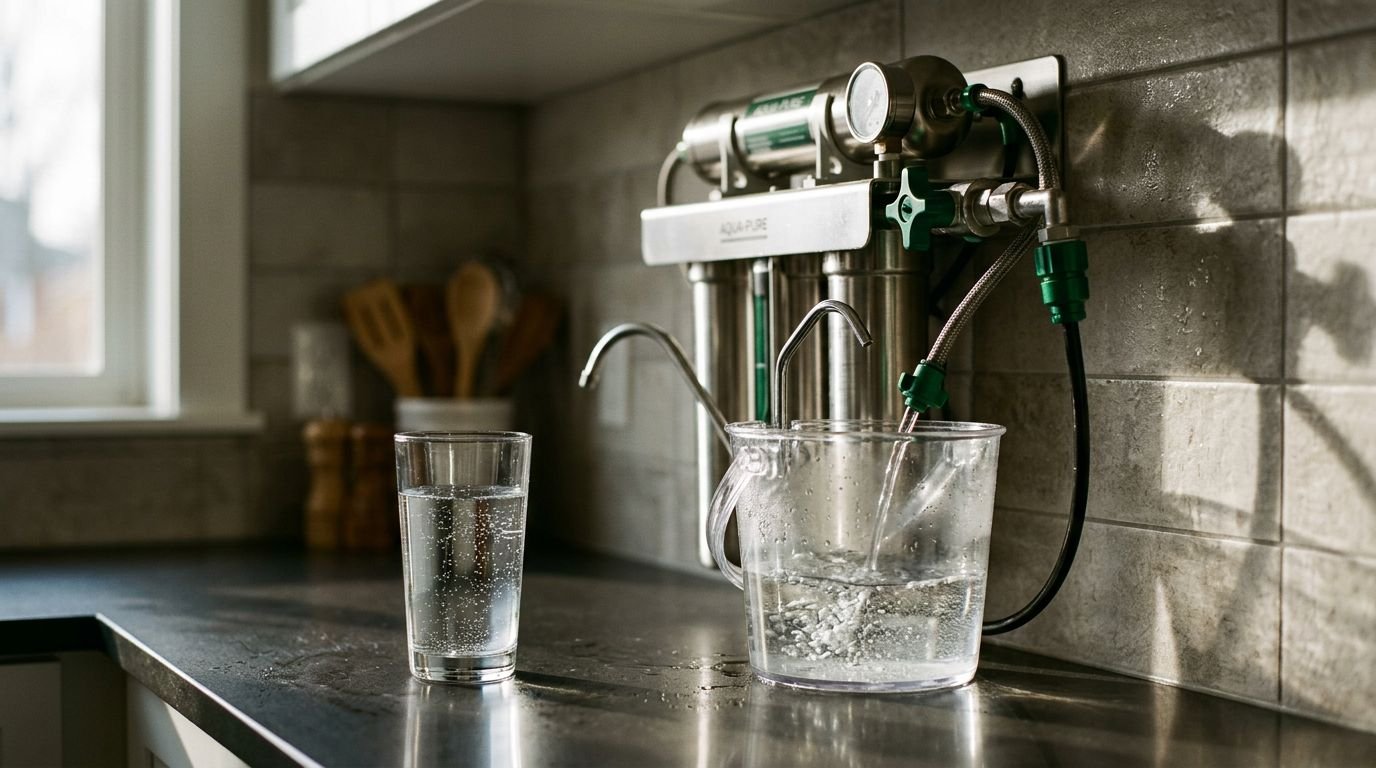
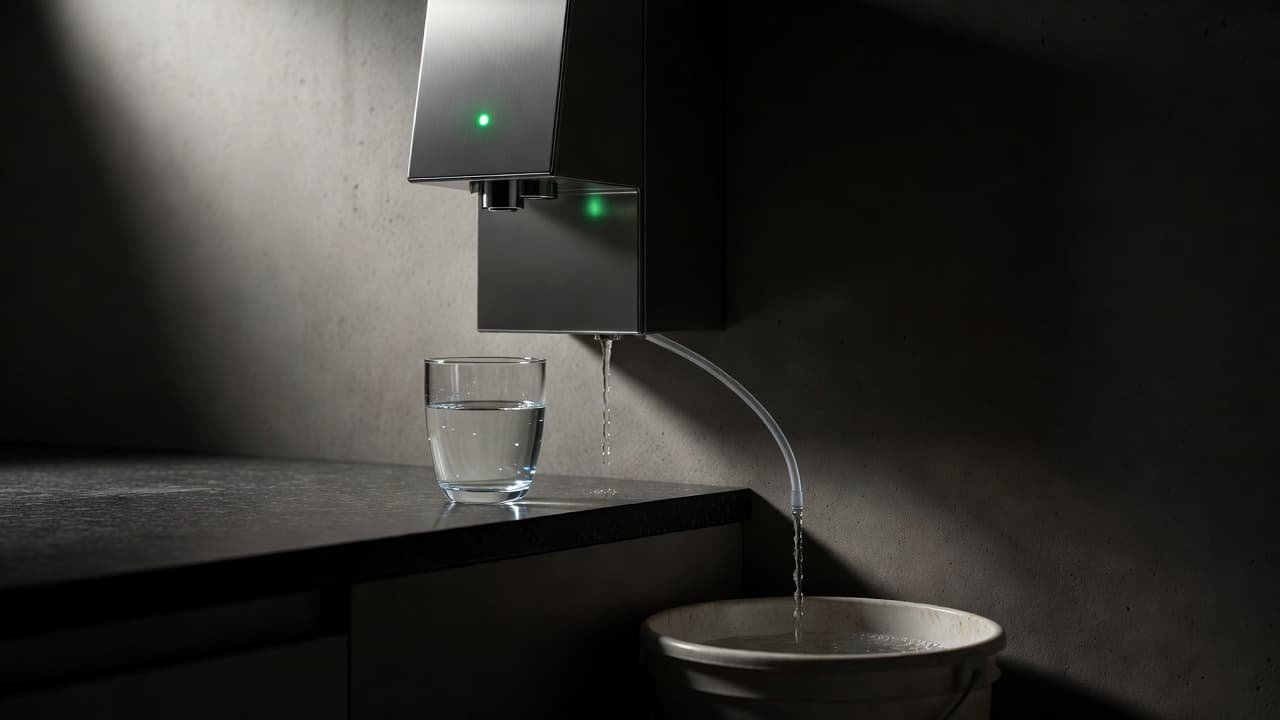
We have normalized a strange trade. We praise the shiny purifier on the wall, then ignore the bucket filling under the drain tube, or worse, the silent line carrying reject water straight into the sewer.
Once you see the math, RO water wastage stops looking like a small appliance quirk and starts looking like a system failure hiding in plain sight.
Key Takeaways
- Most home reverse osmosis system units in India produce a wastewater ratio where they throw away about 3 litres for every 1 litre of purified water.
- The biggest driver of waste is not the machine alone; it is using high-level filtration where it is not needed.
- If your water is below 500 mg/L TDS, simpler filtration may be enough, provided you are not concerned about specific chemical contaminants.
- The cost goes beyond your water bill; it includes groundwater pressure, energy use, plastic waste, and the ecological impact of managing large volumes of reject water.
- Systemic change matters more than individual guilt; better testing, informed purchasing, and better building-level water decisions cut more waste than afterthought hacks.
RO water wastage is built into the process
Reverse osmosis is technically impressive, but using a reverse osmosis system always involves a trade-off. It forces water through a semi-permeable membrane under high pressure to isolate purified water from dissolved salts, heavy metals, and contaminants. This semi-permeable membrane acts as the core barrier, which is exactly why the machine generates waste.
The system cannot indefinitely concentrate the impurities it captures, so it requires a continuous flush to keep the filtration process running smoothly. That flushing action results in a reject stream. In plain terms, this filtration process cleans one portion of the water by sacrificing another.
Most domestic units recover only a small fraction of the incoming water. Standard industry data, including literature from purifier brands, confirms an average 3:1 wastewater ratio in conventional setups. This means that for every liter of clean water you drink, roughly three liters are discharged as waste.
Some newer models claim 1:1 performance, but it is important to read the fine print. Actual recovery depends on several factors, including your input TDS levels, the consistency of your water pressure, the age of the membrane, and overall unit maintenance. A brochure figure is not a guaranteed promise for your kitchen.
A TDS controller does not magically erase this issue either. While it may adjust the taste by blending purified water with filtered water, it does not transform the system into a zero-loss device. The unit continues to produce reject water throughout its operation.
Think of an RO unit like washing rice through a fine sieve while letting most of the rinse water run off. You keep the portion you wanted, but the method is never frugal.
That does not make the technology useless, but it does make it conditional. For high TDS borewell water or specific chemical contamination, the trade may be justified. For many urban homes with access to safer municipal supplies, it simply is not necessary.
Why RO became the default in Indian homes
Fear sells better than testing. That is the short version.
In India, distrust of tap water is often rational. Some homes depend on borewells, while others switch between municipal water, tankers, and storage tanks. Old pipes, seasonal changes that introduce various contaminants, and patchy public confidence push families toward the most aggressive-looking purifier available.
RO became the premium answer. It sounds safer, more advanced, and more complete. Brands such as KENT, Eureka Forbes, and Pureit built a category where more purification often gets treated as automatically better purification. Many families default to standard under-sink RO units, assuming these devices are the only way to ensure safety.
But drinking water is not a vanity contest. The Bureau of Indian Standards treats 500 mg/L Total Dissolved Solids as an acceptable upper limit for drinking water. If your supply is below that, and the real concern is microbes rather than dissolved salts, sediment filtration, activated carbon, and UV may be enough.
This matters because the National Green Tribunal and CPCB pushed against the use of a reverse osmosis system for water below 500 mg/L, largely because of waste and groundwater stress. The policy was later stayed by the Supreme Court, and the market carried on. The result is familiar: the caution slowed, but the sales pitch did not.
If you haven’t tested your water, buying RO first is like wearing spectacles before an eye exam.
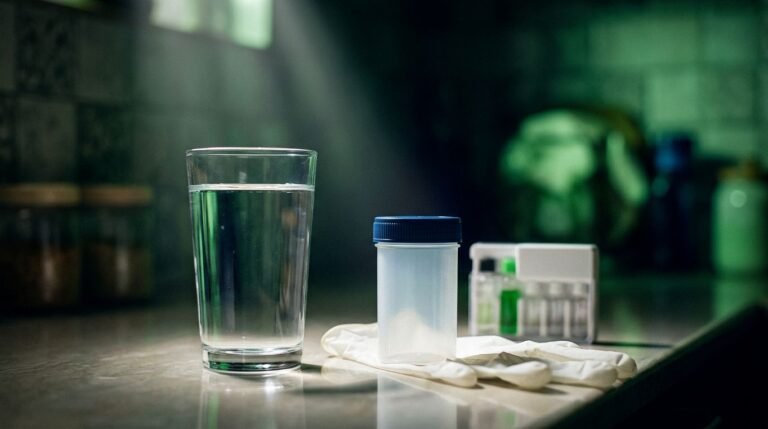
A simple meter often costs less than Rs 300. It will not tell you everything, but it provides more clarity than guesswork. If you are concerned about chemical hazards, heavy metals, or emerging pollutants like PFAS, a full lab test is the better path to identify specific contaminants.
This quick table keeps the decision grounded:
| Water situation | Likely need | Does RO make sense? | Better first move |
|---|---|---|---|
| Regular municipal supply, TDS under 500 mg/L | Microbial or taste issues | Usually no | Test water, consider sediment + carbon + UV |
| Borewell or tanker water, TDS above 500 mg/L | Dissolved solids and hardness | Often yes | Test TDS and contaminants before buying |
| Apartment with mixed sources through the year | Unclear without data | Maybe | Ask the society for source-wise testing |
| Salty water or scaling on kettles and taps | High mineral load likely | Often yes | Confirm with TDS meter and water report |
The most expensive mistake is not buying a cheap purifier. It is buying a stronger than needed purifier and running it for years.
The drain line hides bigger ecological costs
A reject pipe makes the damage look small because it localizes it. One tube. One bucket. One kitchen corner. The real cost is larger.
Take a modest household that uses 10 litres of purified water a day for drinking and cooking. At a 3:1 wastewater ratio, that can mean 30 litres lost daily. In a 100-flat apartment building, that becomes roughly 3,000 litres a day. Over a month, you are looking at nearly 90,000 litres, which is equivalent to roughly 23,775 gallons of water being sent down the drain. Across a city of millions, these figures represent millions of gallons of water disappearing from the municipal supply every single day. On a national scale, one estimate points to 920 million litres wasted daily, totaling over 243 million gallons of water that could have been preserved.
This waste also isn’t neutral. Brine water, often called reject water, usually has a higher concentration of dissolved solids than what entered the machine. While many homeowners suggest reusing RO wastewater for tasks like flushing toilets, mopping floors, or washing vehicles, it is important to be cautious.
If you are drawn to plant-based living, do not assume this brine water is ideal for watering plants. Used repeatedly and undiluted, high-TDS water can stress pots, salt the soil, and lower fertility over time. A little reuse can help, but blind reuse can shift the harm.
That is where the conversation needs more honesty. We love household hacks because they feel responsible. Yet, a few buckets saved for mopping do not erase the upstream extraction or the downstream load.
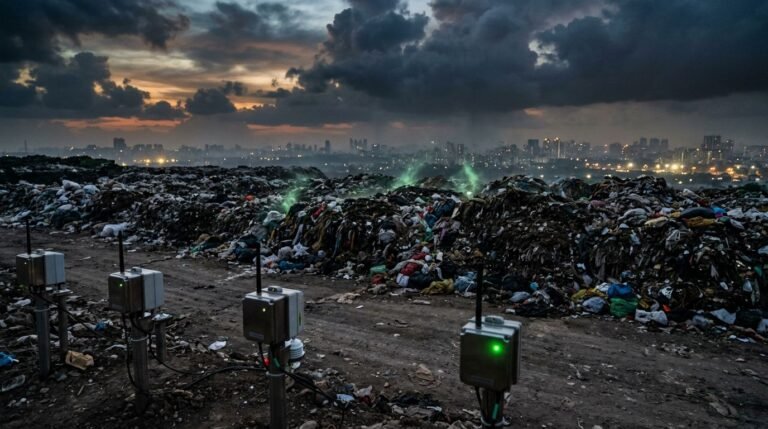
The ecological impact spreads outward. More wasted water means more demand on groundwater, more tanker dependence in some neighborhoods, and more wastewater moving into already stressed drains and treatment systems. In dense cities, that pressure is never shared equally.
And yes, this reaches beyond humans. When water stress worsens, shared gardens, tree pits, and small habitat patches get squeezed first. That is bad for urban biodiversity, the same way dirty runoff and weak maintenance can slowly wear down a city’s living edges without dramatic headlines.
The purifier market rewards the wrong choice
The Indian purifier market has a design problem and an incentives problem.
A company earns more by selling you a complex reverse osmosis system than by telling you not to buy one. These machines often bring higher upfront margins, service contracts, membrane replacements, and add-on stages with names that sound reassuring.
That is why “advanced” has become a substitute for “appropriate.” It is the same logic we see in many environmental fixes. We chase the visible device at the endpoint instead of fixing the source problem. Using an oversized purifier when your water source is reasonable is not wisdom; it is misapplied engineering.
A more honest market would begin with testing. It would ask where your water comes from this month, not what box looks good in the kitchen. It would also be transparent about recovery rates under real conditions. We need to prioritize water efficiency in our home appliances to avoid the environmental impact associated with the industrial bottled water industry. If we adopted a standard similar to a WaterSense label, consumers would have a clearer benchmark for transparency and performance.
This is where sustainable business models need to grow up. If a brand wants climate credibility, it should not profit from selling aggressive filtration into low-TDS homes, then market the waste as a lifestyle footnote. Improving water efficiency should be a primary product goal rather than an afterthought.
A real circular economy approach would go further. It would reduce needless RO adoption, make membranes and filters easier to replace responsibly, offer take-back programs for spent cartridges, and design machines for repair instead of silent disposal. Much like the shift away from single-use bottled water, we must shift our perspective on how we treat our tap supply.
We should also talk about mineral add-back claims with a steady head. Some brands reintroduce calcium, magnesium, copper, or zinc after treatment. Fine. But remineralizing water after over-purifying it is still a strange loop if the water never needed such intense treatment in the first place.
The best purifier is not the most aggressive one. It is the one that matches the water you actually have.
How to cut waste without risking water safety
This is the practical part, and it matters. No one should feel pushed into unsafe water just to save water. The point is fit, not austerity.
Here is the cleanest way to think about it:
- Test before you buy. Use a TDS meter as a first filter for decision-making. Beyond just TDS, test for specific contaminants like nitrates or heavy metals if your source changes, smells odd, leaves heavy scale, or comes from a borewell or tanker.
- Match the purifier to the problem. Low-TDS municipal water with microbial concern may only need sediment, carbon, or UV filtration. High-TDS water may justify RO. Unknown water should trigger testing, not panic buying. When choosing hardware, consider your space. Whether you opt for compact under-sink RO units, a sleek countertop RO system, or modern tankless RO systems, ensure the unit is rated for your specific water quality.
- Ask the seller harder questions. What is the recovery ratio at your home’s TDS level? What happens when pressure drops? How much reject water does the machine produce in a day, not just in a lab chart? If you are using a point-of-use RO, consider adding a permeate pump to improve recovery efficiency.
- Reuse reject water carefully. Reusing RO wastewater is a practical way to minimize the environmental footprint. Store it for floor cleaning, toilet flushing, or outdoor rinsing. If you use it for watering plants, dilute it significantly and monitor the soil health for salt buildup.
- Re-check old assumptions. A family that once needed RO for borewell water may no longer need it after moving, or after a housing society upgrades its central water treatment.
This is where everyday mindfulness beats green theatre. Notice the source. Notice the drain tube. Notice whether the machine in your home is solving a real problem or simply performing one.
Regular maintenance is also critical. Neglecting your system can drastically reduce membrane life and force the machine to work harder, which pushes waste levels even higher. If you already own an RO unit, servicing it properly and keeping filters clean may improve recovery, even if it cannot change the fundamental design of the system.
One more thing: stop treating water advice as a prestige competition. There is no medal for buying the biggest purifier. There is only one question: did you buy the right one for your specific needs?
What real water accountability looks like
Personal choices matter, but private gadgets cannot carry a public water system on their back.
If a whole apartment complex depends on uncertain supply, the answer should not be 200 separate machines guessing their way through the same problem. Building-level testing, better source disclosure, consistent water pressure, and point-of-entry treatment where suitable can ensure that every tap provides safe purified water while cutting far more waste. Separate plumbing for graywater reuse is another critical step in this process.
Systemic change is the missing piece. A flashy water-saving model in one kitchen cannot fix a building that sends poorly characterized water to every floor. The same logic holds citywide. If public supply improves, trust rises, and unnecessary RO demand falls.
This is also a climate literacy issue. Water scarcity is not only about drought. It is also about bad matching between technology and need, weak regulation, and invisible waste normalized as convenience.
Housing societies could post quarterly water-quality reports. Retailers could be required to ask for source type and recent TDS before selling RO. Builders could route reject water into flushing systems where safe. Brands could publish real recovery data on the box.
That is what accountability looks like. Not guilt. Not slogans. Not one smart appliance pretending to solve what poor governance created.
If you care about the link between home choices, water justice, and living cities, Explore Our Active Missions. The same public imagination that protects classrooms, mangroves, and habitats can protect water too.
Frequently Asked Questions
Is it safe to drink water without an RO purifier?
Yes, it is perfectly safe if your water source is reliable and the TDS level is below 500 mg/L. If you are concerned about microbes, technologies like UV or ultrafiltration are often sufficient to ensure safety without the heavy water wastage associated with reverse osmosis.
Can I reuse the reject water from my RO unit for everything?
While you can use it for tasks like mopping floors, washing vehicles, or flushing toilets, it is not suitable for everything. You should avoid using it for cooking or drinking, and you should be cautious about watering plants as the high concentration of dissolved salts can stress the soil over time.
Does a higher price tag mean less water wastage?
Not necessarily. Many expensive models are priced for their aesthetic features, smart displays, or advanced remineralization stages rather than their water recovery efficiency. You should always look for the specific recovery percentage stated in the technical manual rather than assuming a premium brand is more water-efficient.
How often should I test my water to see if I still need an RO system?
It is a good idea to test your water quality at least twice a year, especially after major seasonal changes or if your municipality performs maintenance on local pipelines. If your TDS levels remain consistently low, you may find that you can switch to a more efficient filtration system, significantly reducing your household water waste.
Conclusion
Pure water is not the problem. Unthinking purification is.
When RO is used where it truly belongs, its impact can be a hard but rational trade. When it is pushed into homes that do not need it, the machine becomes a quiet drain on water, money, and trust. Addressing the issue of RO water wastage is essential for any household looking to become more sustainable.
The smartest next step is small. Test your water before your next purifier decision. That one move can save far more than a clever ad, and it puts accountability back where it belongs.