
Why Landfill Fires in Indian Cities Keep Coming Back
 TBH Editorial
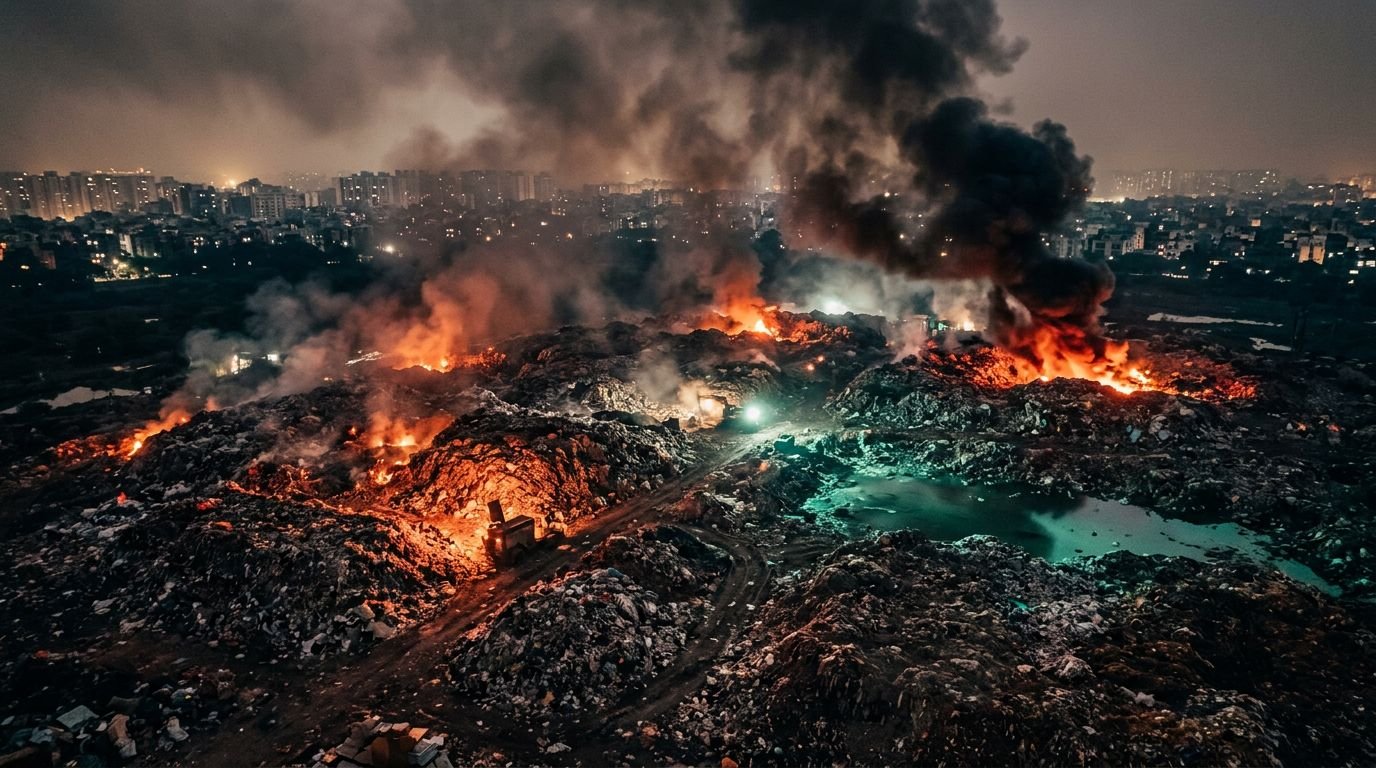
Smoke rising from a city dump should not feel routine, yet in many Indian cities it does. Each new blaze gets framed as a seasonal summer flare-up, even though the pattern is older, deeper, and built into the very foundation of how urban waste is handled.
The hard truth is simple: landfill fires in India keep returning because the conditions that cause them never truly disappear. Mixed waste, trapped methane, a massive garbage mountain, and weak prevention efforts create a cycle that cities still have not broken. From the persistent haze in Delhi to the toxic air pollution choking urban neighborhoods, the impact is undeniable. To understand the smoke, you have to look past the flames and address the systemic failures that keep these fires burning year after year.
Key Takeaways
- Systemic Failure: Landfill fires in India are not just seasonal accidents; they are the direct result of a waste management system that continuously sends mixed, combustible, and methane-rich waste to overloaded legacy dumpsites.
- The Chemistry of the Heap: These dumps are active chemical environments where rotting organic waste generates methane while plastic and rubber act as fuel, creating persistent underground hot spots that are difficult to extinguish using surface-level firefighting methods.
- Economic Disincentives: The current system often finds it cheaper and more politically expedient to dump mixed waste rather than investing in rigorous segregation, organic processing, and proper site remediation, effectively pricing environmental disaster as a standard cost of doing business.
- Broad Social Impacts: The pollution from these fires extends far beyond the dump perimeter, disproportionately affecting the health and daily lives of vulnerable, low-income communities while damaging local ecosystems and contributing to global climate change.
These fires are built into the dump itself
A giant dump site is not a passive heap of trash. It is a hot, unstable mass of food scraps, plastic, cloth, paper, packaging, construction debris, and sometimes hazardous waste, all compressed together. Once that mass sits without enough oxygen, the organic part begins to rot and release combustible gases. Heat builds inside, and fresh waste arrives on top. The pile turns into a slow-burning chemistry problem that releases toxic fumes beside homes, roads, schools, and markets.
That is why the same sites burn again and again. A visible fire on the surface is only part of the event. Below the crust, waste can keep smoldering in hidden pockets for days or weeks. Then wind, high temperatures, excavation, or new dumping can wake those pockets up. That is also why a blaze may look controlled one day and reappear the next.
The Indian Express explanation of the Ghazipur landfill blaze captured this well. These fires are easy to ignite and hard to put out because methane and combustible material are already trapped inside the dump. Firefighters are not dealing with a clean, open fire. They are dealing with layered waste, buried heat, shifting slopes, and fuel that keeps renewing itself.
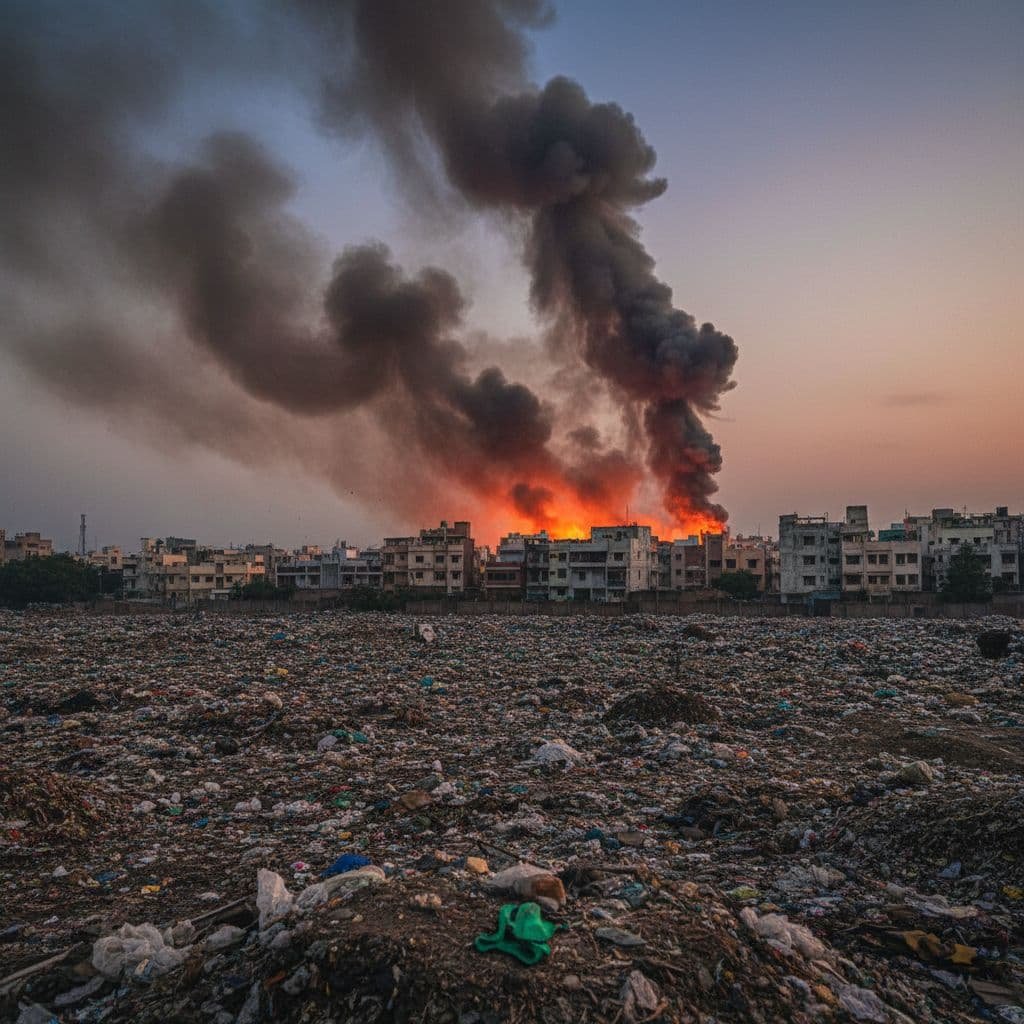
Many Indian sites are not an engineered sanitary landfill in the true sense. They are overgrown dumpsites that kept expanding because cities outpaced planning, segregation, and treatment. Whether it is the Ghazipur site or the Deonar dumping ground, the reality remains the same. When the skyline darkens over Delhi, Mumbai, Chennai, or another dense urban belt, the fire is not arriving from outside the system. The system has already produced it.
Methane, heat, and fresh waste create a repeat cycle
Most city waste in India still arrives mixed. When residents and collectors ignore proper waste segregation, wet waste and dry recyclables travel in the same stream and land in the same pile. That single failure causes significant damage.
Food waste, garden waste, paper, and other organic matter break down in low-oxygen conditions. As BusinessLine’s report on burning dumpsites noted, that process produces methane gas, and rising temperatures make ignition more likely. Once methane emissions meet oxygen, nearby plastic, rubber, cloth, and packaging help flames spread. So the dump has both gas and solid fuel, which is a dangerous combination in peak summer.
This recurring mix is easier to see in a simple format.
| Recurring driver | What it does inside a dump | Why it keeps returning |
|---|---|---|
| Mixed organic waste | Releases heat and methane as it rots | Waste segregation fails at the household, street, or truck level |
| Plastic-rich waste | Helps flames spread and increases toxic smoke | Disposable packaging keeps entering the waste stream |
| Fresh dumping on old waste | Reheats the mound and adds new fuel | Cities continue using overloaded legacy dumps |
| On-site sparks | Ignites hot, gas-rich pockets | Machinery, smoking, and burning trash still happen |
Taken together, these factors make repeat fires feel almost seasonal, even though they are man-made. While global initiatives like the Global Methane Pledge aim to reduce these climate risks, local implementation remains a hurdle.
Even plant-based living does not reduce landfill fire risk by itself. If peels, leftovers, tea leaves, and stale bread still go into mixed bins, they do not stay green. They become methane feedstock inside a dump. Organic waste only becomes low-impact when cities collect it separately and turn it into compost or biogas.
There are also smaller ignition sources that rarely make headlines. This explainer on landfill fire triggers points to equipment heat, debris stuck under machines, smoking on-site, and fires set to recover metal. In other words, the mound is already primed, and a small spark can do the rest.
Why city responses rarely hold
Municipal action usually begins after people can already see the smoke from their balconies or roads. By then, the waste mound is hot at several depths, not one. Surface flames may be visible in one place, while buried hot spots sit elsewhere. Water helps in some cases, but it often does not reach the deepest pockets. It can also create contaminated leachate and fail to cool the waste evenly.
That is why firefighting at dumpsites looks so frustrating. Crews may need soil, inert material, excavation, and isolation of burning sections, not only hoses. Wind makes the task harder. Excavators can expose fresh oxygen. Unstable slopes limit access. A blaze that seems contained can return after sunset or reappear on another face of the mound.
The problem is bigger because many sites lack the basics of fire prevention. They have limited gas venting, weak internal roads, poor thermal monitoring, and little cell-based containment. According to Times Now’s breakdown of sanitary landfill rules, the 2016 solid waste management rules say that only residual waste should reach a sanitary landfill. Yet mixed waste still keeps flowing into major dump sites. That gap turns legal standards into paperwork while the physical risk grows on the ground.
Seasonal planning also has limits. The report on Delhi’s seasonal fire-control plan highlighted a central problem faced by the Municipal Corporation of Delhi: fresh biodegradable waste can spark new fires, even when old waste is already under control measures. These ongoing challenges in solid waste management implementation mean a city may fight today’s blaze while sending tomorrow’s fuel to the same location.
A recurring landfill fire follows a management pattern. The same inputs produce the same smoke.
As long as dumping continues, prevention stays partial. Cities are trying to suppress a fire risk that they keep rebuilding every day.
Smoke is only the visible harm
When people hear “landfill fire,” they often picture a hazardous haze hanging over the city and little else. Yet the public harm spreads far beyond that visual impact. Burning mixed waste can release particulate matter, toxic gases, and residues from plastic, paint, rubber, and chemical-laced material. That pollution does not stop at the dump boundary.
Nearby residents breathe it first, facing severe health risks. So do sanitation workers, waste pickers, street vendors, drivers, and children walking to school. Ash can settle on balconies, food stalls, rooftop water tanks, and laundry lines. A family may never enter the dump site, yet the dump enters the family home through air, dust, and smell. For people living near these sites, the fire is not a headline. It is a repeated exposure.
The ecological impact and environmental hazards also reach places that rarely appear in fire reports. Smoke can coat leaves, reduce plant health, and stress already weak green patches. Leachate can move through drains and soil, especially when fire control and runoff management are poor. Birds, stray animals, insects, and small urban habitats lose what little breathing room they had. Over time, that chips away at urban biodiversity in neighborhoods that already carry more than their share of environmental damage.
There is a climate angle too. Methane from unmanaged waste is a potent greenhouse gas that worsens our global climate crisis. When a dump burns, it degrades local air quality and highlights a larger systemic issue. Cities need more climate literacy here, because a landfill blaze is often treated as a local nuisance instead of a signal of broken waste systems and rising heat stress.
The social cost is also uneven. Dumps are rarely placed beside high-value, low-density enclaves. They sit near working-class settlements, industrial edges, and communities with less political power. So the smoke follows old lines of inequality.
If you want to support work with visible, local outcomes around urban biodiversity and climate literacy, Explore Our Active Missions. Local repair does not replace waste reform, but it helps rebuild trust where public systems have worn people down.
The deeper failure is economic, not only technical
Indian cities do not lack the basic idea of waste management. They lack an economic system that rewards doing it well. Dumping mixed waste is still cheaper, faster, and less politically costly in the short term than separating materials, processing organics, recovering recyclable materials, and capping old dumps properly. The result is predictable. Cities save money on paper and pay for it later in smoke, health risk, land loss, and emergency response.
This is why landfill fires are not only an engineering problem. They are also a pricing problem. When producers can sell hard-to-recycle packaging, when collection systems mix waste back together, and when disposal sites absorb the damage out of public view, the market treats bad design as normal. Poor neighborhoods then carry the physical cost.
A real circular economy changes that equation. It keeps materials in use longer, strips out wasteful packaging, expands refill and reuse systems, and treats organic waste as a resource instead of a liability. That shift also depends on sustainable business models. Companies need supply chains and packaging choices that cut waste at the source, not glossy claims after the fact.
Producer responsibility matters here. India has moved further on plastic accountability, but compliance only works when data is clean and recovery is real. These EPR compliance guidelines for brands show why traceability, verified recyclers, and accurate packaging data matter. Still, even the best paperwork cannot cool a dump if municipal systems keep sending mixed waste to it.
Systemic change also means valuing the people who already recover material under harsh conditions. Waste pickers reduce landfill load every day, often without safety, fair pay, or stable contracts. Cities lower fire risk when they integrate waste pickers into safer sorting and recovery systems, instead of leaving material extraction to happen around hazardous trash mountains.
That is the deeper lesson. Fires return because the system still makes waste disposal cheap, material recovery patchy, and accountability easy to dodge.
What real prevention would look like in Indian cities
The solutions are not mysterious. Most of them are already known. What is missing is steady execution, public pressure, and honest measurement.
A serious city plan would include a few basic shifts:
- Consistent waste segregation at source, backed by reliable collection that keeps wet waste, dry waste, and rejects separate.
- Mandatory waste segregation at the community level to ensure that organic streams are handled separately from inorganic trash.
- Fast processing of organics through composting and biomethanation, which helps mitigate the rise of methane emissions so that gas does not build inside giant mixed heaps.
- Legacy dump remediation, including bio-mining, capping, slope control, soil cover, gas vents, thermal checks, and an end to fresh dumping on old waste.
- Public data on fires, methane control, worker safety, and local air quality, so residents can track results ward by ward and hold officials accountable for poor air quality outcomes.
Those steps sound practical because they are. The difficulty is political. Segregation fails when collection crews remix waste. Composting fails when cities underbuild processing capacity. Capping fails when authorities keep treating old dumps as active sites. Public data fails when agencies fear scrutiny more than recurring smoke.
At the household level, everyday mindfulness regarding your waste disposal habits still has a role. Sorting waste properly, cutting disposable packaging, and asking where wet waste actually goes can reduce pressure on the system. But personal effort has limits. A city that mixes segregated waste back together teaches residents that good habits do not matter. That is corrosive, both for trust and for participation.
This is also where climate-aware citizenship matters more than guilt. When people understand methane, dump fires, and waste contracts, they ask better questions about budgets, hauling routes, treatment plants, and procurement. That is climate literacy in practice. It turns fear into informed pressure.
The same logic applies to lifestyle choices. Plant-based living can reduce environmental strain in many ways, but it only helps on landfill risk when food scraps are composted or separately collected. If the system cannot handle organics well, even low-impact choices get swallowed by a bad waste chain.
The goal is blunt and measurable: stop sending burnable, biodegradable, and recyclable material into giant mixed dump sites. Once that flow slows, fires become less frequent, less intense, and easier to prevent.
Frequently Asked Questions
Why do landfill fires in India happen every summer?
While high temperatures serve as a catalyst, the fires are caused by the accumulation of mixed waste that creates flammable methane gas. Once internal pockets of waste begin to smolder due to decomposition, heat, and lack of oxygen, seasonal spikes in temperature simply increase the likelihood of these buried fires breaking through to the surface.
Why can’t fire departments easily put out these blazes?
Firefighters at these sites are not dealing with standard open fires, but rather massive, unstable mountains of layered refuse. Water often fails to penetrate the deepest smoldering pockets, and the heavy machinery required to excavate and isolate the waste can accidentally introduce fresh oxygen, causing the fire to flare up again in new areas.
How does waste segregation help prevent these fires?
Segregation keeps organic “wet” waste separate from dry, combustible materials like plastic and rubber. By diverting food and garden waste into composting or biogas facilities, cities can stop the production of methane gas, which is the primary driver of internal heat and combustion within a landfill.
Is it just the responsibility of the city to fix this?
While the burden of infrastructure, policy, and enforcement lies with municipal authorities, individual and corporate participation is essential. Citizens must practice consistent waste sorting, and producers must be held accountable for the lifecycle of their packaging to stop the flow of non-recyclable materials into landfills.
The smoke returns because the fuel does
Every repeat blaze tells the same story. A city kept mixing waste, kept piling it high, and kept postponing treatment until thick plumes of smoke forced the public to pay attention.
That is why landfill fires in India will keep coming back until waste policy finally meets street-level practice. Fire crews can suppress flames, but only systemic change removes the fuel through effective waste segregation, organic waste treatment, producer accountability, safer recovery methods, and the capping of legacy dumps.
When this persistent air pollution becomes a permanent part of the skyline, the problem is no longer confined to the landfill. It has already spread into the heart of the city, serving as a constant reminder that landfill fires in India require a fundamental shift in how we manage our resources.