Apartment Fire Door Ratings in India: A Renter’s Check
 TBH Editorial
A fire door can look solid and close with a reassuring thud, but that doesn’t prove it will perform in a fire. If you’re comparing fire door ratings for apartments in India before renting, the number on a door isn’t enough. Fire-rated doors need to be checked as a complete opening: does it need to be fire-rated, does the whole doorset match its paperwork, and does it work today?
That sounds like a lot for a flat viewing. It isn’t. Start with the route you’d use to get out, then ask for the records behind what you see.
Key takeaways
- A fire rating belongs to a tested doorset, not automatically to any door carrying a similar-looking leaf.
- IS 3614:2021 is a product standard, not a rule for which openings need a rated door. That depends on the opening, approved fire plan, and local authority conditions, so there isn’t one rating for every flat entrance.
- A current approval and an intact doorset answer different questions. Check both, including the upkeep of installed fire safety doors, before paying a deposit.
- If a protected stair door doesn’t close and latch, report it. Don’t accept a promise that someone will fix it later.
First, find out which doors need a rating
The National Building Code’s fire and life safety provisions provide the reference framework. Your building’s approved plans and local rules determine what must be installed. IS 3614:2021, by contrast, is a product standard for fire doors and doorsets. It doesn’t decide which openings need them. Check whether the doorset’s product documents also refer to IS 3614:2021.
Walk the protected route
Start at the flat. Follow the corridor to the stairwell enclosure, then continue until you reach a safe exit. Check doors to basement passages, lift lobbies, and electrical or service rooms against the fire plan. These are places to check, not a list of openings that all need the same rating or fire safety doors.
A flat entrance opening onto a protected corridor may have different requirements from a stair door. Ask the manager which openings are rated and why. If the answer is “all our doors are fireproof,” ask to see the drawing.
Match the plan to the building
Request the approved fire plan for your tower or wing. Compare the door locations, floors, and exit route with what you can walk through. An added grill, a converted service space, or a new partition can change the route without changing an old drawing.
Building height, occupancy, approval date, and local conditions matter. A high-rise apartment building may have different requirements, depending on its approved design. Ask which authority approved the scheme, including whether the fire services department was involved. IIT Kanpur’s commentary on NBC Part 4 makes the wider point: passive fire protection and escape work as a system, not as isolated products.
What apartment fire door ratings actually mean
An FD label states a fire-resistance duration under a specified test. The fire resistance rating isn’t a promise that everyone has exactly that long to escape. Smoke conditions, other building systems, and the route itself still matter.
Read the minutes, then read the classification
The number in FD30, FD60, FD90, FD120, or FD180 states the rated duration in minutes. FD60 fire doors have a different tested duration from FD120 fire doors. Longer isn’t automatically right for every opening, the approved design determines what’s required.
Insulation is a separate question. BIS documentation distinguishes UD (uninsulated), PI (partially insulated), and ID (fully insulated) configurations. Ask which classification applies to the installed door. Two doors with the same FD number needn’t offer identical insulation performance.
Don’t let a label replace evidence
BIS’s IS 3614:2021 standard details identify the Indian specification for fire doors and doorsets. IS 3614:2021 covers their testing and classification. A certificate for a product line doesn’t prove the corridor door matches the tested configuration.
Ask for the specified rating for that opening, then evidence for the door installed there. Documentation should identify its integrity and insulation, along with details such as any intumescent seal. Fire door manufacturers may claim a configuration, but you still need evidence that it applies to the installed door.
You might see “fire check door” on a label or in a record. Verify the specified classification rather than relying on terminology alone. A reference to the BS 476 standard doesn’t, by itself, establish acceptance under the applicable Indian approval.
That’s a fair request from a renter, not an attempt to conduct your own laboratory test.
Check the whole doorset, not the leaf
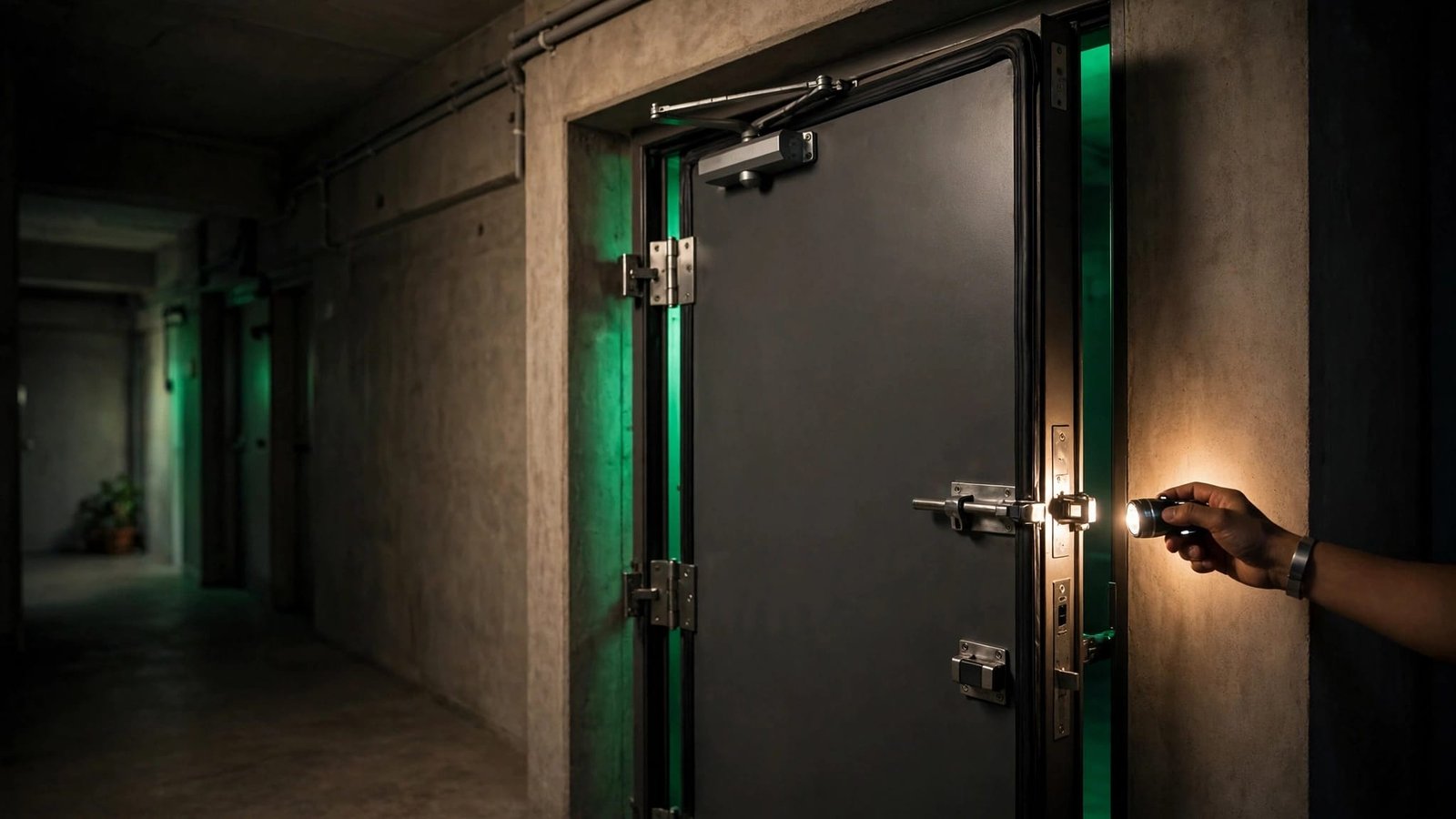
A rated leaf inside an unsuitable frame isn’t a rated assembly; steel fire doors aren’t rated by material alone. The frame, hinges, self-closer, latch, intumescent seal, and vision panel must match the product documents, as must the glazing in glazed fire doors. Installation matters too.
Ask for records you can match
Request the manufacturer’s identification and supporting records from the fire door manufacturers, including BIS certification or applicable product records and the test report for the supplied certified doorset. Ask the building manager to point out matching doors in the installation schedule. Ask whether the lab is NABL accredited for the relevant scope, and whether the records cite IS 3614:2021 where applicable.
The BIS product manual for fire doors and doorsets tracks details beyond the FD number, including door type, insulation type, latch condition, opening size, and vision-pane configuration. If the paperwork describes a different opening or arrangement, ask for an explanation in writing.
A laboratory report alone can’t confirm that the same parts were installed or maintained. Installation records and subsequent repair records help close that gap.
Look for changes after installation
Has someone replaced the closer because the original was “too heavy”? Was a glazed panel added later? Has a cable been run through the frame? None of these changes should be waved away as cosmetic. Ask whether the altered assembly remains within the approved product configuration.
A certificate can tell you what was tested. It cannot tell you who wedged the stair door open this morning.
Test the door during your viewing
A viewing can’t confirm a fire resistance rating or replace a qualified inspection. You can spot a door that plainly won’t perform its everyday job.
Watch it close and latch
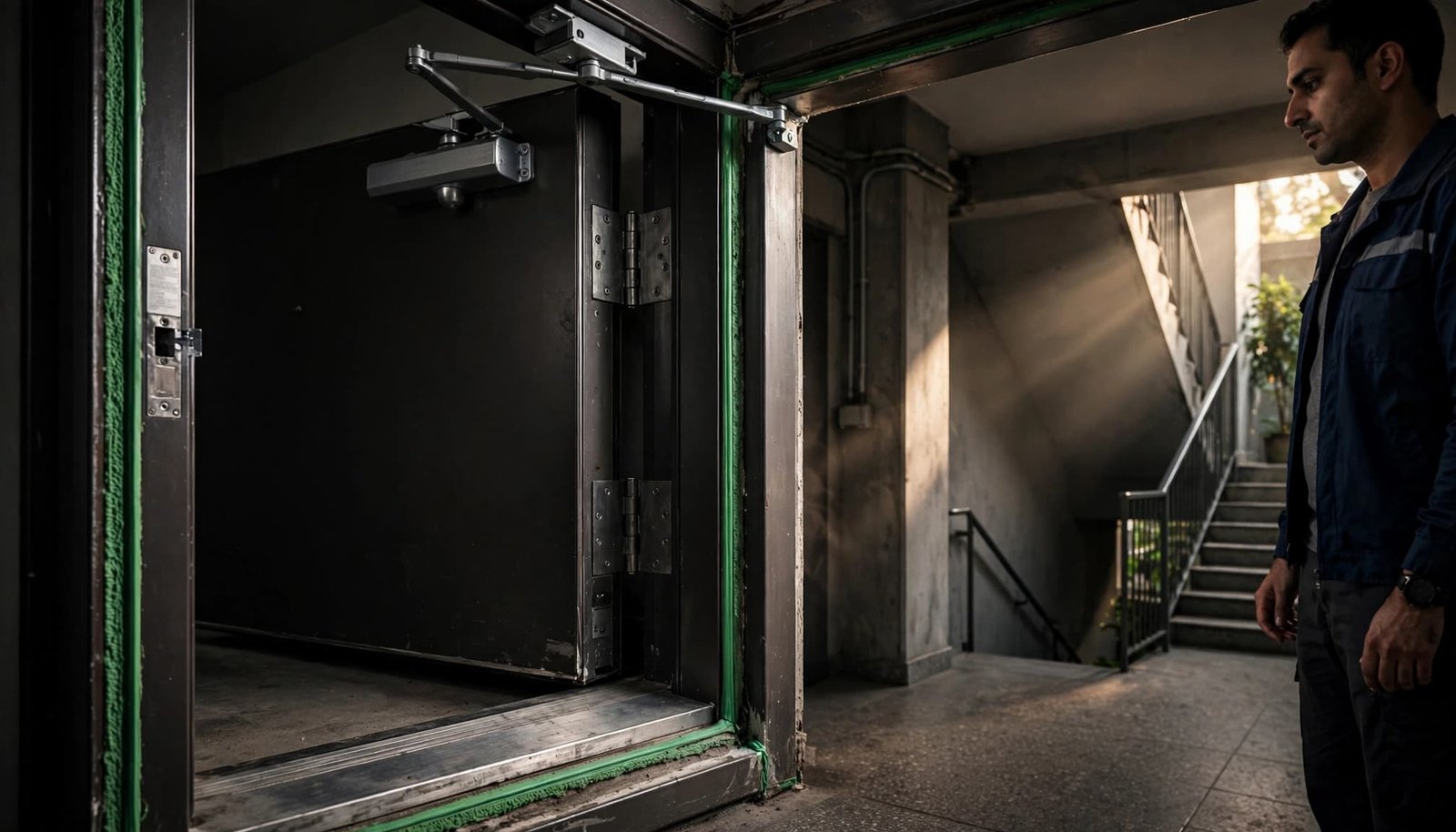
With permission, open a common-area fire door and let it go. It should return fully and latch on its own. Check that the self-closer works, and listen for scraping. Look for a warped leaf, loose frame, damaged hinges, or a disconnected closer.
Check whether the specified intumescent seal is present and intact. An intumescent seal is part of the designed assembly, not decoration, so don’t pull at it or try to repair it yourself. Photograph visible damage and report the door’s exact location, including any damaged intumescent seal.
Note cracks or changes around a vision panel. A pane’s appearance doesn’t verify that the complete assembly is made with fire rated glass or meets its intended performance.
Look at how people use it
A wedge, tied-back self-closer, or stored item that stops a door closing can defeat its purpose in daily use. Ask how the society checks common-area doors and when the last defect was fixed. Maintenance logs should show inspections, faults, repairs, and dates.
If you’re also checking heat risk in Indian rental homes, don’t accept a wedged-open fire door as the solution to a hot corridor. Ventilation needs its own safe answer.
The door is only as useful as the exit behind it
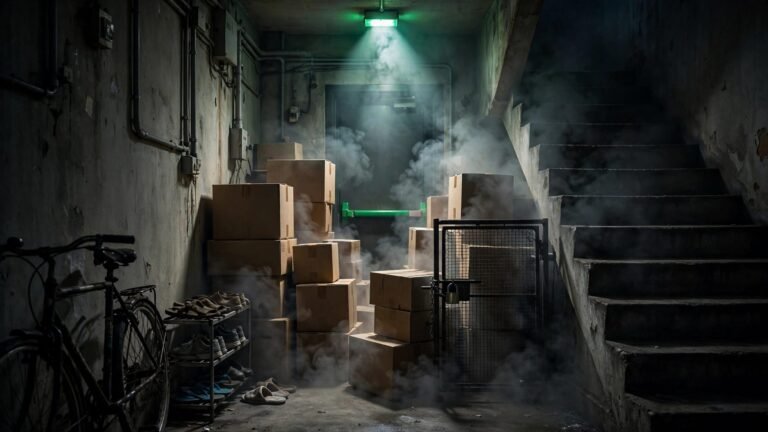
Walk through the stairwell. Can you pass shoe racks, bicycles, or cartons without squeezing? Are the emergency exit doors at the final exit usable? Can you see emergency lighting and signs? A closed fire door protecting a blocked staircase is a bitter joke. Along the route, note whether any intumescent seal looks damaged or missing. Appearance alone can’t confirm a door’s fire performance.
Ask when the alarm, pumps, emergency lights, and any sprinklers were last tested. Look for service and defect records, not simply equipment mounted on a wall. In a fire, follow the building’s evacuation procedure and use the protected stairs, not the lift.
This is where a little everyday mindfulness matters more than a glossy safety claim. Notice what residents encounter on an ordinary Tuesday. If an exit is locked or a stair is filled with combustible storage, report it in writing and seek prompt action.
What does a certified fire doorset cost?
Published vendor-led estimates put complete doorsets broadly around ₹6,000 to over ₹35,000, depending on the rating and specification. Treat that as a starting point for questions, not a verified quote for your city or building. Fitting, hardware, taxes, removing an old door, and making good the opening may change the total. Choosing steel fire doors doesn’t establish the doorset’s tested rating.
If a landlord offers to replace a suspect door, ask fire door manufacturers for an itemised quote identifying the complete doorset and its documentation. A cheaper leaf-only swap may leave the frame or hardware problem untouched. Citing IS 3614:2021 doesn’t, by itself, verify the installation. Replacing a self-closer may be appropriate if approved components and a competent installer can restore the specified assembly, but confirm this rather than guess.
There’s a sensible circular-economy instinct here: don’t discard usable material without reason. But safety comes first. Embodied carbon in Indian building materials deserves scrutiny, while an unverified reused closer deserves none of your trust. Good building decisions account for both material waste and the people who must get out.
Before you pay, ask who is responsible
Check the approval trail
Ask for the current fire approval or Final NOC for the completed building. Check which fire NOC inspections or renewal evidence apply, since requirements vary by building and jurisdiction. Confirm whether an Occupancy Certificate applies, and match the address, tower, floors, and approved use to the place you’re renting. Verify the record with the issuing state fire services department, municipal portal, or competent authority, not a broker’s screenshot.
A Fire NOC records an approval within its scope. It doesn’t prove that today’s doors close, exits are clear, or alarms work. Missing paperwork and broken hardware need different fixes.
Put repairs on record
Send dated photos of defects to the landlord and society manager. Ask who maintains the flat door, who maintains common stair doors, and when repairs will be completed. Put any promised work and access to relevant records in writing before possession.
We need systemic change in rental housing, but it starts with a plain standard of accountability: residents shouldn’t have to fund a building’s neglected safety work or take a manager’s word for it.
Frequently asked questions
Is a fire-rated door mandatory at every apartment entrance?
No single answer fits every Indian apartment. Check the approved fire plan and the local authority’s requirements for that entrance. A protected corridor, the building’s height, and its approved design may affect what applies. Don’t infer the required rating from a neighbouring tower.
Does a Fire NOC prove the doors are safe today?
No. It helps establish what received approval, subject to its scope and current status. A door can be damaged, altered, or held open later. Compare the approval with the premises, then check maintenance records and the doors themselves.
What if a stair fire door won’t close?
Record the date, floor, and location. Send a photo and written report to the society manager and landlord, and request a repair date. If a blocked or failed exit presents immediate danger and the building won’t act, contact your local fire services department or the authority designated in your area. Don’t attempt an improvised repair.
The safer rental is the one you can verify
A thud isn’t a rating. A sticker isn’t an installation record. And a Fire NOC isn’t a maintenance log.
Before you transfer a deposit, walk the exit route, watch the doors close, and ask for the matching approval and doorset records. If the evidence doesn’t match the building in front of you, pause. Your home should come with an answer you can check, not a promise you’ll have to trust.