Test for Lead in Apartment Taps Before Renting in India
 TBH Editorial
A shiny tap can still deliver contaminated water. Lead in tap water has no smell, colour, or taste, so a landlord’s reassurance isn’t evidence of fixture-level water safety.
Before you pay a deposit, test the cold-water outlet used for drinking water. The kitchen tap, bathroom tap, purifier outlet, and building tank are different sampling points, not interchangeable sources.
Key Takeaways
- Clear water doesn’t establish water quality. Lead pipes, plumbing fixtures, and connectors can still add contamination.
- India’s BIS IS 10500:2012 limit for lead in drinking water is 0.01 mg/L, or 10 micrograms per litre.
- Collect a first draw sample after water has sat unused, then collect a flush sample from the same tap.
- Ask a capable, preferably NABL-accredited, lab to test for lead within its accredited scope and follow its collection protocol.
- If exposure is suspected, take extra care around children and pregnant women because health effects can vary.
- A high result isn’t a reason to panic. Stop using that outlet, notify the landlord, repair the cause, and retest.
- Don’t buy a purifier first and call the problem solved. A filter can reduce exposure, but it can’t repair contaminated plumbing.
Why Clear Water Is Not Clearance
Lead can enter drinking water after it reaches your building. Public water systems may be clean at the source, while a lead service line or internal plumbing adds contamination. With private water systems, internal plumbing may be the source instead.
That is the uncomfortable part. Your building can have a clean tank and still have a risky kitchen fixture.
Corrosion Turns Plumbing Into a Water Problem
Water sitting inside a fixture can react with plumbing materials. Lead pipes, lead solder, older brass taps, valves, flexible connectors, and corroded pipes all deserve attention.
This does not mean every brass tap contains lead. It means appearance cannot clear it. Corrosion control depends on water chemistry and treatment practices, so renters can’t diagnose it from appearance alone.
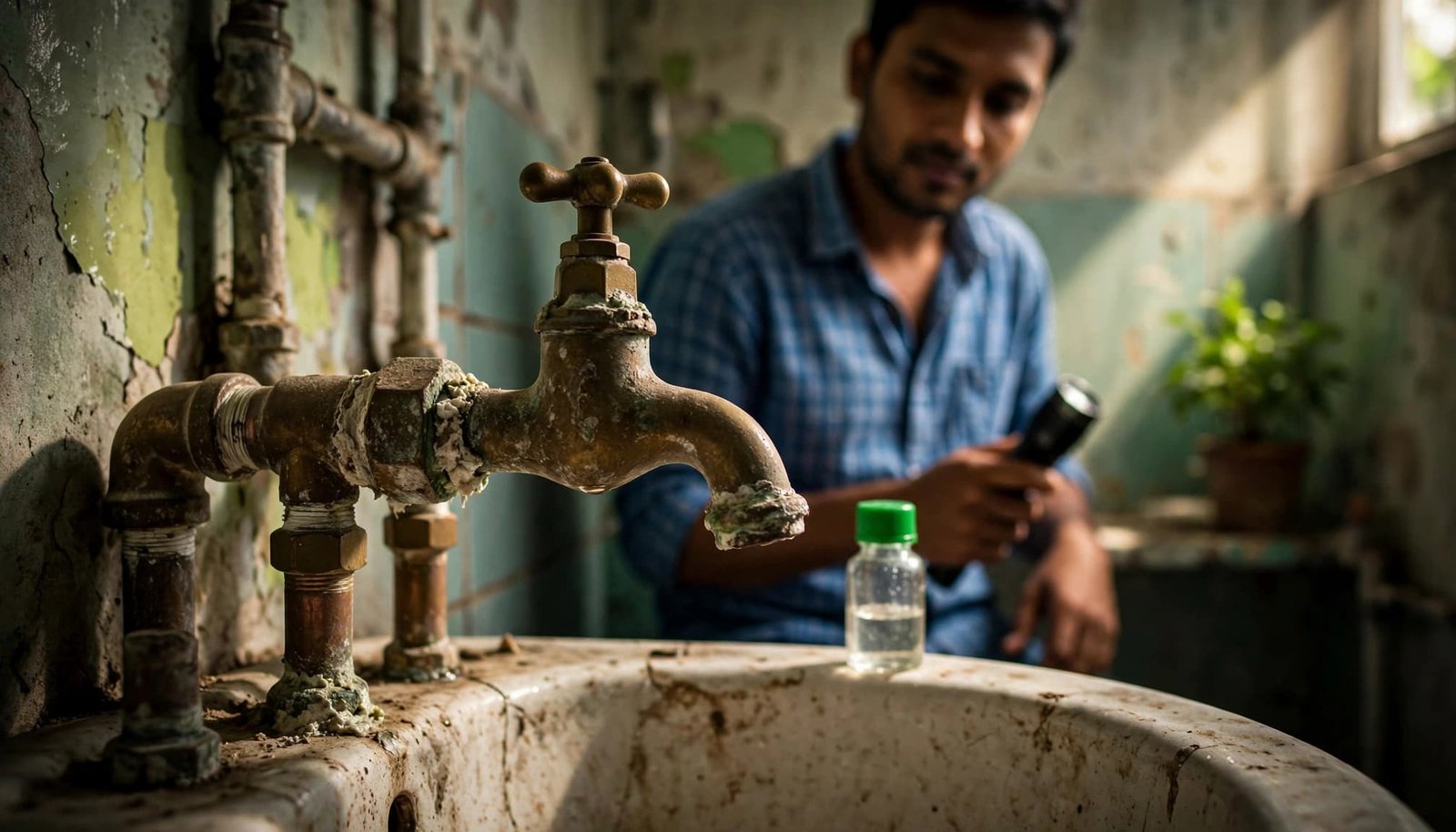
Mineral crust, rust stains, leaks around joints, and unknown repair history raise the need for testing. The Environmental Protection Agency explains that lead can enter water through corrosion of household plumbing materials, not only through public supply lines. Its guide to lead in drinking water is useful context.
The U.S. Safe Drinking Water Act and Lead and Copper Rule provide useful background. India’s applicable drinking water regulations and BIS limit govern your result.
Children Need More Caution, Not More Fear
Children are more vulnerable because their brains and bodies are still developing. The Centers for Disease Control and Prevention says no safe blood lead level has been identified for young children.
That doesn’t mean every rental flat is dangerous. It means we should stop treating clean-looking water as a health certificate. Lead exposure can have serious health effects, so read the CDC’s drinking-water guidance if a child lives in, or regularly visits, the home.
A clean tank report cannot prove that every tap in an apartment is safe. Water quality has to survive the route between source, storage, plumbing, and glass.
Map the Apartment’s Water Route Before You Test
Don’t start with a bottle. Start with questions.
Ask the landlord, broker, facility manager, or resident welfare association where the water comes from. Municipal supply may come through public water systems. Borewell water, tanker water, overhead storage, and purifiers are different supply or storage arrangements, not proof of safety.
Ask whether the building’s incoming connection includes a lead service line. Don’t assume it does, and don’t assume it doesn’t. The answer helps define what your tap test can and can’t show.
Inspect the Fixtures You Will Actually Use
Focus on cold-water outlets used for drinking water, cooking, tea, infant formula, and rinsing food. Hot water can draw more metals from plumbing, but it shouldn’t be used for drinking or cooking anyway.
Look at:
- The kitchen tap and any separate drinking-water tap.
- Bathroom taps, especially if someone fills bottles there.
- The purifier inlet and its final outlet.
- Plumbing fixtures such as flexible connectors, brass valves, exposed joints, and recently replaced fittings.
- The farthest tap from the building’s tank or main supply line.
- Visible soldered joints around taps, valves, and pipe connections.
If someone mentions a U.S. Consumer Confidence Report, remember its limits. It may describe a U.S. public water system, but it isn’t a substitute for testing your renter’s tap. It also isn’t an assumed requirement for an Indian apartment.
Ask for a Maintenance History, Not a Promise
A landlord may not know the age of hidden pipes. That’s common. Still, ask when taps, plumbing lines, storage tanks, and the purifier were last replaced or serviced.
If the maintenance history is known, ask whether any soldered joints used lead solder. Don’t treat every visible solder joint as evidence of lead.
Take dated photos of damaged fixtures, corrosion, leaks, and visible repairs before moving in. Keep written landlord responses, sample locations, and repair history with your test reports. A verbal assurance evaporates during a deposit dispute. A dated report with a location and result doesn’t.
How to Test for Lead in Tap Water Before Renting
The most useful renter screening compares water that has sat in a tap with water flushed through the same outlet. This screening test can guide laboratory testing, but it won’t diagnose every pipe.
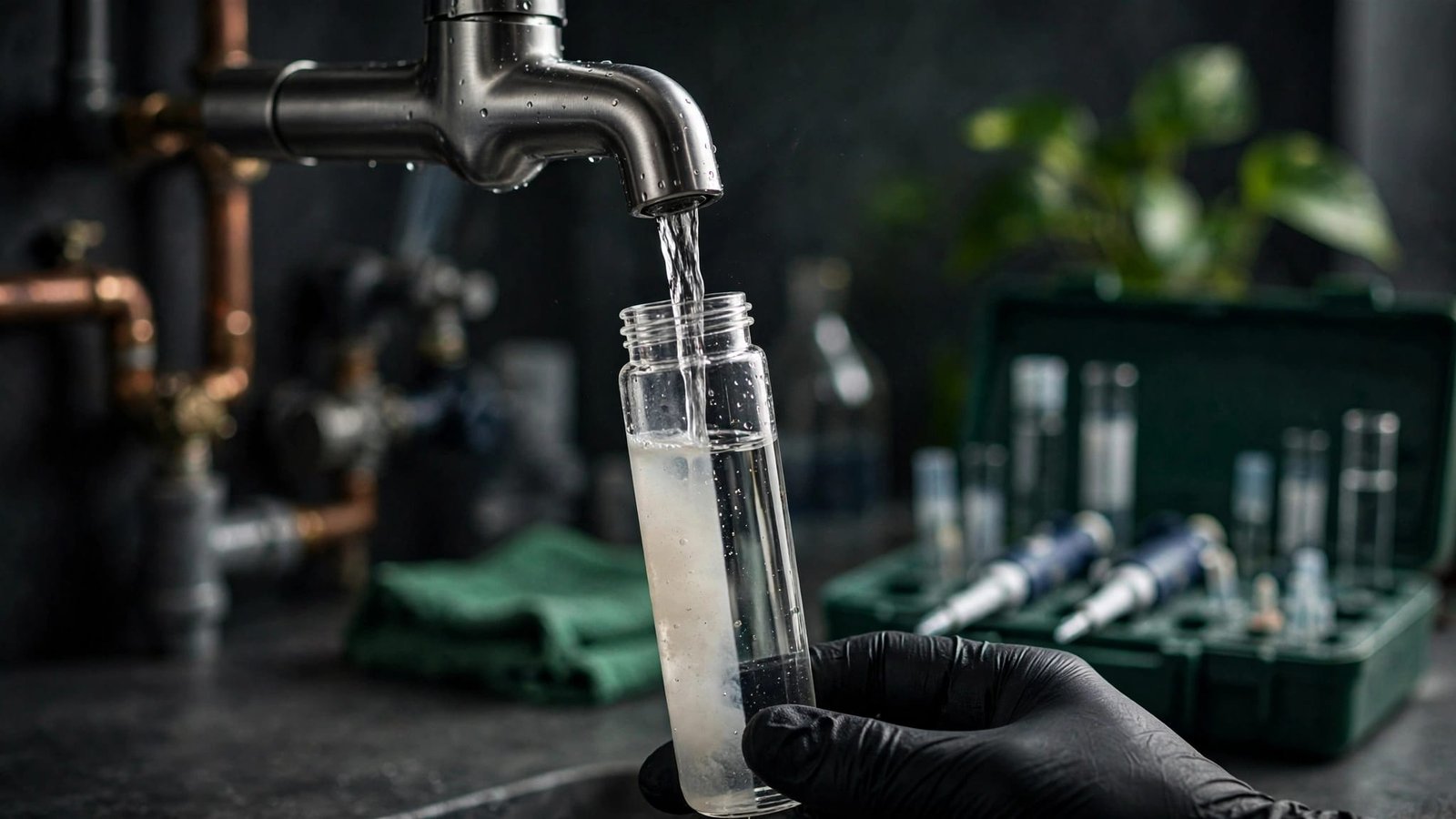
Contact the laboratory before sampling. Ask it to provide the correct bottles, preservation instructions, minimum stagnation period, flush procedure, holding time, and transport requirements.
Collect a First Draw Sample
A first draw sample captures water that has been sitting in the fixture and nearby plumbing. Under relevant EPA residential guidance, at least six hours of stagnation may be required, making an overnight sample practical. This isn’t a universal rule, so follow the laboratory’s protocol.
Use a cold-water tap intended for drinking water. Don’t run water first. Don’t wash the bottle or remove aerators unless the laboratory tells you to.
Record the outlet, date, time, stagnation period, and any recent plumbing work. “Kitchen cold tap, flat 804, first draw after 7 hours” gives the result useful context.
Collect a Flushed Follow-Up Sample
After the initial bottle, follow the laboratory’s specified flushing procedure and label the second bottle a “flush sample.” Collect it from the same cold-water outlet after the required flush time.
There is no universal flush duration. EPA protocols vary, with some using 30 seconds and others using several minutes for different investigations.
A practical pre-rental plan is to take paired samples from the kitchen tap, then test a second outlet if the flat has old fittings, a child will live there, or the building has a patchy maintenance record.
These samples represent the tested outlet at that time. They can’t characterize every tap, storage tank, or pipe in the building.
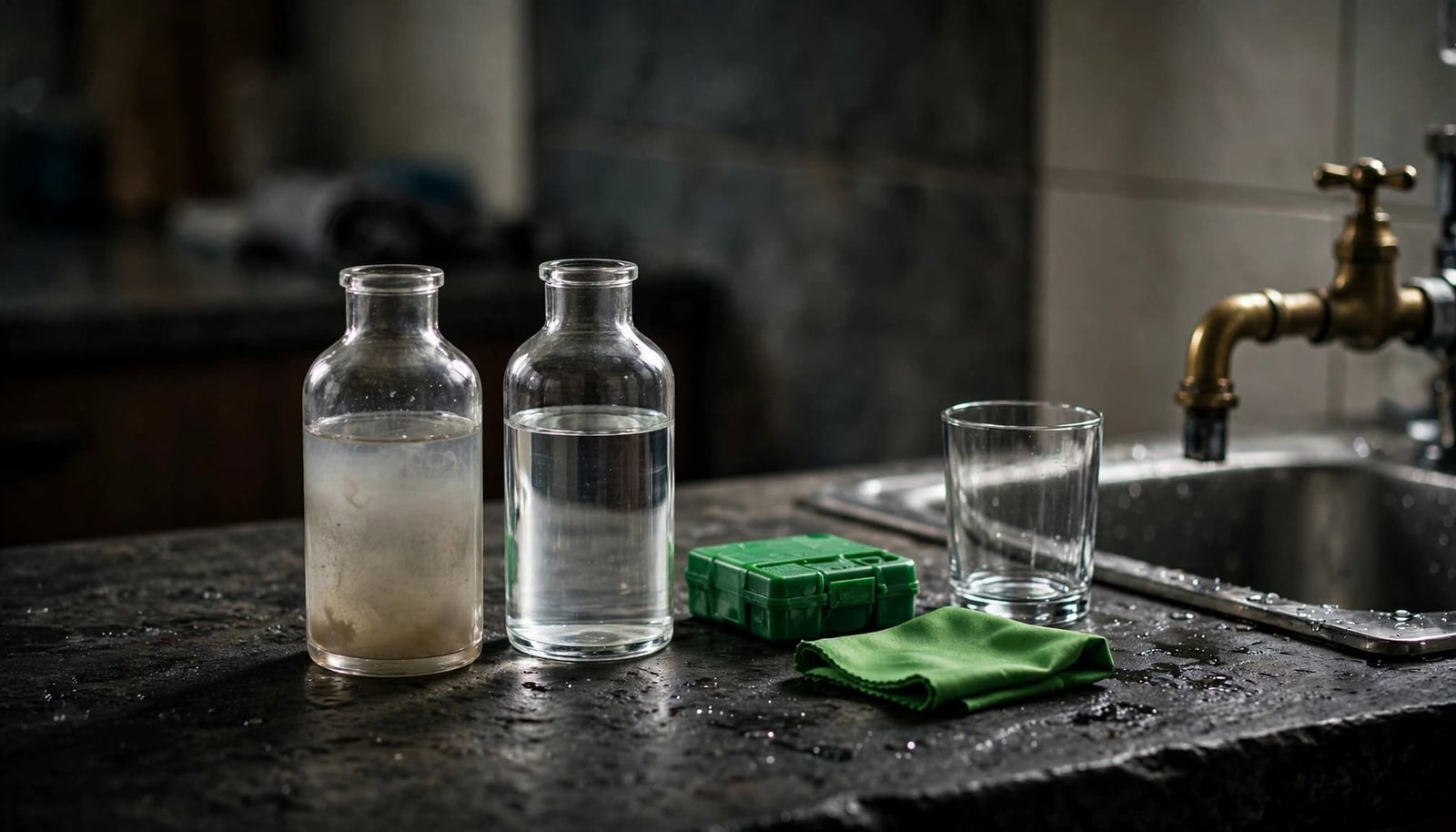
Choose a Lab That Can Answer the Actual Question
TDS meters, pH strips, chlorine checks, and turbidity kits can tell you other things. They cannot confirm lead is absent.
Lead testing needs proper sampling and a laboratory capable of measuring metals at low concentrations. Ask for a NABL-accredited laboratory where possible, and check that lead analysis falls within its accredited scope. Accreditation alone isn’t enough.
Before ordering, confirm how the lab will report your water test results. Ask about the units, detection limit, testing method, sample-preservation requirements, and quality-control information.
Request Lead by Name
Don’t order a vague “basic water test” and assume it includes heavy metals. Tell the lab you need lead analysis for tap water, and ask for the result in mg/L or micrograms per litre.
For Indian drinking water regulations, BIS IS 10500:2012 sets the acceptable lead limit at 0.01 mg/L, with no relaxation. The term maximum contaminant level is mainly used in U.S. standards, so it shouldn’t replace India’s BIS limit.
BIS-linked references use IS 3025 (Part 47) for lead testing. Verify the current BIS document before relying on a limit or method. You can read the BIS drinking-water specification before comparing reports or challenging a casual dismissal of the result.
Home kits can help with initial screening, but they don’t replace laboratory analysis. If you consider a water treatment system, judge its claims by contaminant-specific, independently documented performance.
For carbon filtration, check whether the specific model has been tested for lead reduction. If a product cites an NSF ANSI Standard, confirm that certification covers lead reduction for that model. A generic certification doesn’t prove that every product removes lead.
Expect Prices to Vary
A single lead parameter can cost less than a broad water panel. Published prices may change, so ask the lab for a current quote and check the date of any online rate card.
City, taxes, bottle collection, turnaround time, sample-preservation needs, and the laboratory’s method can all affect the final price. Compare quotes only after confirming that each one includes lead analysis and proper reporting.
Read Your Water Test Results Without False Comfort
Interpret your water test results against India’s BIS limit for lead: 0.01 mg/L, or 10 micrograms per litre. Keep the unit visible. A report in micrograms per litre should not be compared carelessly with a limit written in mg/L.
The term maximum contaminant level is mainly a U.S. comparison term. It shouldn’t replace India’s applicable limit for drinking water regulations.
An initial result near or above the BIS limit needs action. Stop using that outlet for cooking and consumption until the problem is investigated.
What Paired Results Can Suggest
A higher first draw sample followed by a lower flush sample may point toward contamination near the outlet or branch plumbing. It doesn’t prove the tap alone caused it.
If both samples are high, investigate deeper apartment plumbing, the incoming connection, tank, or source. A lead service line is one possible connection, not a conclusion. Test the source or building inlet, then compare it with fixture-level samples.
Your water result isn’t your blood lead level and can’t diagnose health effects. The Centers for Disease Control and Prevention recommends professional medical advice when exposure is suspected.
Don’t average results. One unsafe outlet remains unsafe, and one low result doesn’t clear every outlet or establish the building’s overall water quality.
What to Do if Lead Is Detected
Protect people first. Arguments about responsibility can come next.
Stop using the affected outlet for drinking water, cooking, tea, and food preparation. Arrange a verified alternative, such as packaged water, a tested source, or a treatment outlet with documented performance.
If children or pregnant women may have consumed the water, contact a clinician or your local health department. The Centers for Disease Control and Prevention explains that a clinician, not a water report, assesses a person’s blood lead level and possible health effects.
Ask for Repair, Not Cosmetic Maintenance
Send the landlord or housing society the report in writing. Ask for a dated plan covering inspection, replacement of suspect fixtures and connectors, plumbing repairs, and investigation of any lead service line.
Flushing can reduce lead in standing water temporarily, but it doesn’t remove the source. A water treatment system or carbon filtration unit may reduce exposure only when it has documented lead-reduction performance, is installed correctly, and is maintained and replaced on schedule.
A new tap cover, tank-cleaning invoice, or purifier light isn’t proof of safe plumbing. Request records showing what was repaired, replaced, and tested.
Retest Before You Trust the Outlet Again
After repair, collect new first-draw and flush sample water from the same outlet. Use the same laboratory and comparable testing method where possible, so the results and reporting units remain comparable.
This is where systemic change becomes real. Rental housing should treat fixture testing, repair budgets, and written records as normal maintenance, not a tenant’s private burden.
A circular economy isn’t an excuse to keep unsafe fittings in service. Reuse materials only when they’re safe, traceable, and repairable. Remove contaminated fixtures instead of passing hidden costs to the next tenant.
Water Accountability Belongs in Sustainable City Life
A purifier bought in panic can carry its own ecological impact. Don’t install reverse osmosis without understanding the source water, contaminant, maintenance burden, or possible water wastage. Test first, then match treatment to the result and the actual water quality.
Everyday mindfulness is not staring at a glass and hoping. It means knowing where your water comes from, what the report says, and who must fix a failure.
For a wider look at turning environmental concern into practical action, read this beginner’s guide to climate literacy. Apply that same habit to your apartment’s pipes, tanks, drains, and public health risks.
Better buildings need sustainable business models that put safe water and transparent maintenance ahead of quick rental turnover. Community pressure works best when it is backed by evidence, including documented test results and repair requests. Support fieldwork through Explore Our Active Missions to help make visible problems visible to those responsible.
A Safer Rental Starts With Evidence
Lead in tap water is easy to ignore because you cannot see it. That is exactly why a paired sample, a credible lab report, and a written repair request matter.
Don’t let a clean-looking tap make the decision for you. Test the outlet used for drinking water, compare the water test results with the applicable BIS limit, obtain a written repair record, and retest after work. A clean appearance isn’t a test result, and medical concerns require professional advice.
Frequently Asked Questions
Can I test for lead with a home water-testing kit?
Treat home kits as a screening tool at best. They can’t provide the confidence of properly collected samples analysed by a qualified laboratory.
If you need proof for a landlord, society, or family decision, send samples to a capable lab. Routine checks for TDS, bacteria, turbidity, or chlorine don’t establish that lead is absent.
Can a filter make the water safe to drink?
Carbon filtration and reverse osmosis work differently, so check documentation for lead reduction specifically. A generic certification claim doesn’t prove that a water treatment system removes lead.
Follow the manufacturer’s instructions for installation, filter replacement, cleaning, and maintenance. Use only a system with contaminant-specific performance information for drinking water.
Does boiling water remove lead?
No. Boiling can address some microbial risks, but it doesn’t remove dissolved lead. As water evaporates, non-volatile contaminants can become more concentrated.
Use a safe alternative source while you investigate the plumbing. Don’t turn boiling into a false solution for a metals problem.
Should I test the building tank or my kitchen tap?
Test both when possible, but don’t let a clean tank sample replace a tap sample. The tank gives you a useful baseline. The kitchen tap shows what reaches your glass after storage, pipes, valves, and fixtures.
A lead service line is one possible part of that route, but it isn’t the only source. For renters, the tap you drink from is the place that matters most.
Does a water report show whether I’ve been exposed to lead?
No. A water report measures the sample, not a person’s blood lead level. Lead exposure can have serious health effects, but a water result can’t diagnose anyone.
If exposure is suspected, speak with a clinician or your local health department. Seek advice promptly for children and pregnant women. The Centers for Disease Control and Prevention provides general guidance on lead exposure and testing.
Do U.S. water rules apply to an Indian rental?
Not directly. The U.S. Safe Drinking Water Act, Lead and Copper Rule, and Consumer Confidence Report are U.S. reference terms, not Indian rental requirements.
For an Indian apartment, compare results with verified BIS drinking-water regulations and ask the laboratory to explain the applicable maximum contaminant level.