
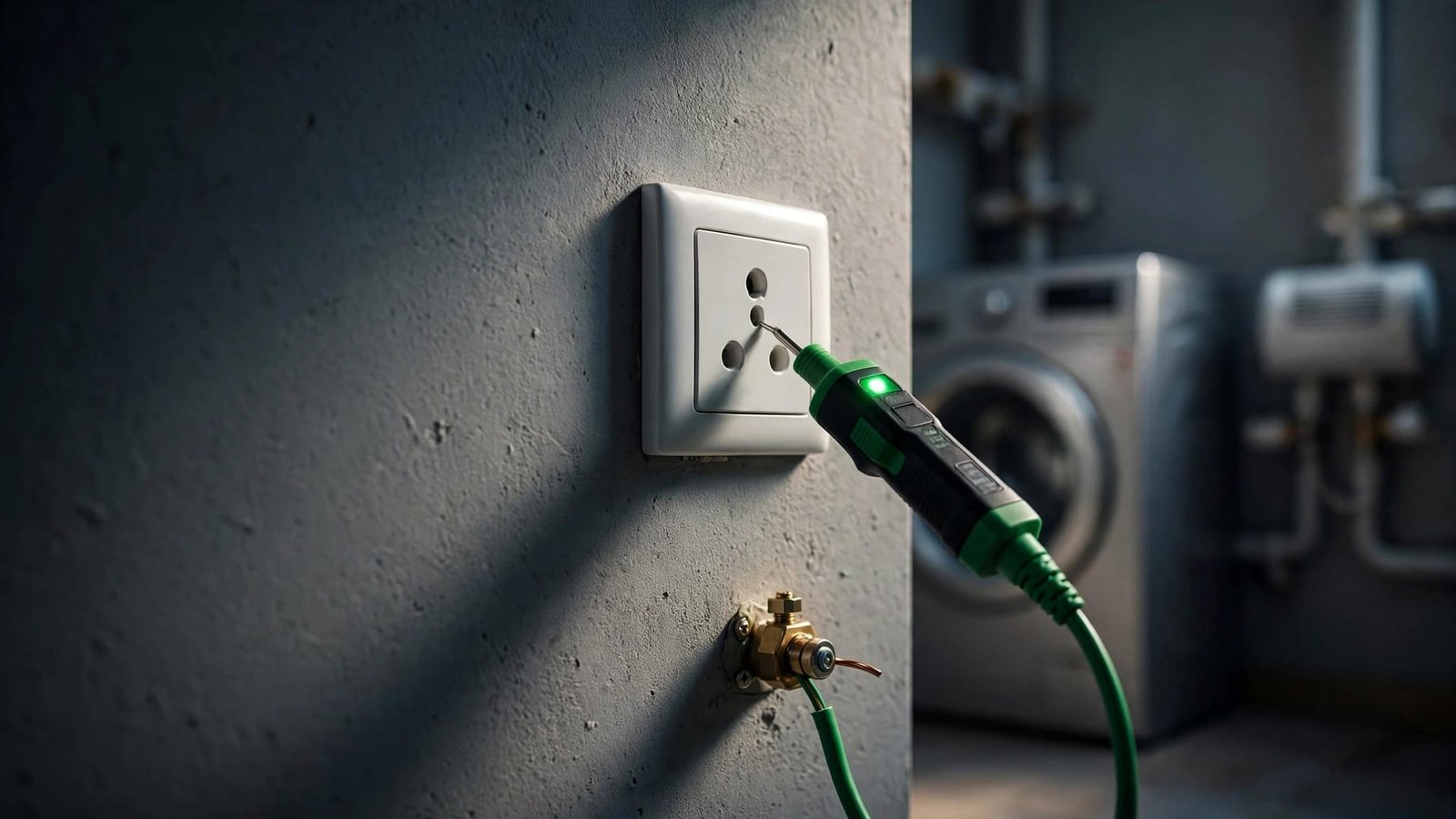
Electrical Earthing Checks Before Renting an Indian Apartment
 TBH Editorial
A shiny modular socket can lie.
You can walk into a bright flat, admire the balcony, picture your furniture by the window, then miss the one defect that can turn a routine appliance into a shock risk. Electrical earthing isn’t glamorous, but it belongs on your rental checklist before you hand over a deposit.
This isn’t about becoming an electrician in ten minutes. It’s about spotting what is visible, asking for proof, and refusing vague assurances when your safety is on the line.
Why electrical earthing matters before you sign
Earthing gives fault current a safer path away from a metal appliance body and toward the ground. If insulation fails inside a washing machine, refrigerator, geyser, microwave, or air conditioner, proper earthing helps protective devices disconnect the supply quickly.
Without it, the metal surface you touch may become part of the circuit. That is not a small maintenance issue. It is a preventable safety failure.
A three-pin socket is not proof
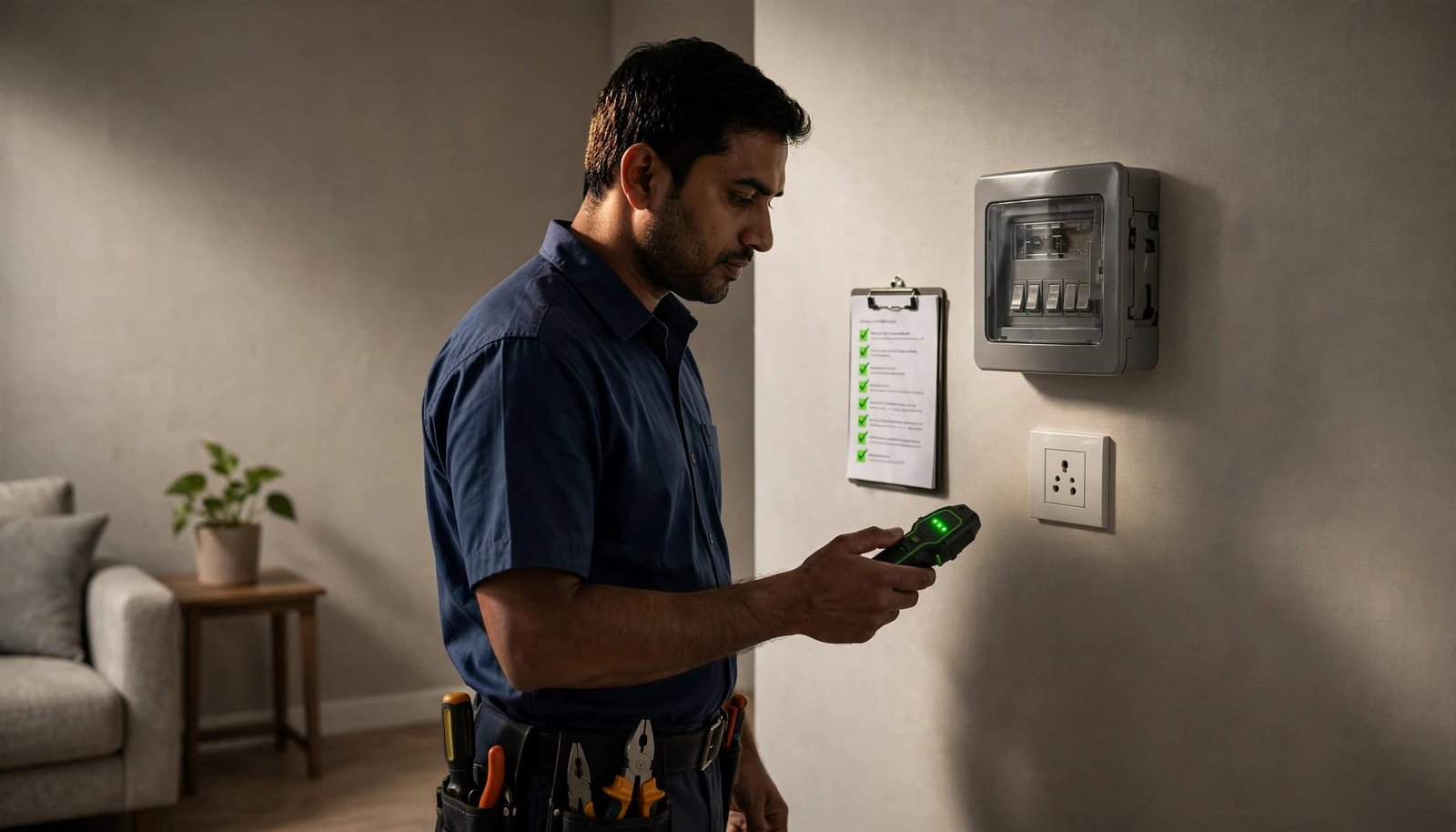
A socket with three holes looks reassuring. It only proves that someone installed a three-pin faceplate.
In older Indian apartments, a new modular socket may sit on old wiring. The earth contact may be disconnected, poorly terminated, or connected incorrectly. Sometimes the earth hole is only there for appearances. That false sense of safety is worse than an obvious two-pin socket because it encourages trust where none has been earned.
Look closely for cracked plates, loose contacts, burn marks, paint inside the earth hole, or plugs that sag in the outlet. These are visible reasons to pause.
Moisture raises the stakes
Bathrooms, kitchens, balconies, utility areas, and terrace-facing rooms deserve extra attention. Water and electricity don’t negotiate.
A geyser with no dependable earth connection is a serious concern. So is a washing machine beside a damp wall, or an air-conditioner circuit patched together after years of informal repairs. If a flat has recurring seepage, ask whether water has affected outlets, junction boxes, or the electrical board.
A coat of paint can hide a stain. It can’t repair a corroded connection behind the wall.
Start with a safe walk-through of the apartment
Do the first inspection in daylight, ideally before you sign the agreement. Take your phone, photograph concerns, and move slowly through each room.
Do not remove socket covers, touch wires, open the distribution board, or try homemade tests with a screwdriver, bulb holder, or bare cable. Those methods can injure you and tell you almost nothing useful.
Check the outlets you will actually use
Don’t inspect one socket near the entrance and call it done. Check outlets where your real life will happen:
- Look at the socket planned for the refrigerator, washing machine, geyser, microwave, air conditioner, desktop computer, and induction cooktop.
- Compare outlets across bedrooms, the kitchen, bathrooms, and balcony. A mix of two-pin and three-pin sockets can point to partial upgrades.
- Plug in a simple phone charger only if the socket looks sound and you have permission. Heat, crackling, a loose fit, or flickering power are reasons to stop.
A landlord may say, “The wiring is new.” Ask which wiring, which rooms, and when the work happened. Details matter.
Use a socket tester as a screen, not a certificate
A good plug-in socket tester can flag likely open earth, polarity problems, or other wiring faults at a particular outlet. It is a useful first-pass tool for renters.
But it cannot measure whether the earth path has low enough impedance to clear a fault quickly. It cannot confirm the health of the building’s earth electrode, the continuity of every protective conductor, or correct bonding across the property.
A socket tester can reveal a problem. A green or “correct” pattern cannot prove the apartment is safe.
If the tester flags a fault, photograph the result and ask the owner to arrange a qualified electrician. If it appears normal, keep asking questions. Electrical earthing needs more than one green light.
Ask for records, not reassurance
India’s Central Electricity Authority safety framework points to technical earthing and wiring practices under Indian Standards. The IS 732 code for electrical wiring installations connects wiring practice with earthing and protective bonding. IS 3043 is the technical reference for earthing systems around buildings.
You don’t need to quote standards at a landlord. You do need to ask questions that require a real answer.
Request these documents before paying
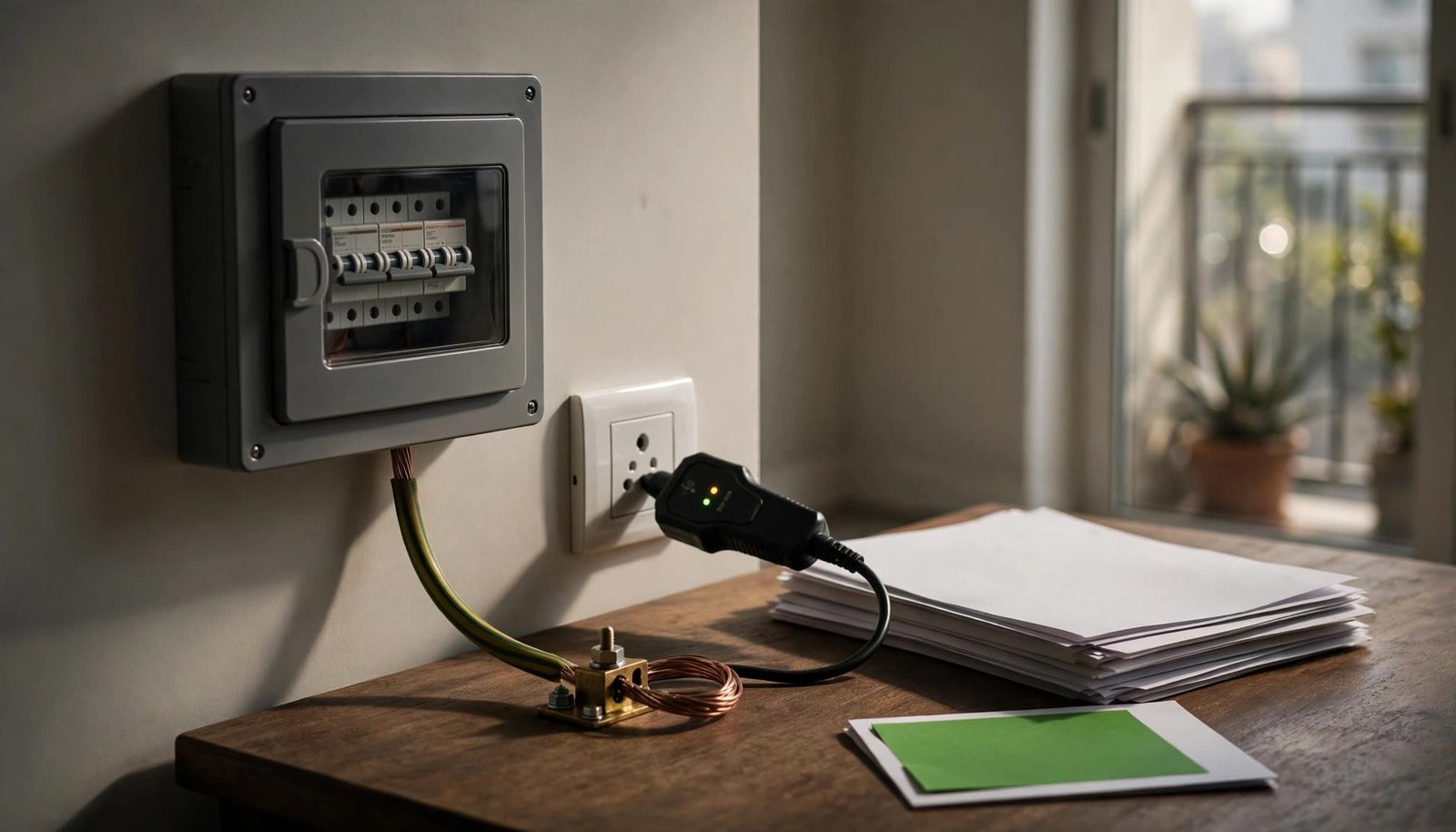
Ask for the latest available electrician’s report, electrical maintenance invoice, builder handover paperwork, or apartment association maintenance record. In a newer high-rise, the association may have records for common earthing, generator systems, lift equipment, and electrical rooms.
For the rented flat, request written confirmation of:
- the date of the last electrical inspection or repair;
- the electrician or firm that completed the work;
- whether the geyser, air conditioners, and heavy-load outlets were checked; and
- who will pay for testing and repair if an earthing fault appears after move-in.
A document isn’t magic. It can be old, incomplete, or unrelated to your flat. Still, paperwork creates a trail. A verbal promise disappears the moment a repair becomes inconvenient.
Know what the board can and cannot tell you
A properly closed distribution board with labelled circuits, MCBs, and an RCCB, ELCB, or RCBO is a positive sign. It suggests someone has invested in basic protection.
It does not replace earthing. Leakage protection and a protective earth work together. One is not a substitute for the other.
Ask the electrician to test the RCCB or RCBO operation and explain what it protects. Never accept “there is an ELCB” as the final answer to an earthing concern. For a practical second opinion on what renters should look for at outlets, this apartment outlet safety guide offers a helpful general checklist.
Red flags that deserve an electrician’s visit
Some problems are not negotiable. They need a licensed professional, not a tenant willing to take a chance.
Call for an inspection before signing if you notice frequent tripping, shock sensations from metal appliances, burnt plastic smells, scorched outlets, loose plugs, exposed joints, or a distribution board that feels hot. Also act if one socket works only when the plug sits at an angle.
Heavy appliances expose weak systems faster
Geysers, air conditioners, washing machines, ovens, induction cooktops, and water pumps put more demand on the system than a bedside charger. A flat can appear fine during a daytime viewing, then show faults once several appliances run.
Ask where the geyser circuit is, whether it has a dedicated protective device, and whether the bathroom outlet is correctly earthed. If the flat has a DG set, inverter, rooftop solar connection, or EV charging point, ask for a more thorough inspection. These setups can involve more complex bonding and changeover arrangements.
Wire colours can help only a little. A green-and-yellow conductor is commonly used for protective earth in modern work, but colours alone prove nothing. Old buildings, altered circuits, and careless repairs don’t always follow the expected pattern. Schneider Electric’s guide to electrical wire colours is useful background, not permission to inspect live wiring yourself.
Don’t let urgency make the choice
Rental markets can be brutal. Owners know someone else may take the flat by evening. That pressure is real, but it doesn’t make a suspect electrical system less risky.
If the owner refuses an electrician’s inspection, dismisses a fault indicator, or asks you to “manage for now,” treat that as information. You are seeing their maintenance culture before you become dependent on it.
Put repair duties in writing
A landlord who says they will fix an issue later has not fixed it. You need a date, a responsible person, and a written record of the completed work.
Send a short message or email after the viewing. Attach photos. Name the outlet or appliance point. Ask for inspection and repair before possession.
Use plain, useful language
You don’t need a legal essay. Write something like:
“During the visit, the socket near the washing-machine point appeared loose and the tester indicated a possible earth fault. Please arrange inspection by a qualified electrician and share the repair confirmation before handover.”
Keep the discussion focused on the condition, not an argument about blame. Ask for the fault source to be fixed, not a new faceplate installed over the same problem.
Where the Model Tenancy Act framework applies, it includes a limited repair-and-deduct route after notice, with deductions capped at 50 percent of monthly rent. State rules and rental agreements vary. Don’t withhold rent or deduct repair costs without checking the law that applies to your tenancy.
Make the agreement carry some weight
Add a clause, if the owner agrees, that confirms the flat’s electrical installations are safe for normal residential use and that the landlord will address pre-existing electrical defects. Include the condition of the geyser, air conditioners, and major appliances if they are part of the rental.
A serious owner won’t be offended by a safety clause. They may negotiate wording, but they should understand the request.
Safe homes are part of systemic change
We talk about sustainability as if it begins with bamboo toothbrushes and tote bags. Those choices can matter. But plant-based living doesn’t make a dummy earth safe, and everyday mindfulness cannot repair neglected building infrastructure.
The more honest question is this: who pays when a rental home’s defects are ignored? Usually the tenant, the electrician called after a failure, or the worker who must repair damage under pressure.
Repair culture is an environmental issue too
Bad repairs create waste. Burnt switches, discarded cables, damaged appliances, and short-life replacements all add to the ecological impact of careless housing. Proper maintenance supports a circular economy because equipment lasts longer and fewer materials are thrown away after preventable failures.
Sustainable business models in housing should include inspection budgets, maintenance logs, qualified workers, and transparent repair timelines. That sounds boring. Good. Safety is usually boring right up until it isn’t.
Climate literacy also means seeing how systems connect. Unsafe rental housing, broken drainage, construction dust, and neglected public spaces all land hardest on people with the fewest choices. The same local accountability that protects tenants can help defend urban biodiversity, cleaner streets, and healthier neighbourhoods.
If you want that accountability to reach beyond your own flat, Explore Our Active Missions supporting on-the-ground climate literacy and community action.
A safer rental starts with one firm question
You don’t need to diagnose an earthing system yourself. You need to notice what doesn’t look right, test only what is safe to test, and ask for proof before you move in.
The strongest protection is not a polished socket or a landlord’s confident smile. It is electrical earthing that has been properly tested, documented, and repaired when needed.
Before you pay the deposit, ask one clear question: “Can you show me the electrical inspection record for this flat?”