
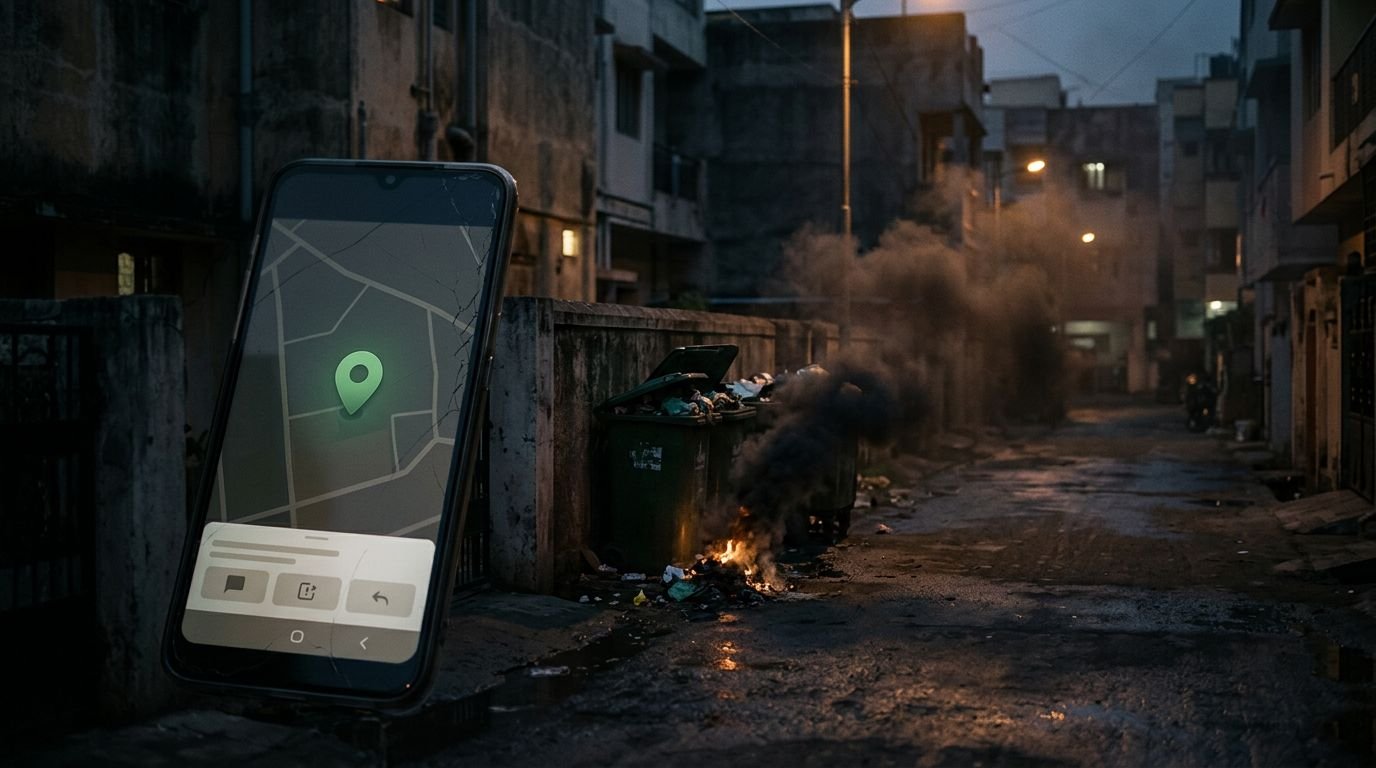
How to Report Waste Burning in Your Indian Neighbourhood
 TBH Editorial
A burning rubbish pile is more than a public nuisance. It is a smokestack at breathing height, filling the same air used by children, vendors, walkers, and people sleeping behind thin windows.
If you need to report waste burning, speed matters. A precise location, safe evidence, and a clear description of public harm make the complaint actionable. Keep the ticket number, so you can track the record beyond a municipal inbox.
You don’t need to identify every chemical in the smoke. You need to make the source, pattern, and public harm impossible to ignore.
Key Takeaways
- Treat waste burning as a health risk. Keep people away from active fires, call 112 for immediate danger, and reduce smoke entering homes.
- Use the right complaint routes. Report sanitation failures through the Swachhata-MoHUA app and report active smoke through SAMEER or the relevant State Pollution Control Board; use both routes when appropriate.
- Build an actionable record. Capture safe, location-specific evidence, note dates and repeat patterns, describe who is exposed, and save every ticket number and response.
- Ask for prevention, not only clean-up. Request an inspection during the burning period, removal of the waste, restoration of collection services, and measures that will stop the next fire.
- Escalate with a paper trail. Follow up through local officials, use RTI for existing inspection and action-taken records, and consider further legal advice only when routine administrative routes fail.
Treat burning waste as an active health risk
During waste burning, mixed materials can release harmful pollutants. Plastic waste, packaging, food scraps, rubber, cloth, and e-waste may produce fine particles, carbon monoxide, nitrogen oxides, and toxic combustion by-products. Burning these materials can also contribute to plastic pollution and toxic smoke.
If anyone is coughing badly, struggling to breathe, feeling chest tightness, or if smoke has entered a home with children or older residents, call 112 first. File the civic complaint after people are safe.
PM2.5 does not stop at your window
Fine particulate matter, especially PM2.5, can travel deep into the lungs and enter the bloodstream. PM10 is larger, but both can linger in indoor air after visible smoke fades, creating an air pollution risk.
That is why “the smell is gone” is not a clean-air test. Close windows and balcony doors facing the fire. Avoid dry sweeping, which can lift settled ash and dust back into the room. Wipe surfaces with a damp cloth once the event has passed.
A repeated burning spot can also become part of a wider pollution burden. Cumulative pollution monitoring in India matters because one street’s smoke is rarely the only exposure people carry.
Don’t trade smoke for a confrontation
Don’t walk into a burning site to get a close video. Don’t argue with workers, guards, neighbours, or waste pickers near an active fire. If a battery, chemical container, fuel, or e-waste appears to be involved, keep even more distance. E-waste may pose a heavy metal pollution hazard, depending on the materials involved.
Photograph from a safe public place. Let the municipal body, fire service, or pollution-control authority handle enforcement.
A burning pile that flares for 15 minutes each evening is not a one-time nuisance. It is a repeat exposure event, and it needs a repeatable record.
How to report a burning-waste problem through the right channel
Open waste burning often falls between two public systems: municipal sanitation and air pollution enforcement. That makes it both a waste management and public-service failure.
The first route depends on where you live, what is burning, and whether the municipal solid waste service failed.
| What you see | First complaint route | What to report |
|---|---|---|
| An open garbage heap or missed collection | Municipal corporation or ward sanitation team | Landmark, photo, waste pile size, collection failure |
| Active smoke, plastic waste burning, repeated fires | SAMEER app and state board | Time, GPS location, photos, smoke direction, repeat pattern |
| Burning on village land or near a drain | Gram panchayat or block office | Exact site, nearby homes, school, water body, repeat dates |
| Fire spreading or people feeling unwell | Emergency services at 112 | Active fire, location, immediate health danger |
Use the official Swachhata-MoHUA app as a municipal grievance redressal route for a garbage dump, failed waste collection, illegal dumping, or another sanitation failure. Add a photo, landmark, and ward details, plus the words “active burning” or “smoke entering nearby homes” in the description.
File through two routes when smoke is involved
For active smoke from waste, file an air-quality complaint through the CPCB’s SAMEER app or your state’s pollution control board complaint route as well. SAMEER is designed for complaints about smoke and air quality, including garbage fires, and can pass the report to the relevant state board.
Attach the same two or three strongest photos to both complaints. Keep the ticket numbers together. The municipality can remove the pile. The pollution-control authority can address the smoke and repeated violations.
In rural areas, submit a written complaint to the gram panchayat, the relevant local panchayat office, and ask for a receiving stamp or diary number. If the burning continues, copy the Block Development Office and the regional state board.
Build a complaint an inspector can act on
A blurry photo of smoke may help, but a clear record of repeated waste burning gives an inspector something actionable. Think like someone who has to find the site during a busy workday.
Record the pattern, not only the flame
Capture only what you can safely verify:
- Take a wide photo that shows the road, landmark, gate, shop sign, or nearby building.
- Add a close photo or short video showing smoke, ash, plastic waste, tyres, or mixed materials.
- Note the date, time, wind direction, and whether the fire happens every day or after waste collection fails.
- Write down who is exposed, such as homes, a school gate, street vendors, sanitation workers, or a bus stop.
- Save every ticket number, screenshot, follow-up email, and response.
Don’t exaggerate. You don’t need to claim that a pile contains a named chemical unless you can see the material. “Mixed waste with visible plastic packaging, producing dense smoke” is strong, factual language.
Use plain language that demands a real response
Your complaint should request inspection during the active burning period, not a generic clean-up at some later date.
“I am reporting repeated open burning of mixed waste at the stated landmark. Smoke is entering nearby homes and public spaces. Please inspect the site during the active period, remove the waste, prevent repeat dumping, and share the action taken against this complaint number.”
Ask for more than a swept pavement. If the service failed, ask when it will resume. If the pile is on public land, ask what barrier, signage, collection point, or monitoring plan will stop the next fire.
What the law says about illegal waste burning
Open waste burning is not a lawful waste disposal method. It breaches waste management duties and creates a public-health problem.
The CPCB’s central solid-waste portal lists the Solid Waste Management Rules, 2026, notified in January and effective from 1 April 2026. The rules sit within a wider waste management framework that assigns duties to waste generators, local bodies, and pollution-control authorities.
For residents, the practical point is plain: municipal solid waste cannot be thrown, buried, or burned in streets, drains, open public spaces, or water bodies. Illegal dumping is related but distinct, and both can breach environmental regulations governing waste disposal. Burning plastic waste contributes to plastic pollution and may also implicate rules concerning single-use plastics. Smoke pollution may bring the State Pollution Control Board into the case as an air pollution matter. Repeated or hazardous conduct may warrant review as a potential environmental crime, but only where the facts and applicable law support that classification.
Fines are local, so don’t quote a random number
There is no single national fine that applies identically in every lane, town, or panchayat. Local bye-laws, enforcement powers, and the scale of the violation determine whether conduct is punishable by fines and what amount may apply.
The Pune Municipal Corporation action plan on open burning records a revision to its garbage-burning penalty. It is a useful warning against repeating old WhatsApp figures as universal law.
Ask the authority three direct questions: Which local rule applies? Has a notice or fine been issued? What action will prevent the next fire?
A clean-up photo after the flames are gone is not enough. Accountability means stopping recurrence.
Escalate when the first complaint disappears
A complaint number is the beginning of a paper trail, not the finish line. Keep a short log with the filing date, department, officer response, fire dates, and screenshots.
Follow up with the authority that owns the failure
If the waste pile remains, reply to the original ticket. State that the waste burning is recurring, then attach one fresh photo with its new date and time. Ask for an inspection during the usual burning period.
Use the municipal grievance redressal route first, then escalate through your ward councillor, ward office, municipal commissioner, or panchayat secretary. If local officials don’t respond, copy the regional pollution control board and include the complaint number and dates.
A residents’ welfare association can submit a joint letter, but one person should maintain the evidence file so nobody loses the record.
The CPCB’s implementation-status material is a reminder that solid waste is a public service with rules, reporting duties, and named institutions. It is not a favour residents should beg for.
Use RTI when “action taken” means nothing
If officials claim the matter is resolved but illegal waste burning continues, file an RTI request under the RTI Act, 2005. Ask for records that already exist.
Request copies of inspection reports, complaint-register entries, action-taken reports, notices, site photographs, and collection records. Specify the named location and a defined period. Also request records of illegal dumping or other site failures during that period.
Avoid asking, “Why is the air polluted?” That asks for an opinion. Ask, “Provide copies of inspection reports and action-taken records for the named issue at this location between these dates.” Records are harder to dismiss.
You can also escalate an ignored municipal grievance through CPGRAMS. Keep the language factual. The aim is an inspection and a durable fix, not a dramatic social-media fight.
If administrative routes fail, consult qualified counsel about whether the National Green Tribunal has jurisdiction. It isn’t a routine complaint app or a guaranteed next step.
Stop treating waste burning as an individual habit
People burn waste for reasons that municipal reports often hide: unreliable collection, overflowing community bins, no storage space, mixed waste, contractor failures, and a belief that smoke is faster than waiting for a truck.
That does not excuse waste burning. It tells us where enforcement must look.
A complaint is not a waste management system
Punishing only the person who lit a pile while ignoring a missed collection route is lazy governance. Ask whether the neighbourhood’s municipal solid waste system provides regular waste collection and separate wet and dry waste streams.
It should also provide safe handling for plastic waste, sanitary waste, and e-waste, plus a place for bulk waste.
A working circular economy needs a functioning solid waste management system and a clear waste disposal hierarchy. That means reduction, reuse, recycling, composting, repair, and diversion from landfill sites. The informal recycling sector matters, but workers need safe conditions and fair pay. Regulated waste-to-energy plants may have a limited role after these steps, never as a substitute for them.
Systemic change means putting these duties into contracts, ward budgets, inspections, and public dashboards.
Make your concern useful beyond one fire
Reducing single-use plastics can lower the waste a household brings home. It can’t excuse a municipality that leaves mixed waste rotting in the street.
Climate literacy means seeing pollution as more than a personal lifestyle issue. Poorly controlled burning contributes to carbon emissions and greenhouse gases. It also raises questions about who collects waste, who gets fined, whose child walks past smoke, and whose complaints are ignored.
The ecological impact reaches beyond people. Ash and plastic residue settle on soil, leaves, drains, and small green spaces, worsening plastic pollution and adding pressure to already fragile urban biodiversity. If you want direct work connecting public accountability with local ecosystems, Explore Our Active Missions supports on-the-ground climate literacy and biodiversity projects.
Frequently Asked Questions
How do I report waste burning in India?
Report the sanitation failure through the municipal corporation or the Swachhata-MoHUA app, including the exact location, landmark, photos, and details of the burning. For active smoke or repeated fires, also file a complaint through the SAMEER app or your State Pollution Control Board.
What evidence should I collect?
From a safe public place, take a wide photo showing the location and a close photo or short video showing the smoke and materials being burned. Record the date, time, wind direction, repeat pattern, people exposed, and every complaint or ticket number.
Should I call 112 for a waste-burning complaint?
Call 112 when the fire is spreading, someone is struggling to breathe, smoke has entered a home, or there is an immediate risk to people. For a recurring but non-emergency fire, file municipal and pollution complaints and keep the evidence record.
What can I do if the complaint is marked resolved but burning continues?
Reply to the original ticket with a new dated photo and request an inspection during the usual burning period. If the problem remains unresolved, escalate through the ward office, municipal commissioner, panchayat officials, or pollution-control board, and use RTI to request existing inspection and action-taken records.
Give the smoke a record it cannot escape
A burning pile asks you to look away because it is familiar. Don’t. Take safe evidence, file municipal and pollution complaints, and save every acknowledgement.
You do not need a laboratory to report waste burning. You need an exact location, an honest description, and patience to follow the paper trail.
Give the next smoke event a ticket number, a timestamp, and a public record.