India Green Building Ratings Still Miss Embodied Carbon
 TBH Editorial
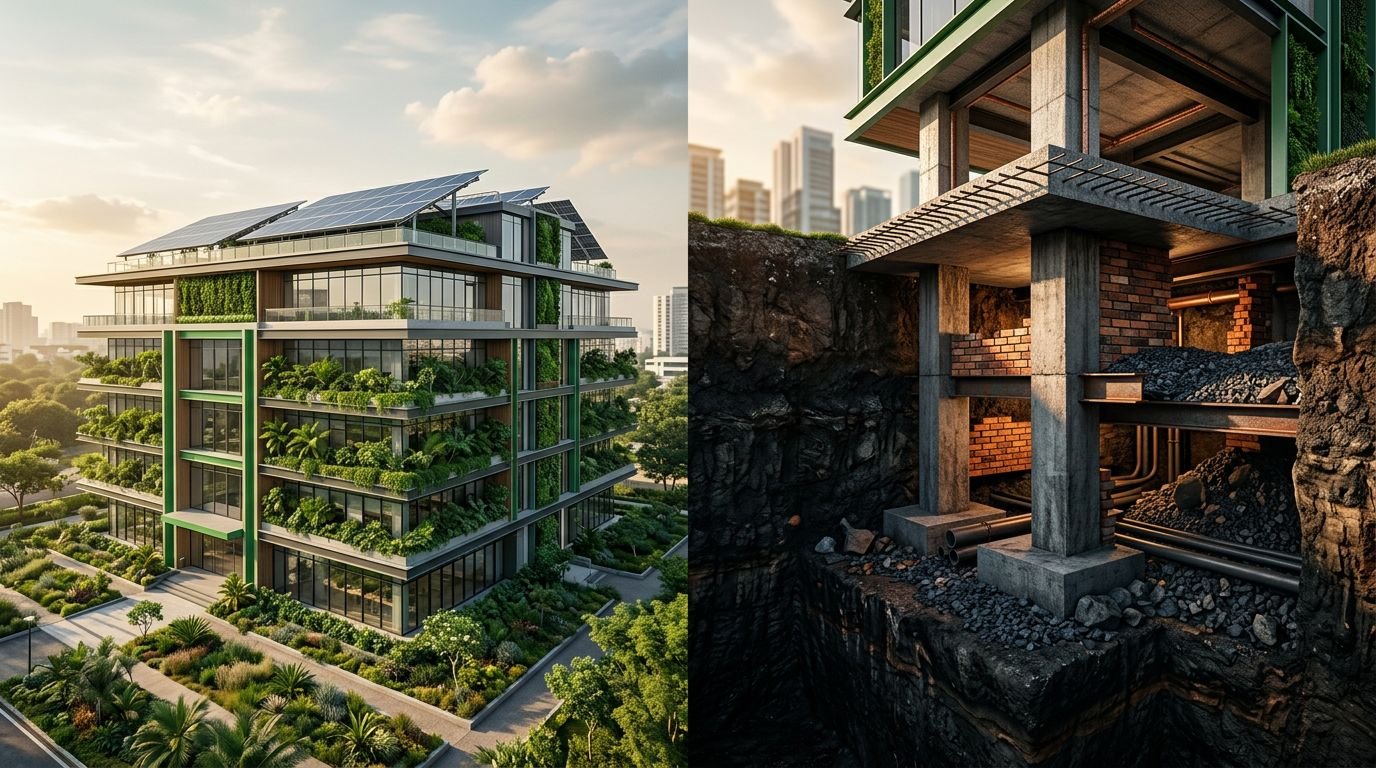
A building can save electricity for decades and still arrive with a heavy carbon debt on day one.
That is the uncomfortable blind spot in many conversations about India green building ratings. We celebrate solar panels, low-flow taps, shaded glass, and energy-efficient air-conditioning. Meanwhile, carbon emissions from cement, steel, bricks, aluminium, glass, and transport are already locked into the structure.
Green building certification standards in India are improving, but embodied carbon still gets less attention than it deserves. If we only measure what a building consumes after handover, we miss what it took to build it.
Key Takeaways
- Green ratings have traditionally focused more on operational energy than the carbon released before a building opens.
- The GRIHA rating addresses material impacts through embodied energy credits, but carbon is not yet a standalone mandatory metric across its system.
- IGBC has moved faster with a net zero carbon pilot and embodied carbon benchmarks, yet this remains outside much of mainstream certification.
- Cement, steel, sand extraction, transport, demolition waste, and responsible waste management all carry an ecological impact that a glossy rating plaque can hide.
- Systemic change means making whole life carbon disclosure a normal part of design, procurement, contracts, and public approvals.
A “Green” Building Can Begin With a Carbon Problem
Most people picture building emissions as electricity use. They think of lifts, air-conditioners, lighting, pumps, and glass façades baking in the sun. This focus on energy efficiency is understandable, but it is only half the story.
Embodied carbon is the pollution released while extracting raw materials, manufacturing products, transporting them, constructing the building, repairing it, and eventually demolishing it. Concrete does not arrive as a neutral grey substance. Steel does not appear on-site without furnaces, mines, freight, and energy.
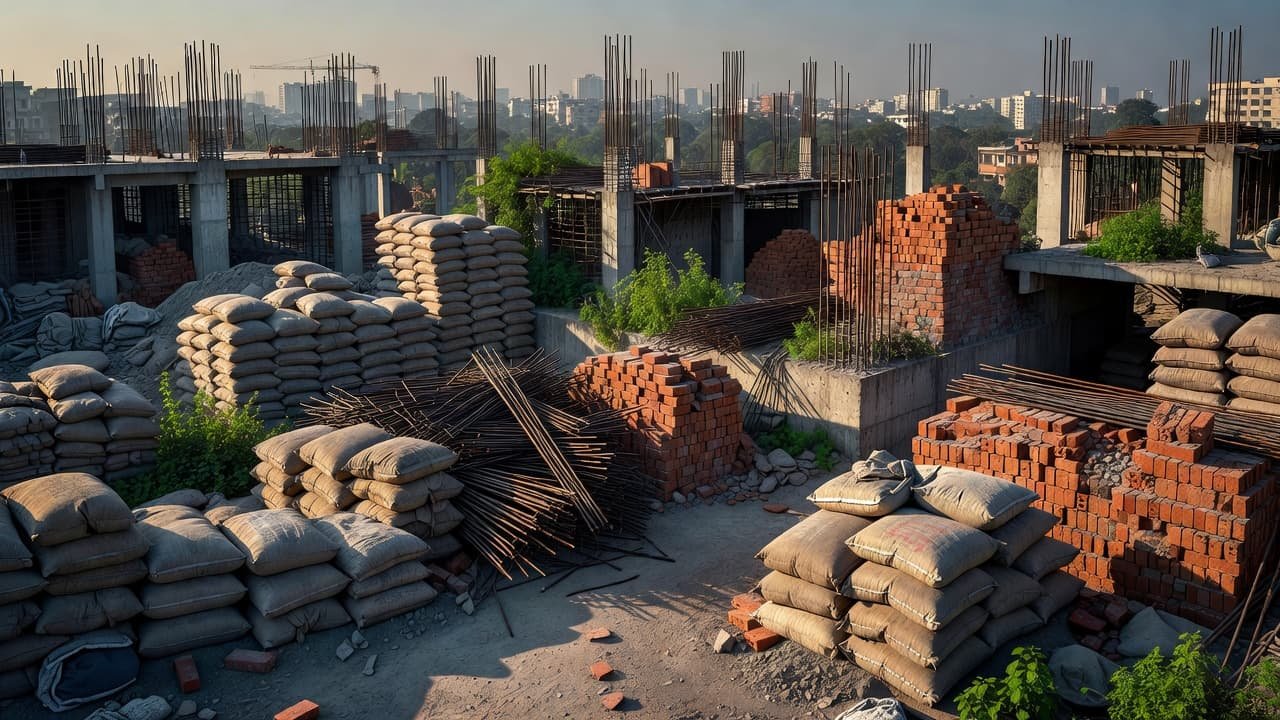
A short, glass-heavy commercial building can earn praise for efficient operations while carrying a large upfront carbon load. It may look clean in its brochure, but the emissions were simply released earlier, far from the lobby.
This matters more as structures become more efficient to run. When operational energy consumption falls, the impact of building materials takes up a bigger share of the full climate bill. The World Green Building Council’s embodied carbon framework calls for major upfront reductions, prioritizing resource efficiency rather than just focusing on better performance after occupation.
India’s construction sector cannot treat this as a niche accounting issue. Cement production, steel production, freight movement, sand mining, quarrying, and demolition are physical acts with physical consequences. They affect riverbeds, worker health, neighbourhood air, waste sites, and urban biodiversity as we strive to create a sustainable built environment.
A low-energy building is not automatically a low-carbon building.
The problem is not that green ratings are useless. The problem is that a rating can reward visible features while failing to ask the hardest question: how much carbon did we release before anyone switched on a light?
What GRIHA and IGBC Measure, and What Still Falls Through
India has two major homegrown frameworks: GRIHA, backed by TERI, and the Indian Green Building Council, which operates under the Confederation of Indian Industry (CII). Both have pushed developers beyond the old idea that green construction means adding a few plants near reception. While these local efforts are significant, they often coexist or compete with international frameworks like LEED certification from the USGBC and GBCI, or the EDGE certification, which provides its own unique metrics for efficiency.
Water conservation, energy performance, waste handling, daylight, materials, and indoor environmental quality all matter. That progress is real, though it is primarily focused on operational green certification rather than the construction process itself.
But the treatment of embodied emissions remains uneven.
GRIHA currently uses an embodied-energy reduction pathway for structural systems and masonry. A project can earn points by reducing embodied energy by 10%, 20%, or 30% compared with a conventional reinforced-concrete and burnt-clay-brick baseline. That approach can reward AAC blocks, recycled content, local materials, and alternatives to high-impact walls.
Still, energy is not carbon. India has a changing electricity grid, different fuel sources, and material supply chains with wildly different emissions. A carbon calculation needs to show the actual climate cost, not only a proxy. Benchmarks set by the Bureau of Energy Efficiency or the Energy Conservation Building Code are helpful, but they do not always capture the full carbon footprint of the materials themselves.
IGBC has taken a sharper step through its Net Zero Carbon Rating pilot. Its framework sets an embodied-carbon benchmark of 700 kg CO2e per square metre for civil materials, excluding finishes, for Near Net Zero and Net Zero levels. Projects must also show at least a 2% reduction against the benchmark.
The IGBC Net Zero Carbon pilot document is a welcome shift because it puts a number on the table.
| Rating approach | What it does well | What remains weak |
|---|---|---|
| GRIHA material credits | Rewards lower embodied-energy choices | Carbon is not a universal mandatory metric |
| IGBC Net Zero Carbon pilot | Sets an embodied-carbon cap and reduction target | It is not yet the default route for every project |
| Conventional green certification | Improves operational energy and water use | Can overlook upfront emissions and future demolition |
For instance, a project might achieve a Platinum rated or Gold rating status under various systems, but these accolades primarily reflect operational efficiency. IGBC Green New Buildings Version 4 now includes embodied-carbon accounting. That deserves credit. But a pilot, a credit, or an advanced rating path cannot carry the national burden alone.
If a large project can secure a mainstream green label without publishing its whole-life carbon, the public is being asked to trust a partial picture.
The Material Bill Is Also a Community Bill
Embodied carbon is often discussed like a spreadsheet problem. It is not. It is a people problem.
A tonne of cement has a supply chain. So does every steel bar, ceramic tile, glass panel, and aluminium frame. These building materials involve raw material extraction that can damage habitats. Truck movement adds diesel fumes, while poorly managed construction sites spread cement dust and loose soil into public roads.
That dust does not stay inside the project boundary.
It settles on roadside food stalls, school bags, window grills, leaves, and lung tissue. Traffic then crushes and lifts it back to breathing height. A project cannot claim a low green building footprint if its construction phase leaves nearby workers and residents inhaling the cost.
The same applies to demolition. A building designed to be smashed into mixed rubble has no serious place in a circular economy. Inadequate waste management makes reuse difficult, as recoverable materials often get buried, burned, or dumped. Public money later pays for debris removal, damaged roads, blocked drains, and polluted land.
Research on building life cycles also shows why material transport cannot be treated as an afterthought. A 2024 review of building embodied emissions found that material transport made up a meaningful share of total carbon emissions.
That should change how developers choose suppliers.
Local sourcing is not automatically clean. A nearby product made in a dirty kiln may carry more impact than a better alternative transported from further away. The answer is measurement, not a comforting slogan.
This is where sustainable business models need more backbone. Developers should not sell a green story while outsourcing the dirty parts to subcontractors, mines, brick kilns, transport fleets, and waste yards with little scrutiny. By prioritizing these considerations, the industry can better contribute to a sustainable built environment.
Climate justice begins where the construction gate ends.
Make Whole-Life Carbon a Condition, Not a Bonus Point
India green building ratings need a harder baseline. Implementing mandatory requirements for every large project to calculate and disclose whole-life carbon before approval is essential, rather than waiting until the design is fixed and materials are already ordered.
That means looking at the full chain:
- Material extraction, manufacturing, transport, construction, maintenance, replacement, and end-of-life recovery.
- Structural choices, including whether a building is oversized, over-glazed, or built with more concrete than it needs.
- Demolition plans that separate reusable components instead of treating everything as rubble.
- Construction controls that prevent dust, uncovered debris, and waste from entering surrounding streets.
Design less before you design greener
The lowest-carbon material is often the material a project never uses.
Do we need another basement? Does every facade need imported glass? Can an existing structure be repaired and adapted? Can floor plates reduce their green building footprint by using less cement-intensive systems without compromising safety?
While features like energy efficiency, water conservation, rainwater harvesting, and renewable energy remain vital components of modern design, these established goals should not overshadow the urgent need to address embodied carbon. Those questions are less glamorous than rooftop solar, but they matter more at the beginning of the process.
A rating should reward material efficiency, adaptive reuse, longer building life, repairable components, and verified reclaimed materials. It should not let carbon offsets become a permission slip for excessive concrete.
Procurement needs evidence, not promises
Architects and developers need Environmental Product Declarations where available, reliable Indian material databases, and life-cycle assessment tools that match local conditions. GRIHA already supports carbon assessment through One Click LCA tools. That capability should move from a specialist feature to ordinary practice.
Public agencies can help by requiring carbon limits in tenders for schools, hospitals, residential projects, offices, and metro stations. A government contract should not reward the cheapest short-term bid if it shifts pollution and repair costs onto the public.
Residents have a role too. Everyday mindfulness includes asking sharper questions before praising a new project as sustainable. What was demolished? Where did the materials come from? Was waste recovered? Did the project protect nearby trees and workers?
That is not anti-development. It is climate literacy with its sleeves rolled up.
Community action matters because buildings shape the places where people breathe, walk, work, and raise children. Explore Our Active Missions to support on-the-ground work that connects climate literacy, local ecosystems, and public accountability in our pursuit of a sustainable built environment.
Even plant-based living and lower-consumption choices belong in this wider conversation. Personal choices reduce pressure on land and emissions. But personal virtue cannot replace rules for the industries pouring millions of tonnes of material into growing cities.
Frequently Asked Questions
Why is embodied carbon often overlooked in India green building ratings?
Traditional green ratings have primarily focused on operational energy efficiency, such as electricity usage from air-conditioning and lighting. Because these operational metrics are easier to measure and reward, the significant carbon emissions generated during the material extraction, manufacturing, and construction phases are frequently sidelined.
What is the difference between operational energy and embodied carbon?
Operational energy refers to the carbon released while the building is occupied and running, whereas embodied carbon encompasses the total emissions linked to the construction lifecycle. This includes the production of materials like cement and steel, the logistics of transport, and the eventual demolition of the structure.
Can a building be considered ‘green’ if it has high embodied carbon?
Technically, a building can achieve a high rating for its energy-saving features while still carrying a large ‘carbon debt’ from its construction. Current certifications often reward the visible, efficient performance of a building, but this can mask the ecological damage and high upfront carbon load caused during the building process.
How are GRIHA and IGBC currently addressing these concerns?
Both frameworks have begun to incorporate material impact metrics, with IGBC introducing a pilot for Net Zero Carbon that sets specific benchmarks for civil materials. While these represent positive steps forward, these carbon-focused pathways are not yet mandatory components of all mainstream certifications.
Green Ratings Must Count What Buildings Cost Before They Open
India does not need another decorative definition of sustainable construction. It needs ratings that count the carbon, dust, extraction, waste, and ecological damage built into every square metre.
While operational efficiency, solar panels, and water systems remain vital, embodied carbon cannot remain a mere footnote beneath a green plaque. Relying solely on a traditional operational green certification often ignores the true impact of materials. To achieve genuine sustainability, India green building ratings must evolve to prioritize the full lifecycle of a structure.
A building that protects its future occupants while harming the people and ecosystems around its construction site is not a complete climate solution. Whether it is a GRIHA rating or an IGBC assessment, we must move beyond the current frameworks to include mandatory lifecycle analysis. A robust green building certification should account for the cost of construction long before a building opens its doors.