How to Dispose of Expired Medicines Safely in India
 TBH Editorial
The most dangerous place for an expired tablet may be your bathroom bin. A minor household chore can raise questions about expired medicine disposal India, household health hazards, and wider public-health and environmental concerns.
An expiry date does not mean expired drugs turn poisonous at midnight. It means you can no longer rely on a medicine’s safety, quality, or strength.
Left in a drawer, a medicine can be swallowed by a child, shared by mistake, or used incorrectly, causing accidental poisoning.
Start with one honest rule: old medicines don’t disappear because we stop looking at them.
Key Takeaways
- Keep expired and unwanted medicines sealed, separate from active prescriptions, and out of reach of children and pets while you arrange disposal.
- Use a verified collection route first by checking pharmacies, district health offices, municipal bodies, State Drug Control Departments, or local programmes such as Kerala’s nPROUD.
- Never pour medicines into sinks or drains, and do not flush them unless the medicine is specifically named on the current CDSCO flush list.
- If no collection route exists and local guidance permits it, make medicines difficult to recognise and retrieve before placing them in household waste; this is a last resort, not a way to neutralise them.
- Safer pharmaceutical waste management also requires responsibility from manufacturers, pharmacies, regulators, and local bodies—not households alone.
Expired medicine disposal India starts before the bin
The problem is not only what happens after a tablet leaves your hand. Homes, pharmacies, manufacturers, and local bodies all shape pharmaceutical waste management, yet each can treat it as somebody else’s job.
Medicines do not vanish in a drain
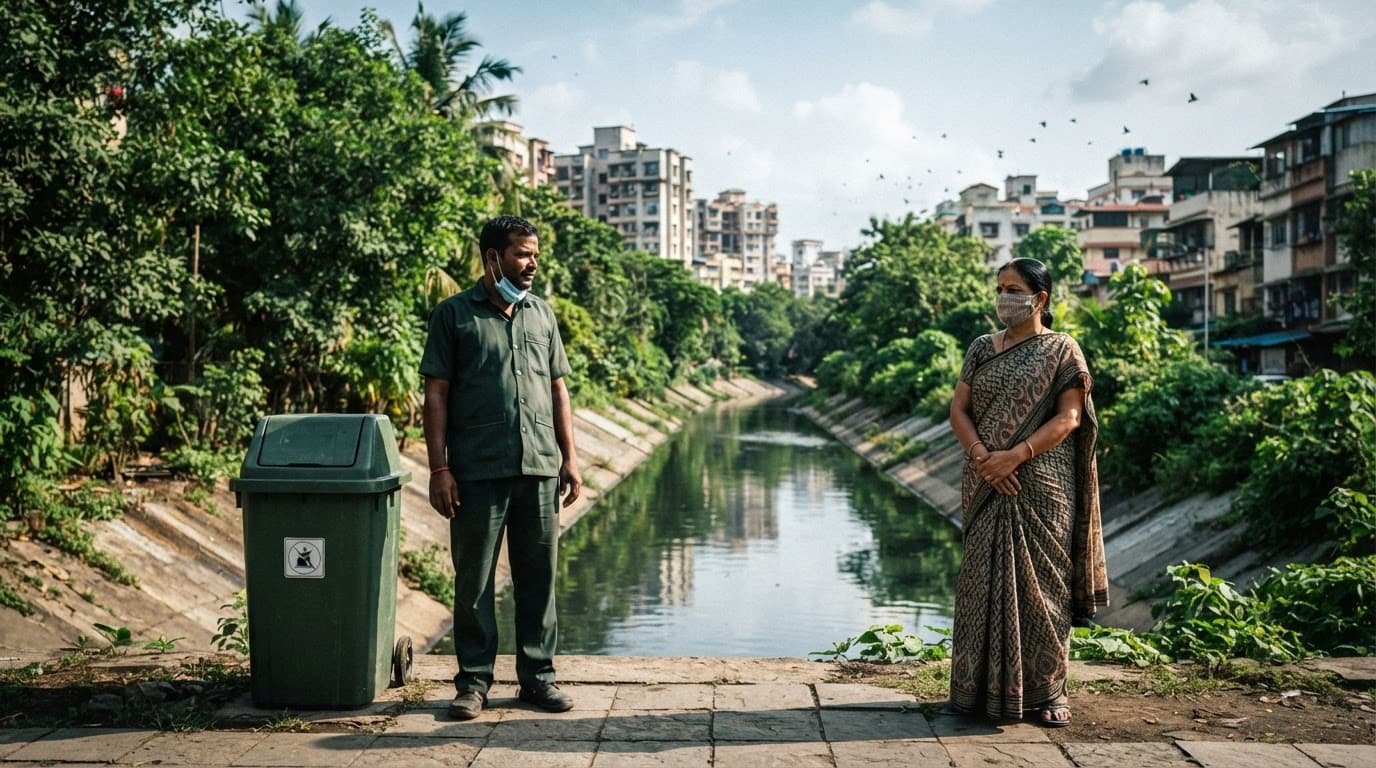
Flushing a strip of antibiotics or pouring syrup into a sink sends pharmaceutical chemicals into a system not built to remove them all. Wastewater treatment plants can reduce some pollutants, but they aren’t designed to remove every pharmaceutical active ingredient.
Repeated releases can add to environmental contamination in drains, soil, rivers, and groundwater. Antibiotic residues can contribute to antibiotic resistance and the wider problem of antimicrobial resistance when releases happen repeatedly.
One discarded strip won’t poison a river by itself. But millions of small, routine decisions create a waste stream with a real ecological impact.
The immediate risk is often inside the home
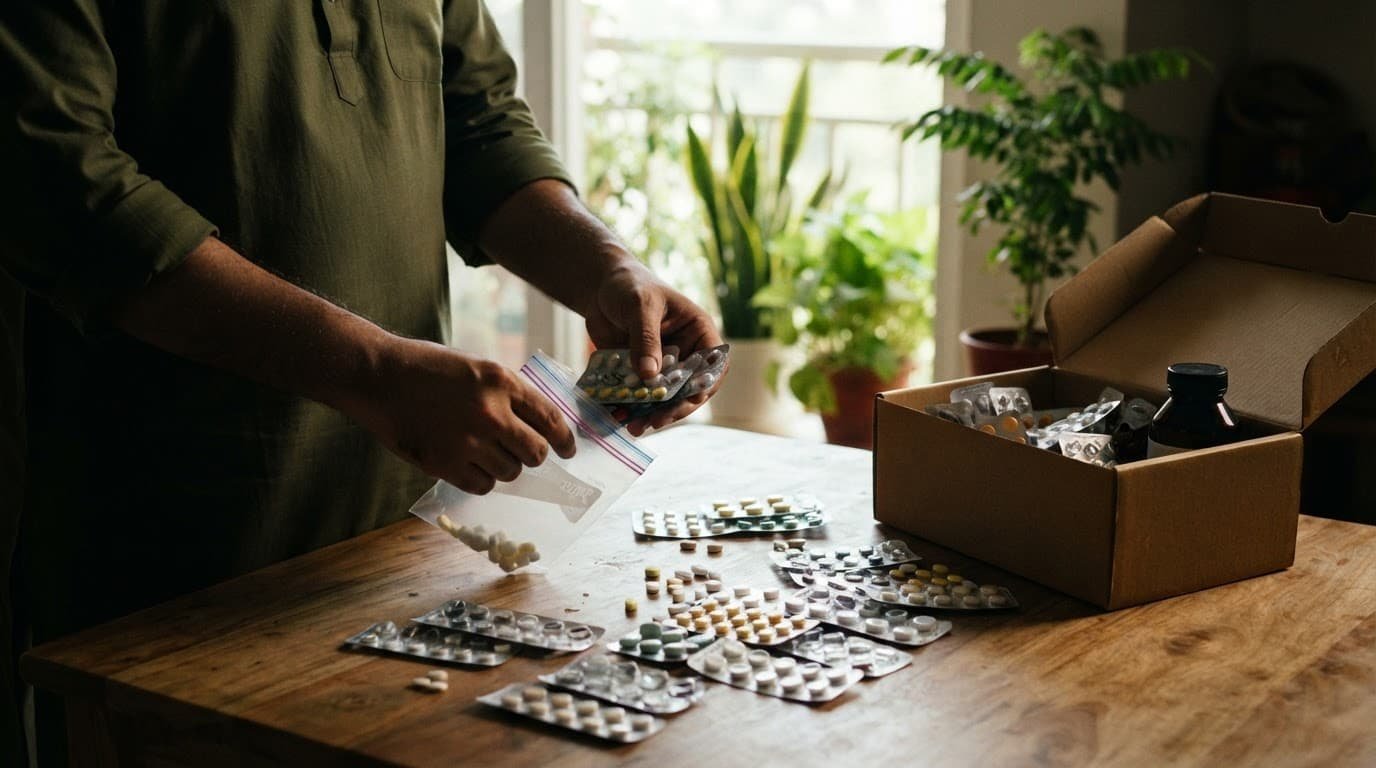
Expired drugs are often stored beside active prescriptions. That is how people take the wrong tablet during a rushed morning, or hand an old painkiller to a relative because “it should still work.”
Children, pets, and waste pickers can also find loose tablets or half-empty bottles. A child, pet, or adult taking the wrong product or dose can suffer accidental poisoning within minutes.
Keep old medicines sealed, away from food and active prescriptions, and out of children’s and pets’ reach while you find a verified route. These simple steps support safer disposal practices.
Find a collection route before using household waste
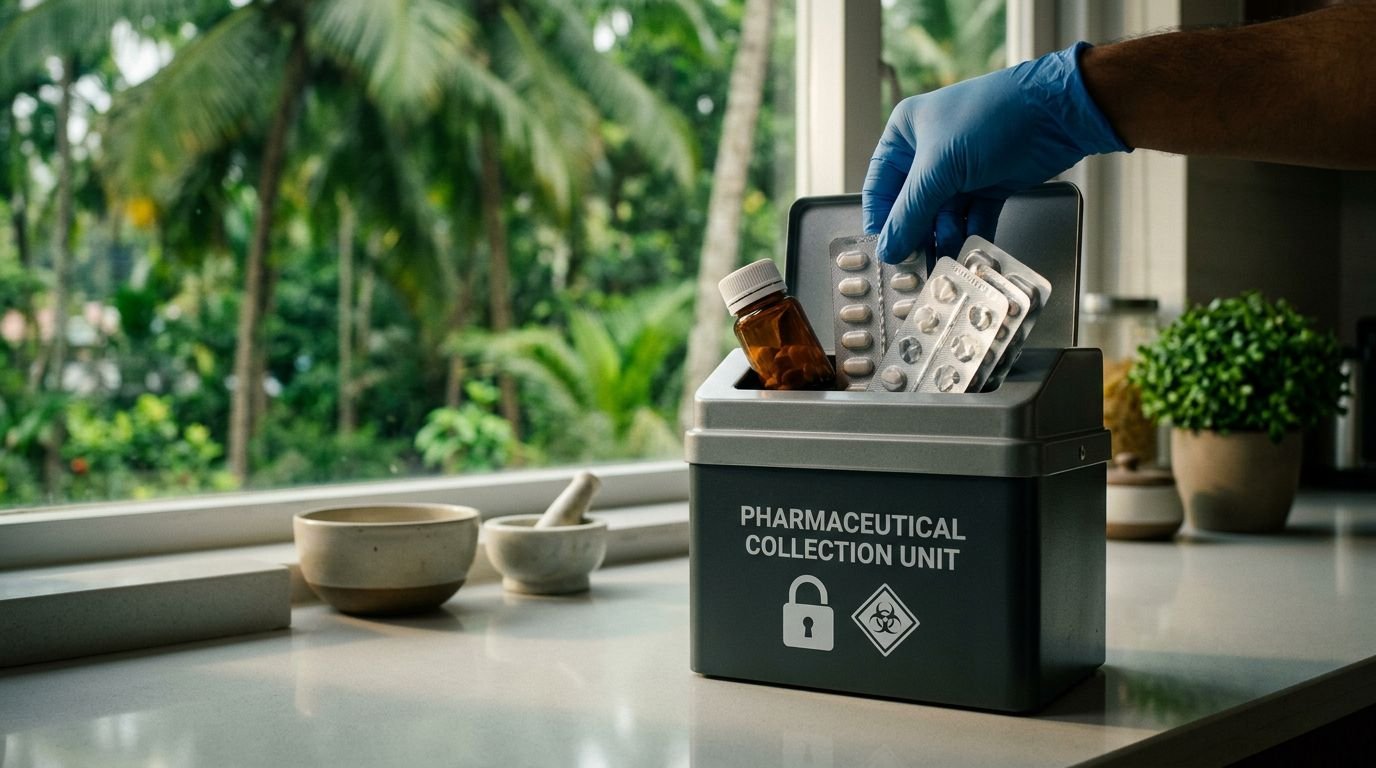
A drug take-back program is the best option because it moves medicines into a controlled, documented pharmaceutical waste management system. India does not yet have one permanent, nationwide public return system that works the same way in every city. That gap matters.
Kerala’s nPROUD project shows what a working system looks like
Kerala’s New Programme for Removal of Unused Drugs, or nPROUD, gives households a more responsible route. The initiative has used household collection periods, blue collection boxes, and designated drop-off points for unused and expired medicines.
Collected medicines move through a controlled supply chain to approved facilities for authorised treatment, including controlled incineration where appropriate, alongside other approved methods. This is reverse logistics, meaning products move back through the network for treatment rather than into drains or ordinary garbage. Kerala’s nPROUD initiative is a useful reminder that collection is possible when public systems decide it matters.
If you live in Kerala, check current district notices for collection dates and box locations. Rollout details can differ by area.
Ask a direct question at the right place
If you live elsewhere, contact local retail pharmacies, your district health office, municipal body, or State Drug Control Department. Ask one plain question: “Do you provide a prescription drug take back service for unused or expired household medicines?”
Don’t assume every pharmacy participates or leave a bag at the counter unless staff confirm acceptance. A hospital’s biomedical waste management system handles regulated medical waste disposal, but it isn’t automatically authorised to accept household returns.
The Central Drugs Standard Control Organization, or CDSCO, has circulated drug-disposal guidance to state and Union Territory regulators. That is progress, but funded, visible collection points and public awareness are still needed for easy access.
How to handle expired medicines at home
For safe home handling, collection remains the first choice. Still, many households will not find a verified return point nearby. In that case, the goal is simple: prevent misuse, prevent easy recovery, and avoid sending medicines straight into water.
Separate, check, and contain what you have
Pull expired drugs and unwanted medicines out of cupboards every few months. Keep them separate from medicines you still use. Check the active ingredient, not only the brand name.
Do not open capsules, crush tablets, or pour liquids into a drain while sorting. Keep bottles tightly closed until you know the disposal route. Put needles, lancets, and syringes in a puncture-resistant container, then ask a clinic or local authority about safe sharps disposal.
If a medicine is unexpired but no longer needed, treat it with the same care. A prescription made for one person is not a donation box for another.
Use household trash disposal only as a last fallback
When no collection route exists and local guidance permits household disposal, using the ordinary municipal solid waste stream should remain a last resort. Make the medicines hard to recognise and hard to retrieve:
- Remove tablets or capsules from their outer cartons, but do not crush them into powder.
- Mix them with an unappealing material such as used coffee grounds, soil, or cat litter.
- Put the mixture in a sealed bag or lidded container before placing it in household waste.
- Keep liquid medicines tightly capped, place them inside a sealed bag with absorbent material, and prevent leaks.
- Scratch out your name, prescription number, and address on empty packaging before discarding it.
These disposal practices make misuse harder. They don’t neutralise the medicine.
Never throw loose medicines into an open community bin. Never pour syrups, drops, or suspensions into the sink because the bottle looks almost empty.
The flush list is deliberately short
Most people have heard “don’t flush medicines.” That remains the right default. Most expired drugs should not be flushed. A narrow exception exists for a small group of high-risk medicines identified by CDSCO. The FDA flush list is a US reference, not India’s authority, so Indian households should follow the current CDSCO list.
Only named medicines get the flushing exception
CDSCO’s flush list includes 17 medicines, many linked to serious overdose or misuse risks. It includes active ingredients such as fentanyl, morphine, methadone, oxycodone, tramadol, diazepam, and methylphenidate. Verify the number and contents against current official CDSCO guidance before publication, since regulatory lists can change.
The reason is blunt. Some of these drugs can cause fatal harm from a single dose if a child, pet, or another person takes them. The exception exists to remove an immediate danger when no safer disposal route is available.
Check the active ingredient and dosage form against the current list. Do not flush an ordinary painkiller simply because it is a painkiller. Antibiotics, antacids, fever medicines, cough syrups, vitamins, and most prescription drugs do not get a blanket pass.
A public explanation of India’s disposal guidance can help you understand why the flush list is limited.
The flush exception exists to stop one-dose harm at home, not to turn the toilet into a medicine-disposal system.
The real fix is accountability before expiry
Household care matters. But putting every burden on families is a familiar way for systems to avoid responsibility.
Buy less, track more, and don’t hand medicines around
Expiry date management begins when medicine enters the home. Check your existing stock before buying another strip. Store medicines in a dry place away from heat. Use prescriptions as directed, not as a reason to stockpile.
Don’t donate leftover medicines to a neighbour, domestic worker, or informal charity drive. Only consider an unexpired product if a named hospital, charity, or local programme confirms in writing that it accepts that exact product under controlled conditions.
A circular economy has a hard boundary here. Unused medicines can’t be casually recirculated because waste isn’t the same thing as safe supply.
Collection systems must become ordinary public infrastructure
Systemic change looks less glamorous than public awareness alone. It means ward-level collection maps, clear pharmacy duties, and instructions people can actually follow.
Good pharmaceutical waste management needs reliable funding, documented handovers, safe treatment, and public reporting on what was collected and destroyed. The system also needs extended producer responsibility, so manufacturers and other supply-chain participants help finance or organise collection and treatment.
Drugmakers, distributors, retailers, and regulators share duties across the supply chain. Responsible disposal practices at home matter, but they can’t replace those system-level responsibilities.
The ecological impact reaches beyond people. Pharmaceutical residues can burden waterways, soil life, and the urban biodiversity growing around drains, ponds, and fragile green spaces.
Everyday mindfulness, plant-based living, repair, and lower-waste habits can reduce other pressures on the planet. They don’t replace responsible medicine procurement, collection, or treatment. Climate literacy means knowing when a personal habit must become a demand for a functioning public system.
For local work that connects climate literacy with visible community repair, Explore Our Active Missions.
Frequently Asked Questions
Can I throw expired medicines in the household bin?
Household waste should be a last resort when no verified collection route is available and local guidance permits it. Keep medicines intact, mix them with an unappealing material, seal them in a bag or lidded container, and remove identifying details from empty packaging.
Should I flush expired medicines down the toilet?
No. Most medicines should not be flushed because pharmaceutical residues can enter wastewater and the environment. Only medicines specifically named on the current CDSCO flush list may qualify for this narrow exception when no safer disposal route is available.
Where can I return expired medicines in India?
Ask participating retail pharmacies, your district health office, municipal body, or State Drug Control Department whether they accept household medicines. Do not leave a bag at a pharmacy or hospital unless staff confirm that the location is authorised to receive it.
How should I store medicines until disposal?
Keep expired and unwanted medicines in their original, tightly closed containers, away from food, active prescriptions, children, and pets. Do not crush tablets, open capsules, or pour liquid medicines into a drain while sorting them.
What should I do with expired needles, lancets, or syringes?
Place sharps in a puncture-resistant container rather than loose household waste. Contact a clinic or local authority to confirm the appropriate safe-sharps disposal route in your area.
A medicine cabinet is part of the public environment
Safe disposal isn’t about perfection. It means refusing the easy lie that a tablet vanishes when it leaves your sight.
Expired medicine disposal India improves when we use a verified collection route first, treat flushing as a narrow exception, and keep medicines secured while arranging disposal.
Open your medicine cabinet this week. Separate what is expired, seal it safely, and identify the most accountable disposal route available to you.