Apartment Sprinkler Testing: Check Records Before Renting
 TBH Editorial
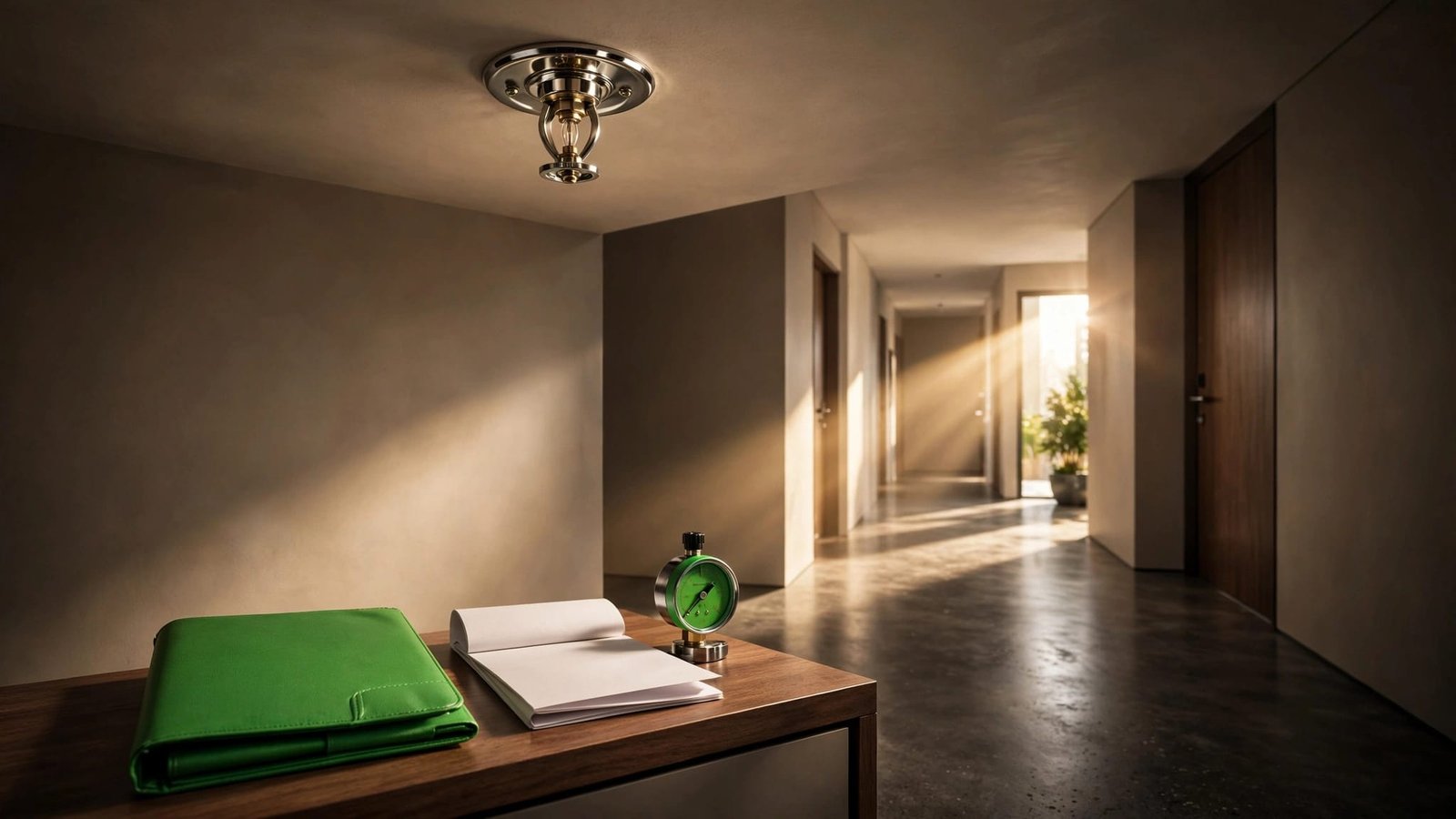
A sprinkler head on the ceiling can look reassuring. It can also sit above a system nobody has tested in months. Before you rent an apartment in India, ask for the records behind the hardware, not a promise that the building is “fire safe.”
Apartment sprinkler testing sounds technical, but you don’t need to be an engineer to spot a missing date, an unresolved fault, or a report for the wrong tower. I’d start with one question: Can someone show you that this system works in the building you’re about to call home?
Key takeaways before you visit
- Ask for the latest sprinkler inspection and test reports, plus records showing that any faults were repaired and retested.
- Match every report and fire approval to the correct building, tower or wing, and approved use. A document for another block tells you little about your flat.
- Routine tests usually happen at system controls and designated outlets. Ask what access, if any, a technician will need inside the apartment.
- Check current maintenance separately from the Fire NOC. An approval records a decision made at a point in time; it doesn’t prove the equipment works today.
A building manager who can produce a clear paper trail is giving you something useful. A manager who points only to a framed certificate is asking you to take the system on trust.
What apartment sprinkler testing actually involves
Most tenants picture every ceiling sprinkler head spraying water during a test. That’s not how routine system checks normally work. Technicians can inspect sprinkler heads without activating them, then test the water supply and alarms through designated equipment.
The schedule may call for annual inspections or quarterly inspections only when applicable rules, approval conditions, or the building’s maintenance plan require them.
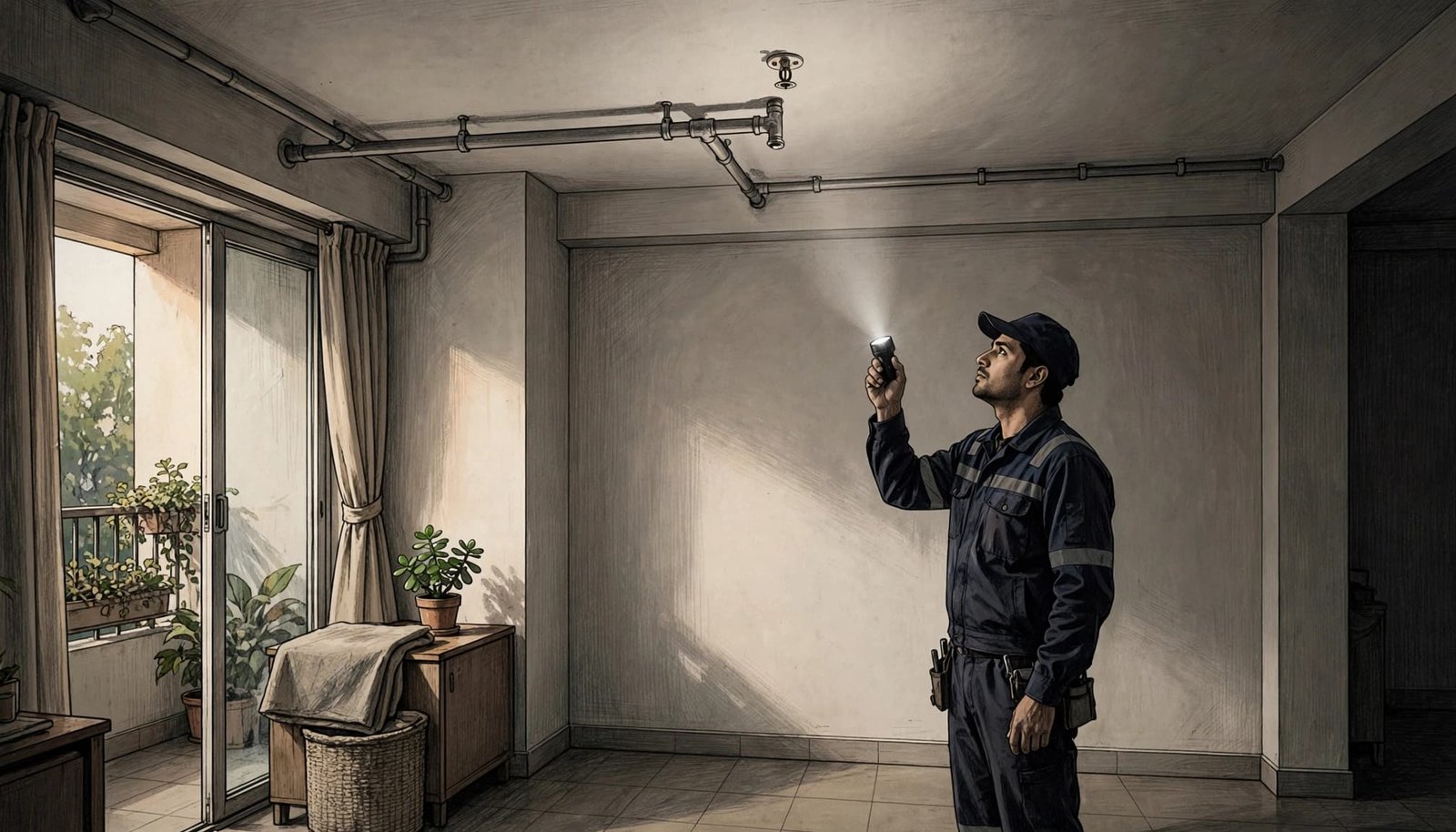
Inside the flat: usually a visual check
If technicians need access to your unit, they may make a visual inspection for painted, corroded, damaged, or obstructed sprinkler heads. They may also inspect visible pipes and supports. A standard visual check shouldn’t require anyone to open a head or spray your furniture.
Still, ask what the visit covers. Repairs, replacements, and leak investigations can carry different risks from a visual check. If work is planned above a wardrobe or bed, ask whether you should move anything, whether the system will be drained, and what precautions will limit water damage.
Outside the flat: water and alarm tests
A main drain test releases water through a designated drain. Technicians compare pressure readings to help identify changes in the water supply. Functional testing may also cover pumps, control valves, pressure gauges, waterflow switches, and alarms.
During flow testing, an alarm may sound without water discharging through the sprinkler heads in your room. Ask where the water will go, whether residents will hear an alarm, and how they’ll be told it’s a test.
Request records before paying a token
Ask the landlord to connect you with the society office or building manager. They may hold the common-system records, even if your lease is with an individual owner. If full reports are restricted, ask to review the relevant pages in person.

Get the test report, not the contractor’s name
Request the latest dated fire sprinkler inspection and functional testing reports for the system serving your tower. Ask what inspection schedule applies to the property, including whether it has annual inspections. If the latest report notes a recurring fault, request earlier reports too. An annual maintenance contract tells you who was hired, not what they tested or found.
Check that the report identifies the premises, tower, inspection date, person or contractor, equipment checked, and results. See whether it records a main drain test, where relevant. Look for findings, repairs, and a retest result after any failure, not just the words “work completed.”
Keep approvals in a separate pile
Ask for the current Fire NOC or other fire approval, renewal evidence, and Occupancy Certificate where applicable. Keep these records for compliance purposes, but don’t treat them as interchangeable. Fire approval concerns arrangements accepted by the competent authority; an Occupancy Certificate concerns permission to occupy a completed building. Neither replaces a maintenance log.
Read the address carefully. Does the approval cover your tower, floors, and residential use? Verify the issuing authority and file number through its official portal or by contacting it directly. A broker’s screenshot isn’t independent verification.
Read a sprinkler report for what it leaves unresolved
A recent date is a starting point, not a verdict. Check whether the report names your block or tower and states its scope. Compare its date with the annual inspections shown in the applicable building schedule or local requirements. Large developments may have multiple towers, pumps, risers, and zones.
Trace the water supply and alarm path
Look for recorded checks and results for fire pumps, power, control valves, and pressure gauges. Check for a main drain test and recorded results for alarm devices and waterflow switches. The report may also note sprinkler heads or internal pipe corrosion.
You aren’t trying to certify a reading yourself. You’re checking whether equipment was tested, results recorded, and unusual findings compared with expected conditions.
Maharashtra’s amended fire-safety rules illustrate how detailed an inspection trail can be. They address checks involving active fire-safety measures, including pump run status, pump power, and low-pressure monitoring of a sprinkler riser. Those are Maharashtra-specific provisions, not a template to impose on every Indian society.
Follow defects to closure
Suppose a report notes a valve left shut or an alarm that failed to sound. Ask when it was fixed, who signed off, and whether the affected function was tested again. An invoice for a replacement part alone cannot tell you whether the system works.
A passed inspection for the wrong tower is no comfort. A failed test with no repair record is an open safety question.
Check the report’s scope, too. A visual-only inspection doesn’t establish that pumps ran or alarms sounded. A service tag on an extinguisher says nothing about sprinkler records. Each record has a job; don’t let one stand in for another.
Which rules apply to your Indian apartment?
India doesn’t have one inspection timetable or one Fire NOC that covers every apartment. Inspection frequency and system requirements depend on local rules, the building’s approval, and its characteristics.
Start with the building’s approved requirements
The National Building Code of India 2016, Part 4 is an important fire-and-life-safety reference. It isn’t, by itself, proof that your building received local approval or passed its latest inspection.
Ask the manager which rule, approval condition, and maintenance schedule apply to this address and its fire protection system. Depending on local requirements and the approved plan, that schedule may include annual inspections or quarterly inspections.
State fire-service resources, such as the Gujarat fire standards and NBC page, can help you identify relevant standards. The authority for a building in another state may use a different process. Don’t assume a certificate issued in one jurisdiction covers an address elsewhere.
Treat this standard as a reference, not a shortcut
NFPA 25 covers inspection, testing, and maintenance of water-based fire-protection systems. It can help explain why records mention valves, alarms, drains, and checks of the water supply in wet pipe systems or dry pipe systems. NFPA 25 isn’t automatically Indian law.
If a contractor says the building is “NFPA 25 compliant,” ask which edition and checks they used, and how that relates to the local approval. Likewise, don’t assume every apartment needs sprinklers because a neighbouring high-rise has them. Confirm what the approved fire plan requires for your building.
Check the building you’ll actually live in
Paper can be tidy while the hardware is neglected. During your visit, look up at the sprinkler heads in the flat. Are they visibly damaged, painted over, or blocked by new shelving or a false ceiling? Don’t touch them. Photograph the concern and ask the manager to have it checked.
Walk the shared areas
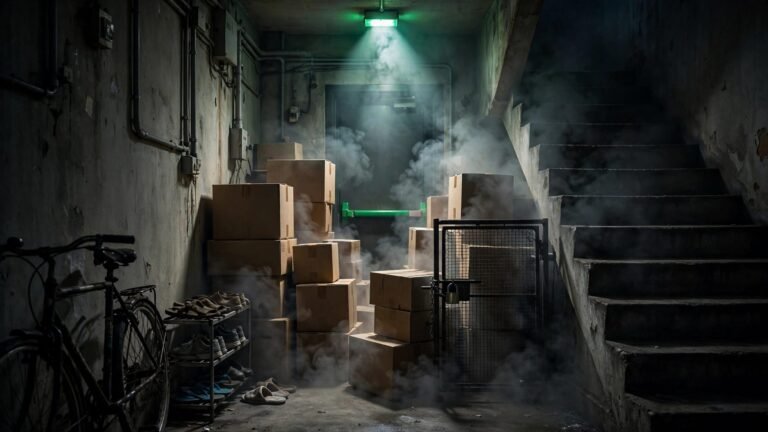
Find the stairs and follow the route out. Are doors usable and passages clear? Look for accessible fire equipment and ask whether the alarm panel shows a fault. A locked exit or a staircase used for storage deserves an immediate written question, even if the sprinkler report looks fine.
Look at the pump-room access if the manager can show it safely. You don’t need to operate anything. Clear access and a manager who knows where the records are tell you more than a polished lobby does.
Ask what happens when something fails
Who receives a contractor’s defect report? Who authorises the repair? How are residents told if part of the system is temporarily unavailable? A society should be able to explain the process without handing you a stack of unexplained forms.
If an alarm sounds during a test, residents need advance notice and a clear way to distinguish planned work from a real emergency. Ask for that communication before you move in.
If records are missing, put the question in writing
Missing paperwork alone doesn’t establish fire code violations or prove a system failure. It does mean you can’t verify claims that sprinklers are maintained, including annual inspections. Send the landlord and society office a written request naming the tower and missing records, and ask the building manager for a dated response. Keep their reply.
Ask for a dated resolution
If a report notes a failed pump test, ask for the repair date and retest evidence before signing. If reports name another block, request the correct records. For an approval mismatch or unclear local requirement, contact the fire authority responsible for the property’s address.
The Maharashtra Fire & Emergency Services rules and acts page is one place to start checking Maharashtra requirements, but it doesn’t set rules for all of India. Use the authority responsible for your address, not a certificate or rule borrowed from another city.
Decide what you can live with
I wouldn’t treat an undocumented promise as a repair. Put any agreed work, deadline, and access to updated records in writing before possession. If a serious fault or approval mismatch remains unresolved, pause the rental decision and seek local fire-authority or legal guidance where appropriate.
This is systemic change in a very ordinary form: residents asking who checked the system, who paid to fix it, and where the proof went. Safety can’t depend on which tenant knows the right words.
Frequently asked questions
How often must an apartment sprinkler system be tested?
There isn’t one nationwide answer for every Indian apartment. Inspection and test intervals depend on applicable local rules, approval conditions, system design, and maintenance standards. Ask the manager for the property’s dated schedule and compare it with test reports. If they describe annual inspections, ask which components they cover and what happens between visits.
Can routine testing flood my flat or damage furniture?
Routine checks usually don’t activate the heads inside your home. Visual checks may require access; waterflow tests normally use designated connections and drains. A scheduled repair, leak investigation, or work on pipes above your unit may carry a risk of water damage. Ask about the exact task, location, water-shutoff plan, and notice period before allowing access.
Will missing test records automatically void insurance?
Don’t assume that. How missing records affect insurance claims depends on the policy terms, the facts of the fire, and applicable requirements. Poor maintenance or missing evidence could complicate a claim, but automatic denial is too broad a claim. The stronger reason to request records is immediate: they help you find faults while there’s still time to fix them.
A safer lease starts with a verifiable record
That ceiling sprinkler deserves more than a reassuring glance. Match the approval to your tower, read the latest tests, and follow every recorded fault through to repair. The paper trail should describe the building in front of you.
Before you hand over a deposit, ask the manager for the latest sprinkler report and the evidence that its outstanding faults are closed.