
Mangrove Restoration Benefits for Coastal Communities
 Saket Sambhav
TL;DR
- Restored mangroves cut wave energy, slow erosion, and lower flood damage.
- They help fish, crabs, and prawns recover, which supports food and income.
- Good projects create local work and can reduce public repair costs over time.
- The best results come when communities lead, water flow is fixed first, and survival matters more than seedling counts.
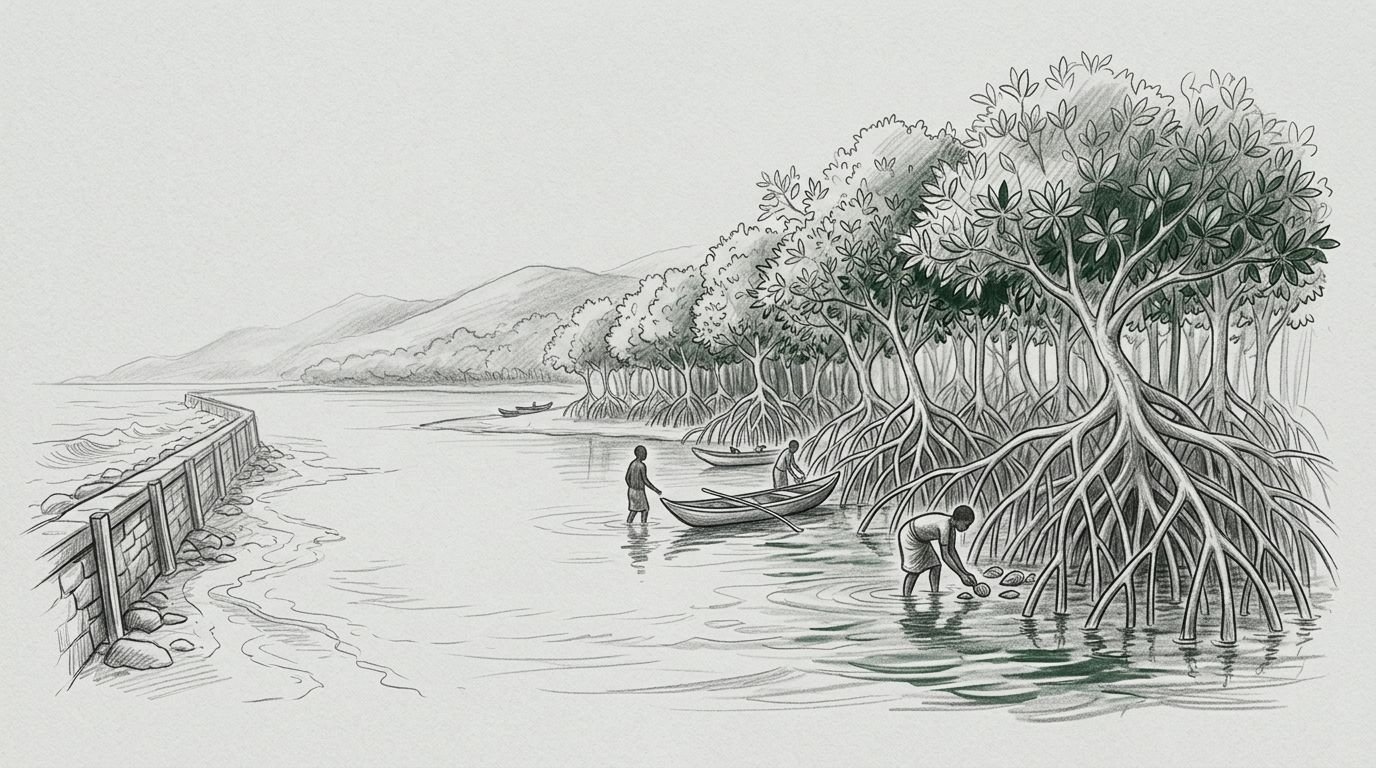
A damaged seawall protects a coast once. A healthy mangrove belt, as a nature-based solution, delivers coastal protection every day, while also feeding fisheries and holding the shoreline together.
For coastal communities, that difference is hard to ignore. The strongest mangrove restoration benefits show up where people live, work, teach, fish, and rebuild after storms. That is why this topic belongs in village meetings, council plans, and school lessons, not only in climate reports, but also for climate change mitigation.
Why mangroves matter before the storm arrives
Mangroves are a living coastal buffer. Their roots perform sediment trapping, slow waves, and help shorelines keep their shape. When a cyclone, storm surges, or high tides exacerbated by sea level rise hit, that rough wall of roots can take the edge off the blow before it reaches homes, roads, and farms.
In favourable conditions, an 80-metre belt of mangroves can cut wave height by about 80%. That does not make a village invincible. It does buy time, reduce force, and lower damage. For families living close to the shore, a few less centimetres of floodwater can mean a dry school, a usable road, or one less ruined fishing net.
Mangroves also help with the quieter damage that happens between disasters. They slow coastal erosion, reduce saltwater intrusion in some places, and trap polluted runoff before it spreads. Water quality and stable mudflats matter to public health and to fishing grounds.
Concrete still has a place. Dikes, embankments, and raised infrastructure can save lives. Yet concrete cracks, sinks, and needs repair. Healthy mangroves keep growing if the site is right. That makes them a practical part of coastal protection, especially where budgets are thin and weather shocks keep coming.
A recent community mangrove management study shows why this works best when local people help manage the forest. Residents know which creek floods first, which bank is eroding, and which patch still holds juvenile fish. Plans written far from the shore often miss those details, and the tide has no patience for paperwork.
A living shoreline protects people best when the tide can reach it and local people can care for it.
How restoration supports food, work and local budgets
A mangrove forest, as a blue carbon ecosystem, is more than a row of trees. It is a nursery habitat for fish, crabs, prawns, and other aquatic species that support local diets and fishing income. When mangroves disappear, many coastal communities feel the loss first in their catch, then in household spending.
That link between roots and meals is one of the most overlooked mangrove restoration benefits. Fish do not read project reports, but they respond fast to habitat. When creeks recover and shade returns, breeding and shelter improve. Over time, that can help stabilise local fisheries.
Restoration also creates work. People are needed to map sites, reopen blocked tidal channels, collect seed, run nurseries, plant, monitor survival, and patrol against illegal cutting. Those jobs matter because they keep money in the community instead of sending every contract to outside firms, fostering sustainable livelihoods.
A useful example comes from a Maharashtra village restoration project. In Khardi, Palghar district, more than 20 hectares of degraded land were restored, and 45 people from nearby tribal communities got work through the effort. The project also reintroduced tidal water and planted multiple species, which is far smarter than throwing one kind of seedling into the mud and hoping for the best.

Photo by ADollarForCoral
There is a wider economic case too. A 2026 study on coastal wetland returns found high returns from restoration through carbon sequestration and carbon storage in aboveground biomass, belowground biomass, and sediment carbon, along with other ecosystem services. Put plainly, every rupee spent on doing this well can prevent much higher losses later, especially in lower-income coastal areas that get hit hardest.
Good restoration fixes water flow, not only seedling counts
Many ecological restoration drives fail for a simple reason. They focus on planting day photos instead of the hard work that comes before and after.
Salt-tolerant trees like mangroves need the right tides, salinity, mud depth in the intertidal zone, and species mix. If a road, bund, or aquaculture pond blocks water flow, seedlings often die. If planners force one species across a mixed habitat, survival drops. If grazing, dumping, or cutting continues, the site slides backwards.
That is why honest restoration starts with hydrology. Open the tidal channels. Remove the blockage. Protect what remains. Then pursue reforestation where planting is needed, distinguishing it from afforestation in barren areas. In many places, natural regeneration does part of the job once water can move again, restoring nutrient cycling and coastal protection.
The evidence backs that up. A meta-analysis of restoration outcomes found restored mangroves perform better than bare tidal flats, but they still do not match intact natural forests. That is not bad news. It is a reminder to protect existing mangroves first, then restore damaged areas properly with proper reforestation.
Good projects usually share a few traits:
- They repair tidal exchange before reforestation.
- They use native species and allow natural regrowth where possible.
- They pay local people to monitor survival for years, not weeks.
This part is less glamorous, and that is exactly why it matters. A survival rate measured after one monsoon tells you more than a headline about one million seedlings. Coastal communities already know the difference between a real fix and a photo opportunity. Policy should catch up.
Frequently Asked Questions
How do mangroves protect coastal communities from storms?
Mangroves act as a living buffer, with roots that trap sediment, slow waves, and reduce flood damage. An 80-metre belt can cut wave height by about 80%, buying time for homes, roads, and farms during cyclones or surges. They also curb erosion and saltwater intrusion between disasters, keeping shorelines stable.
Does mangrove restoration boost local fisheries and jobs?
Restored mangroves provide nursery habitat for fish, crabs, and prawns, improving catches and supporting food security and income. Projects create local work in site mapping, nursery running, planting, and monitoring, keeping money in communities. Examples like Maharashtra’s Khardi project employed 45 tribal members while restoring 20 hectares.
Why is fixing water flow more important than just planting seedlings?
Mangroves need proper tides, salinity, and hydrology to survive; blocked channels from roads or ponds kill seedlings. Good restoration starts by reopening tidal exchange, allowing natural regrowth before reforestation with native species. Survival rates after monsoons reveal real success, not just planting-day photos.
What makes a mangrove restoration project successful?
Successful projects involve communities who know local conditions, repair hydrology first, use mixed native species, and monitor long-term survival. They outperform bare flats but aim to match natural forests by protecting existing stands too. Local leadership ensures benefits like safer shores, steadier fisheries, and lower repair costs.
The coast remembers what we plant
The best mangrove restoration benefits are practical and local. Safer shores, biodiversity conservation, steadier catches, paid work, cleaner water, and fewer repair bills all matter more than grand slogans.
Done badly, restoration wastes time and trust. Done well, it fosters stakeholder engagement and gives coastal communities a stronger chance to stay, work, and recover with climate resilience on their own terms.
If you want to back field work rather than glossy claims, consult the Global Mangrove Alliance for best practices, then Contribute to Active Missions to support direct interventions, including mangrove planting and ethical carbon offsets, with funds going to the ground. This community action connects directly to global goals for a sustainable planet.