How a 100 Percent Donation Model Builds Trust
 Saket Sambhav
If you’ve ever hesitated before giving in the nonprofit sector, the reason is easy to understand. You want to know where your money goes.
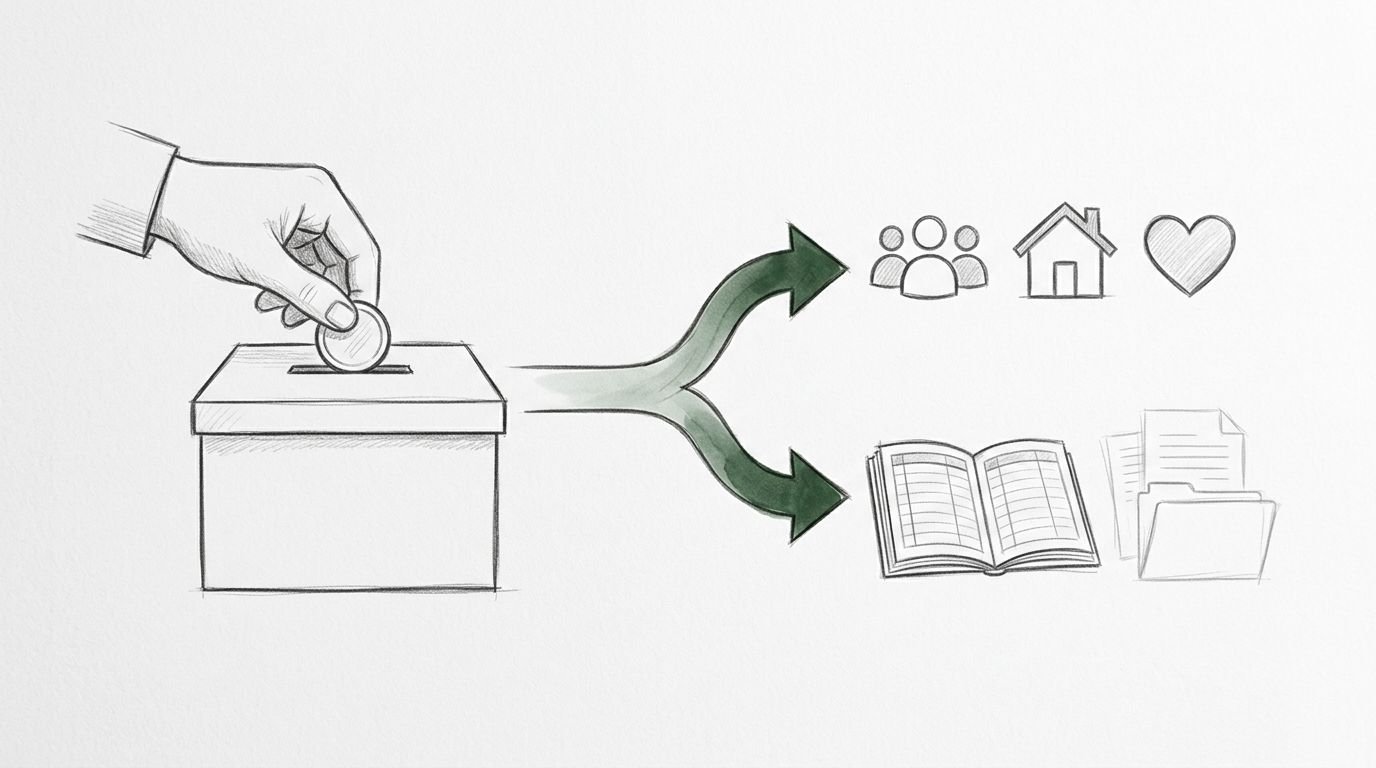
A 100 percent donation model speaks to that concern in plain language with transparency. Public gifts are directed to programmes, while admin and fundraising costs are covered separately. That clear split can build trust quickly, yet lasting confidence still depends on honest reporting, strong leadership, and proof that the work helps people.
Key Takeaways
- A 100 percent donation model directs public gifts to programs while covering admin and fundraising costs separately, easing donor fears tied to the overhead myth.
- The promise builds initial trust through clarity but cannot prove program impact, overhead sustainability, or strong management—evidence fills those gaps.
- Charities sustain the model with private funding, grants, volunteers, and reserves, yet disciplined budgeting is key to avoiding risks.
- Donors build lasting confidence by checking transparency details, recent accounts, and impact reports from sources like CharityWatch.
Why the promise feels reassuring to donors
Many donors carry a simple fear. A donation to fundraising appeals for families in crisis might end up paying for rent, salaries, or advertising instead. The 100 percent promise reduces that anxiety because it restricts the gift to the cause the donor chose.
Part of the appeal comes from a long-running overhead myth that shapes donor expectations. People often use overhead as a shortcut for waste, even though sensible administrative costs pay for finance checks, safeguarding, staff support, and fraud controls. The model works because it answers the fear first, without asking donors to untangle program expenses on the spot.
That clarity changes behaviour. When a charity says a donation funds food parcels, water systems, or school supplies (choices that align with donor priorities), the choice feels more concrete. Donors can picture the path from gift to result.
Still, the promise has limits. Overhead does not disappear. The charity still needs people, systems, compliance, and measurement. The difference is that those costs come from a separate pot.
This quick comparison shows what the model answers, and what it does not.
| The model can show | The model cannot prove |
|---|---|
| Public gifts are restricted to projects | The projects work well |
| Overhead is funded separately | The overhead plan will last |
| Donor intent is protected | The charity is well run |
That gap matters, because trust starts with clarity and grows with evidence.
Clear restrictions help donors feel their money is handled with care.
How separate funding for overhead works in practice
Most charities that use this approach split funds into separate funding streams, such as accounts or cost centres. Public donations go to programme delivery. Core costs come from private donors, trusts, seed funding, Gift Aid, pro bono services, or a small circle of supporters who agree to pay for the organisation’s engine.
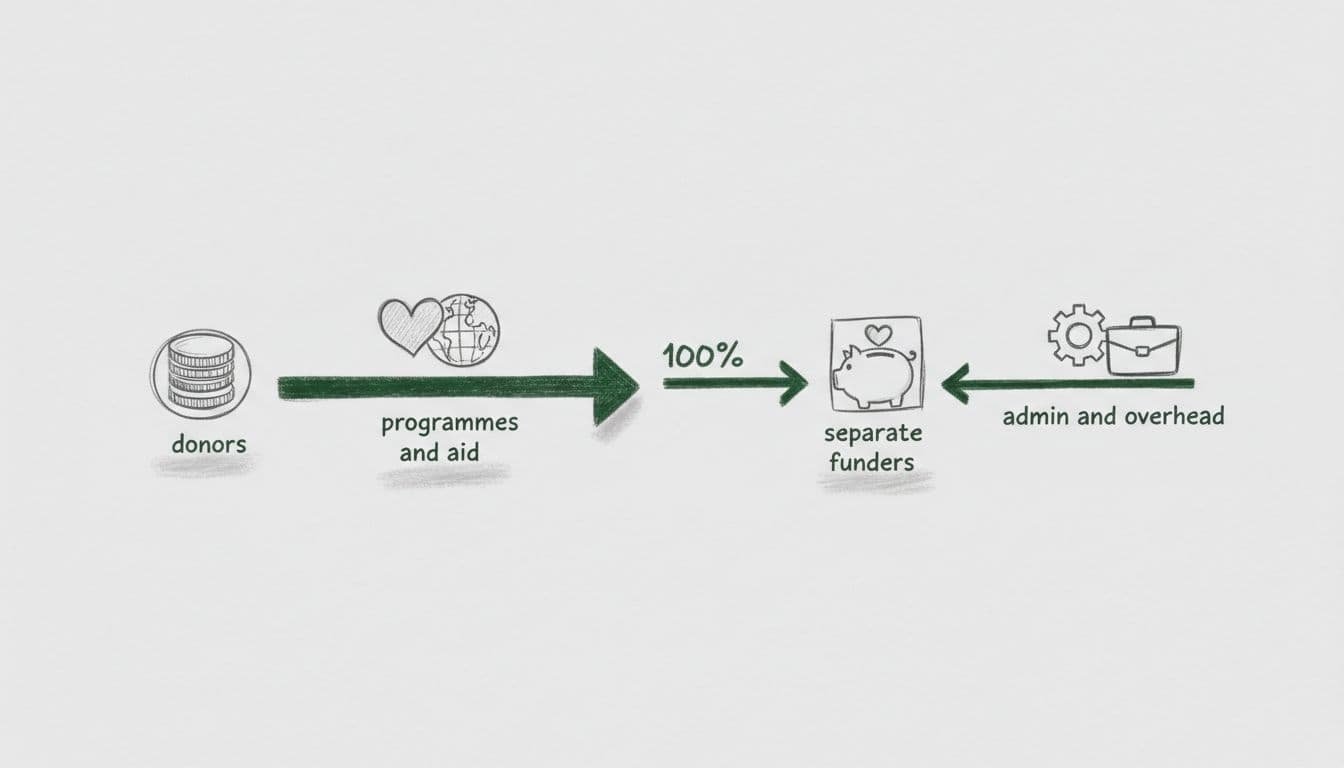
A simple example helps. Say a winter appeal raises money for blankets, heaters, and local delivery. Those public gifts pay for the charitable programs that deliver items to families. Meanwhile, a foundation grant might cover bookkeeping, a compliance officer, and the staff time needed to buy and track supplies.
Some charities explain this openly. charity: water’s 100% model says public donations fund water projects, while a separate group covers operating costs and even donation processing fees. In the UK, One World Relief’s 100% donation policy says it covers operating costs through volunteer support, pro bono help, and other separate funding.
For donors, that setup feels cleaner. A family giving to an emergency appeal knows the gift is not paying the office electricity bill. For fundraisers, the message is also easier to explain.
However, the model only works when the second pot is steady. If backers for administrative infrastructure pull out, pressure appears fast. Audits, safeguarding, and data systems do not pause because public donations are restricted. Some charities handle that risk with multi-year pledges and reserves. Others rely heavily on volunteers, which can lower costs but may be harder to scale.
So the 100 percent donation model can be strong, but it still needs disciplined budgeting and honest accounting behind the scenes.
Why the best donor decisions go beyond the model
A clean promise is helpful, yet donors should still ask hard questions. The first is transparency. What does “100 percent” include? Does the charity cover card fees? Is the promise for every campaign, or only a few named appeals? Are any shared costs moved around through managerial accounting or creative accounting in ways ordinary donors would struggle to spot?
Those details matter because loose wording can mislead. A charity watchdog has warned that “100% to programme” claims can confuse donors when the accounting behind them is unclear.
The second question is sustainability. A charity may separate donor gifts from overhead, yet still face trouble if it lacks reliable core funding, risking the nonprofit starvation cycle. Good practice is plain. The charity should explain how the model is funded, publish recent accounts with program ratio and accountability details, and show that restricted and unrestricted funds are handled properly.
The third question is impact. A gift can reach a project and still underperform. Strong charities report outcomes, not only inputs. They show how many people were helped in charitable programs, what changed, what it cost, and what they learned when results fell short. Such reporting also helps avoid mission creep.

A few checks go a long way:
- Read the latest annual report and accounts.
- Look for named trustees and board members.
- Check whether outcomes are measured and published.
- Use independent reviews, such as CharityWatch’s rating process, to see how outside assessors judge financial health and governance.
If the charity is registered in England and Wales, the Charity Commission entry adds another useful check. Also, healthy overhead is not a red flag by itself. Staff training, case management, audits, and finance controls protect beneficiaries and donors alike.
Frequently Asked Questions
What is a 100 percent donation model?
Public donations go fully to charitable programs, with overhead like salaries and compliance funded separately. This clear split reassures donors their gifts reach the cause chosen, without untangling expenses on the spot. Examples include charity: water and One World Relief.
How do charities cover overhead costs separately?
Core funding comes from private donors, trusts, Gift Aid, pro bono help, or volunteers. This keeps public appeals clean while supporting the organisation’s engine. Steady streams like multi-year pledges help manage risks.
What are the limits of the 100 percent promise?
It shows donor intent is protected but doesn’t prove projects succeed or the charity is sustainable. Overhead doesn’t vanish, so separate funding must hold up. Trust grows with honest reporting and proof of results.
How can donors verify a charity’s model?
Ask what “100 percent” covers, read annual reports and accounts, and check program ratios. Look for outcome data and independent reviews like CharityWatch. Named trustees and Charity Commission entries add checks.
Do only 100 percent models build donor trust?
No, charities without the model can earn loyalty by explaining costs clearly, running strong programs, and publishing credible impact. Verification matters more than slogans. Healthy overhead often supports better safeguards and efficiency.
Clear promises matter, but proof matters more
This wider view protects donors from false comfort. Some charities without a 100 percent donation model still earn deep loyalty because they explain relevant costs well, including overhead costs, run strong programmes, and publish credible results. Even an incremental donation contributes to the whole when integrated with program efficiency.
A 100 percent donation model builds trust best when it is real, well funded, and easy to verify. The 100 percent promise goes beyond marketing spin when a charity can explain both where the money goes and what it achieves, giving donors something firmer than a slogan to rely on. Trust is ultimately built through verification.