
How to Spot Exploitation on Indian Wildlife Tours
 TBH Editorial
A safari without a tiger sighting can be more ethical than one that delivers the perfect photograph. If you’re searching for ethical wildlife tourism India, start with restraint. Responsible wildlife tourism gives animals space when expectations collide with their needs.
We want our travel money to protect wildlife, yet a conservation label can conceal harmful encounters and questionable spending. Sustainable travel starts before you book: consider what happens when protecting an animal costs an operator a sale. Start there.
Recognise when an animal becomes the product
Close contact deserves closer scrutiny
Tiger selfies, elephant rides and wildlife feeding sessions deserve scrutiny, even when marketed as rescue or wildlife conservation experiences. Ask why contact is necessary, especially with endangered wildlife, and whether the animal can withdraw.
A “wildlife sanctuary” label alone doesn’t show that contact is necessary, that an animal can retreat, or that the facility is properly accountable.
Public handling is different from treatment by trained veterinary staff. A genuine need for medical care doesn’t justify selling visitors access to an animal’s body.
Watch for tethering, repeated performances, visible injuries, forced positioning and handlers preventing retreat. You cannot diagnose sedation from a photograph or a sleepy animal. Describe what you observe, rather than inventing an explanation.
Free-ranging wildlife can also be exploited
An animal doesn’t need to be captive to face tourism pressure. Vehicles can block its path. Drivers can chase it along a track. Food or recorded calls can manipulate its behaviour.
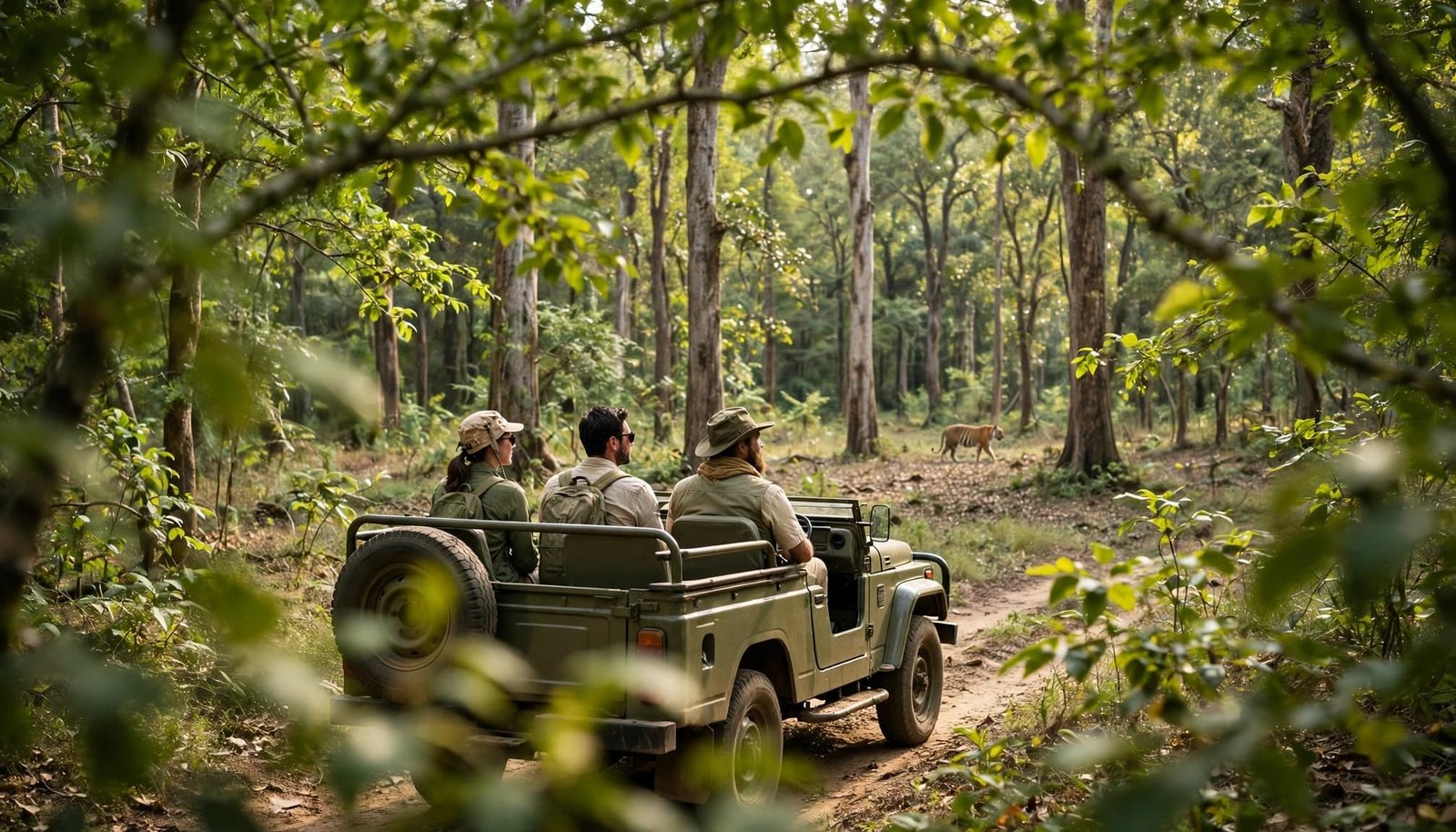
A tiger walking beside a vehicle doesn’t automatically prove misconduct. The question is whether the driver respects its movement or keeps repositioning to prolong the encounter.
Guaranteed sightings deserve questions. What happens if no tiger appears? If the answer involves bait, prohibited access or “special arrangements”, walk away. Sustainable business models must survive an ordinary day without a headline sighting.
Ethical wildlife tourism in India needs enforceable limits
Use numbers, then check the local rules
NTCA guidance offers useful benchmarks for wildlife viewing: stay more than 20 metres from wildlife, keep spotting vehicles at least 50 metres apart, and limit a sighting to 15 minutes. Feeding, luring and surrounding animals are prohibited.
Rules can differ between national parks, so check the reserve’s instructions first. The NTCA’s Tiger Task Force report discusses carrying capacity and the limits needed to regulate wildlife tourism.
Don’t accept one vehicle quota as a nationwide rule. Capacity depends on each protected area’s approved management arrangements. Visitor limits support, but don’t replace, broader tiger conservation.
Your behaviour changes the driver’s incentives
During wildlife viewing, stay seated, keep your voice low and switch off flash. Use a long lens rather than requesting a closer approach. Never encourage speeding, off-route driving or blocking an animal’s exit.
Ask the operator whether staff bonuses depend on sightings. That payment structure deserves scrutiny because it can reward risky behaviour.
Everyday mindfulness has a concrete use here: noticing when your excitement becomes pressure on someone else.
Tell your guide before departure that you’ll support leaving a crowded sighting. That gives them permission to disappoint the camera, rather than the animal.
Vet the operator before paying a deposit
Verify permission separately from sustainability claims
Before booking wildlife safari tours, ask for the reserve, entry gate, zone, departure time and official booking channel. When visiting national parks, confirm the permit through the relevant park’s official booking channel. NTCA guidance calls for vehicles registered with reserve management and an authorised guide.
A hotel confirmation isn’t proof of park access. Neither is a message saying the operator “knows someone inside”.
TOFTigers recognition can inform your assessment of sustainability, but TOFTigers isn’t the statutory tiger-reserve regulator. Check the exact property, assessment details and validity. Verify claims about eco-friendly practices with evidence. Membership, recognition and government permission answer different questions.
Make the price explain itself
Ask tour operators for an itemised quote, including who is authorised and what the package includes, before comparing prices. Transparent pricing supports responsible tourism. A higher price doesn’t prove better ethics, and a cheaper shared safari isn’t inherently exploitative.
These are the distinctions worth checking.
| Quoted component | Evidence to request |
|---|---|
| Park access | Permit details and official fee |
| Vehicle and guide | Separate charges and authorisation |
| Accommodation | Inclusions, taxes and cancellation terms |
| Conservation contribution | Recipient, amount and reporting method |
The useful comparison is what you’re funding, rather than the package’s green branding.
Ask what happens after a cancelled departure or an unsuccessful sighting. Get refund terms in writing. Treat paid promises to bypass closures or access restrictions as warning signs.
I would also ask one uncomfortable question: “When did you last refuse a guest’s request because it could harm wildlife?” A concrete answer reveals more than a polished mission statement.
Read the lodge’s ecological impact beyond its decor
Bamboo furniture and reusable bottles tell you little about a property’s total ecological impact. Ask for measurable evidence of eco-friendly practices, not just decor or branding. Find out where its water comes from, how sewage is treated and where waste goes after collection.
“Zero waste” needs a destination trail. A circular economy involves refill systems, repair, reuse and accountable recovery. Moving rubbish outside the property doesn’t close the loop.
Whether you’re assessing jungle lodges or eco-lodges, request recent figures for water use per guest-night, waste generated, waste recovered and locally purchased supplies. Comparable records matter more than a single impressive percentage without a baseline.
Plant-based meals are another practical question. Ask whether the kitchen offers satisfying local options without requiring imported substitutes. Food choices deserve attention alongside transport and accommodation.
Check habitat, not just resource efficiency
Even an efficient lodge can occupy a sensitive movement route or disrupt natural habitat and biodiversity. Ask whether construction, fencing, access roads or night lighting interfere with wildlife.
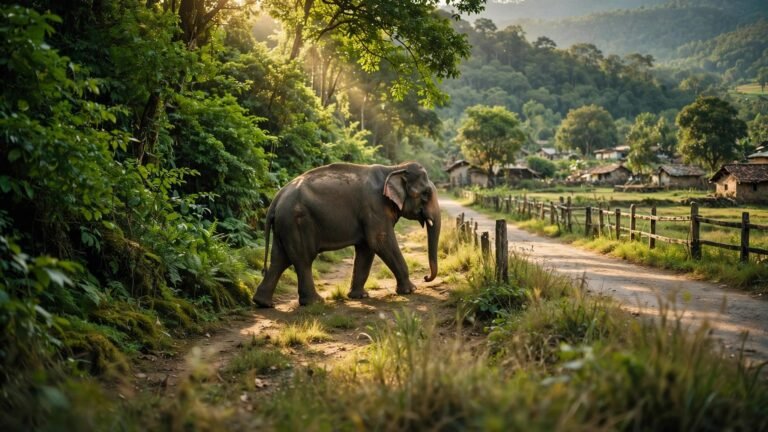
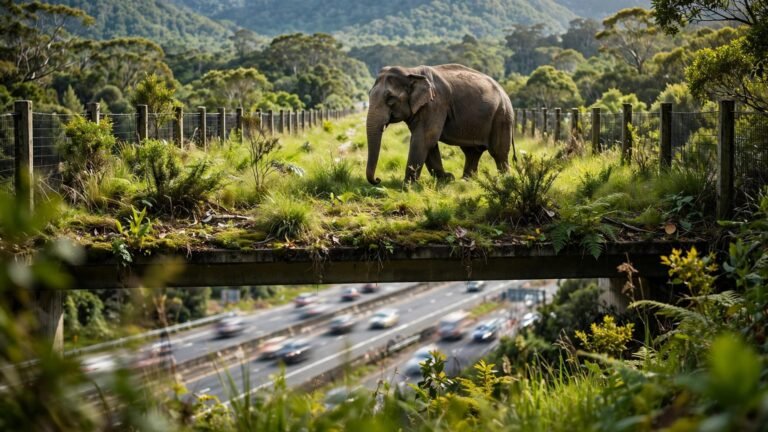
Protection of India’s elephant corridors shows why conservation cannot stop at the boundaries of protected areas.
A property should also explain how it consulted local communities. Their knowledge can reveal seasonal movement, water stress and access problems that a short site visit misses.
Look for records of problems
A credible operator can discuss failures: a sewage fault, a water shortage, a neighbour’s complaint. Ask what changed afterward.
A business claiming it has never caused a problem may simply have no way to record one.
Follow the money to local people
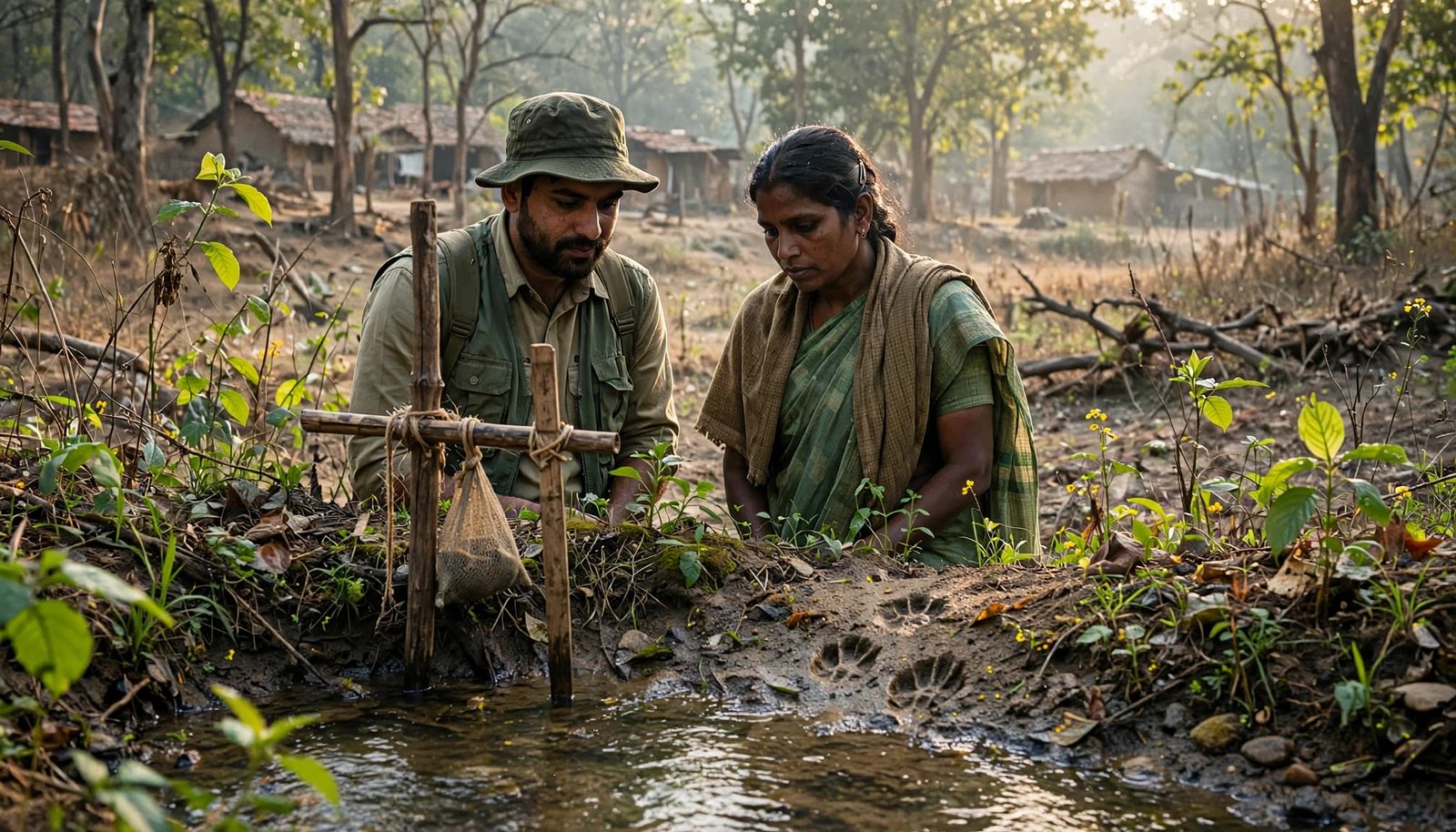
Count livelihoods, not community photographs
“Supporting local communities” should come with evidence. Ask how many employees live nearby, which roles they hold and whether work continues outside peak season.
Employment totals can hide unequal opportunity. Local communities may be concentrated in room cleaning, while better-paid guiding and management jobs go elsewhere. Ask about training, promotion and payment terms for local suppliers.
Local communities also live with wildlife-related costs: crop losses, damaged property and disrupted access to water or grazing. A village visit doesn’t settle those debts. Their knowledge deserves payment, consent and a documented response. People shouldn’t face dangerous monitoring work to improve a lodge’s publicity.
Separate spending from conservation outcomes
A donation receipt proves money moved. It doesn’t prove habitat improved.
Ask for the recipient, project period, expenditure and measured results, including for anti-poaching initiatives. For tiger conservation, ask whether a contribution is linked to Project Tiger, and seek evidence before assuming it is. Conservation reporting should track habitat condition, threats and species needs. The NTCA’s July 2026 bulletin discusses habitat assessment and prey-base evaluation in tiger recovery.
A lodge’s eco-friendly practices don’t prove community benefits or conservation outcomes. Systemic change requires operators to publish outcomes and act on complaints. Tourists cannot personally audit every forest programme, but we can refuse claims without evidence.
The same demand for proof applies to urban biodiversity and climate literacy work. Explore Our Active Missions to see ongoing community-scale interventions beyond your holiday.
Choose dates without treating sightings as an entitlement
Dense foliage can make tiger viewing difficult in Indian national parks. Some African grassland safaris offer clearer visibility, but neither setting guarantees an encounter with a Royal Bengal tiger.
Allow time for several lawful drives if your budget permits. Choose one reserve rather than rushing between parks to collect sightings. A guide who explains birdlife, tracks and habitat can make an unsuccessful search worthwhile.
There is no automatic ethics ranking that makes Kanha National Park, Bandhavgarh National Park, Pench National Park or Ranthambore National Park the responsible choice. Responsible tourism depends on your operator, permitted route and actual conduct.
Confirm dates directly with the relevant reserve. Check current NTCA guidance and state wildlife authority notices for monsoon closures, as periods can vary by state and reserve.
Don’t assume central Indian national parks are completely closed every Wednesday. Verify whether a restriction affects an afternoon session, a particular zone or the whole park.
Summer heat may make water sources important viewing locations, but it also makes visitor behaviour around them more consequential for tiger conservation. Give animals room to approach and leave during wildlife viewing.
Avoid holiday peaks where practical. If an operator advertises monsoon access, check the precise permissions instead of assuming every buffer-zone offer is either lawful or prohibited.
Respond to violations without creating another disturbance
You don’t need a confrontation beside a tiger. Your first responsibility is to avoid increasing the risk.
- Ask calmly for the harmful action to stop. Request distance, a clear escape route or departure from an overcrowded sighting.
- Record details only when safe: the time, zone, vehicle registration, operator and behaviour observed. Keep original photographs or videos.
- Report the incident to reserve management or the relevant forest authority. Request an acknowledgement and retain the complaint reference.
Describe observable actions. “The driver blocked the animal’s path” is more useful than an accusation you cannot substantiate.
Don’t approach an injured animal or step out for evidence. Avoid posting live wildlife coordinates publicly.
Afterward, give tour operators a chance to explain their response. Reviews should document whether management investigated, corrected the conduct and protected staff who raised concerns.
Accountability includes follow-through. Our work on safer wildlife crossings applies the same principle: local observations need a documented response, rather than being collected and ignored.
Frequently Asked Questions
What makes a wildlife safari ethical in India?
An ethical safari follows reserve rules, keeps a respectful distance and lets animals move freely. The operator should be transparent about permits, pricing and how it responds when guests request harmful behaviour.
Are guaranteed tiger sightings a warning sign?
Yes, ask what the operator will do if no tiger appears. Promises involving bait, prohibited access or special arrangements are reasons to walk away.
How can I check whether a safari operator is authorised?
Ask for the reserve, entry gate, zone, permit details and authorised guide before booking. Confirm park access through the relevant reserve’s official booking channel; a hotel confirmation or personal connection isn’t proof of permission.
What should I do if I witness harmful behaviour on safari?
If it’s safe, calmly ask for the behaviour to stop without escalating the disturbance. Record observable details and report them to reserve management or the relevant forest authority.
Make restraint part of what you pay for
Ethical travel leaves room for an animal to walk away and a guide to say “enough”. That freedom matters more than a photograph you can bring home.
Before paying, send your operator one request: show me the evidence behind its permits, viewing rules and responsible tourism claims.
You’ll make a better booking decision. You’ll also tell the business what earns your trust, even when a worthwhile safari experience brings no tiger sighting.