
Wildlife Compensation in India: How Claims Work
 TBH Editorial
A bigger compensation package can look like progress while a grieving family still waits for payment. For wildlife attack victims, the compensation amount matters less than the rule governing their claim.
Wildlife compensation in India depends on state-specific procedures, even when central funding supports the payment. Families need clear answers about eligibility, evidence, deadlines, and who must act next.
Start with the distinction that causes much of the confusion: central assistance and state benefits aren’t interchangeable, and neither alone is a complete response to mitigating human-wildlife conflict.
Key Takeaways
- The central assistance norm is ₹10 lakh for death or permanent incapacitation, but state rules govern payment.
- Karnataka provides ₹20 lakh after a qualifying wildlife fatality, plus ₹4,000 monthly for five years.
- Report losses promptly. Madhya Pradesh’s livestock scheme requires notification within 48 hours; other states have their own deadlines.
- Keep a written record of your application, inspection, and follow-up. A verbal assurance is difficult to challenge.
- Compensation needs to work alongside habitat protection and prevention, rather than become the government’s entire response.
How Wildlife Compensation in India Is Funded
What the central ₹10 lakh figure means
The Ministry of Environment, Forest and Climate Change increased its ex gratia compensation norm in December 2023. The amount rose from ₹5 lakh to ₹10 lakh for human fatalities or permanent incapacitation caused by wild-animal attacks.
The Union government’s parliamentary clarification sets out two conditions: financial assistance depends on fund availability, and state-specific provisions govern payment.
This assistance is provided through government schemes, not a separate national application that every affected family submits directly to Delhi. The norm doesn’t set a fixed national amount for injuries, cattle killings, or crop damage caused by wild animals.
Why the state order matters
Your state or Union Territory determines the applicable benefit and claim procedure, including how payouts reach claimants. There isn’t one nationwide form, filing deadline, or evidence checklist covering every loss.
Ask the local forest office for the current government order and compensation schedule. Check which rule applies to the incident date, especially when a state has recently revised its rates.
Don’t add the central ₹10 lakh norm to a state’s announced payout unless the applicable order explicitly allows it.
A newspaper headline can identify a policy change. The written order tells you whether that change applies to your family. Reliable relief is one part of mitigating human-wildlife conflict, not a substitute for prevention.
State Benefits: Karnataka and Madhya Pradesh
These examples show why a single national figure gives families an incomplete picture. Other states, including Kerala and Rajasthan, have their own provisions. Timely benefits are one element of mitigating human-wildlife conflict, not a substitute for prevention.
Karnataka: ₹20 lakh and continuing support
The Karnataka minister’s compensation statement said the Karnataka government increased compensation for deaths caused by wildlife attacks from ₹15 lakh to ₹20 lakh, effective April 2025.
A family member also receives ₹4,000 per month for five years, totaling ₹2.4 lakh. Don’t call it a monthly pension unless the applicable order defines it that way.
The statement also clarified that there is no provision for government jobs for victims’ family members.
For wildlife conflict victims, that distinction matters when families plan future income. A pension, a lump-sum payment, and employment are different forms of support. Ask how each eligible benefit will be processed, rather than assuming one application settles everything.
Madhya Pradesh: livestock losses dominate spending
According to reporting on Madhya Pradesh’s compensation expenditure, the state paid more than ₹88 crore over 2020-21 to 2024-25. Livestock losses accounted for over ₹62 crore.
The report listed ₹13.95 crore in 2020-21 and ₹20.05 crore for 2024-25 at the reporting stage. The latter shouldn’t be treated as a final audited annual total.
These figures show why livestock losses deserve attention alongside human fatalities. Losing a milch animal can damage a household’s recurring income. Timely, state-defined support matters for wildlife conflict victims.
But expenditure alone can’t establish whether conflict worsened. Revised rates, reporting levels, and successful applications can also change the bill.
How to File a Wildlife Compensation Claim
First, report the incident and arrange verification
Put medical care and immediate safety first. Don’t approach an animal, chase it, or enter an unsafe area to collect evidence.
Contact the nearest forest officer or local forest range office promptly. Ask the state forest department which reporting deadline, inspection process, and claim channel apply. Requirements vary by state and claim type.
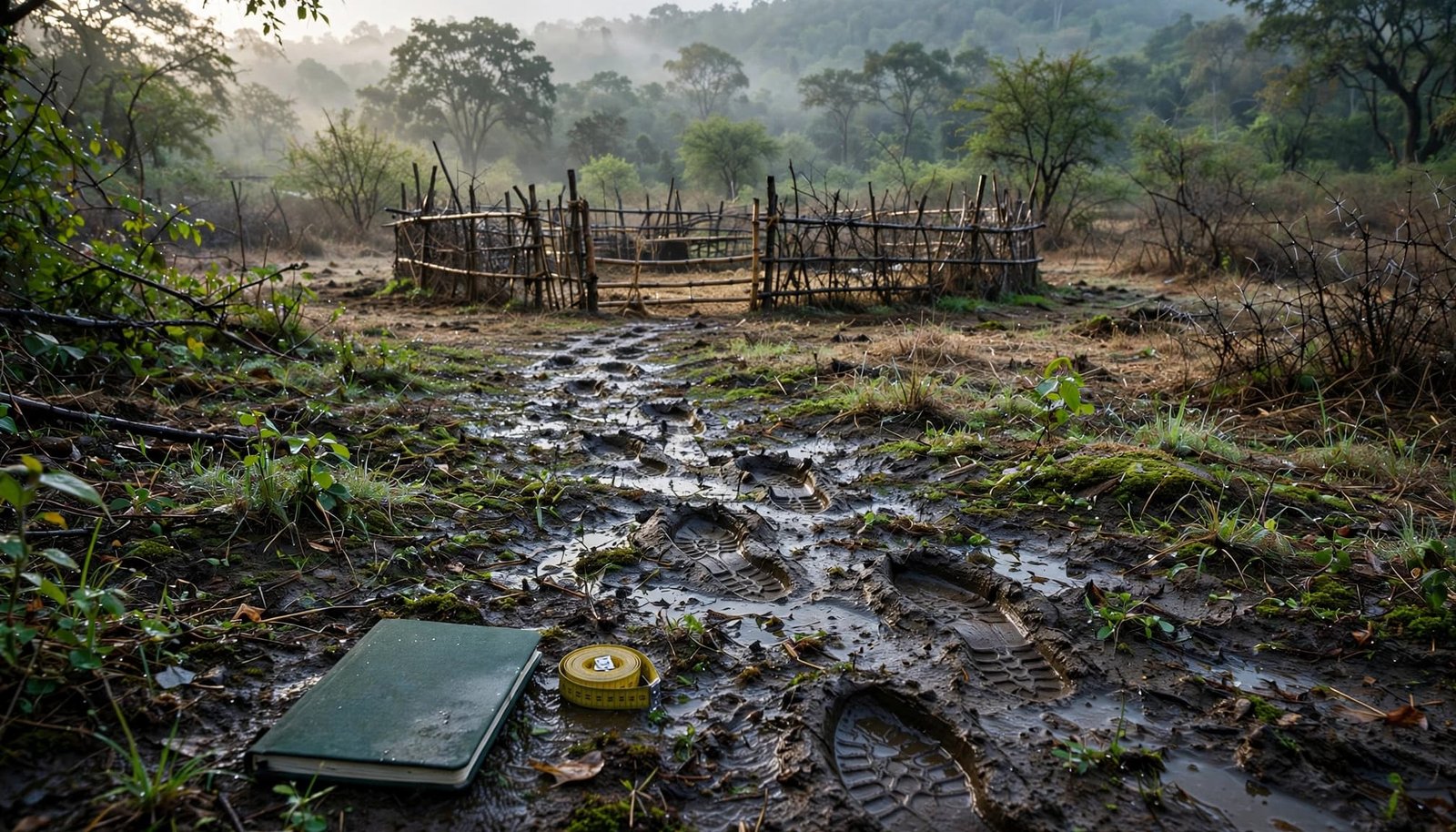
Record whom you contacted and when. Photographs, the incident location, witness contacts, and the time of discovery can help establish what happened. Collect them only when safe.
Request an acknowledgement or reference number. If the first report is by telephone, follow it with a written account through the channel the office accepts.
Then, submit documents and follow the assessment
Ask for the claim-specific document list. Human death claims may require death and post-mortem records, along with proof of the claimant’s relationship. Injury claims may need medical records.
Livestock claims may require ownership information and veterinary verification. Crop claims may need land or cultivation records and an assessment of the damaged area.
These are possible requirements, not a universal national checklist. Confirm what your state accepts before paying to obtain documents.
Keep copies of everything submitted. Check the recorded incident details and bank information for errors.
After inspection, ask whether verification is complete, who approves the claim, and whether anything remains outstanding. This separates a pending assessment from an approved payment awaiting transfer.
What Livestock and Crop Claims Cover
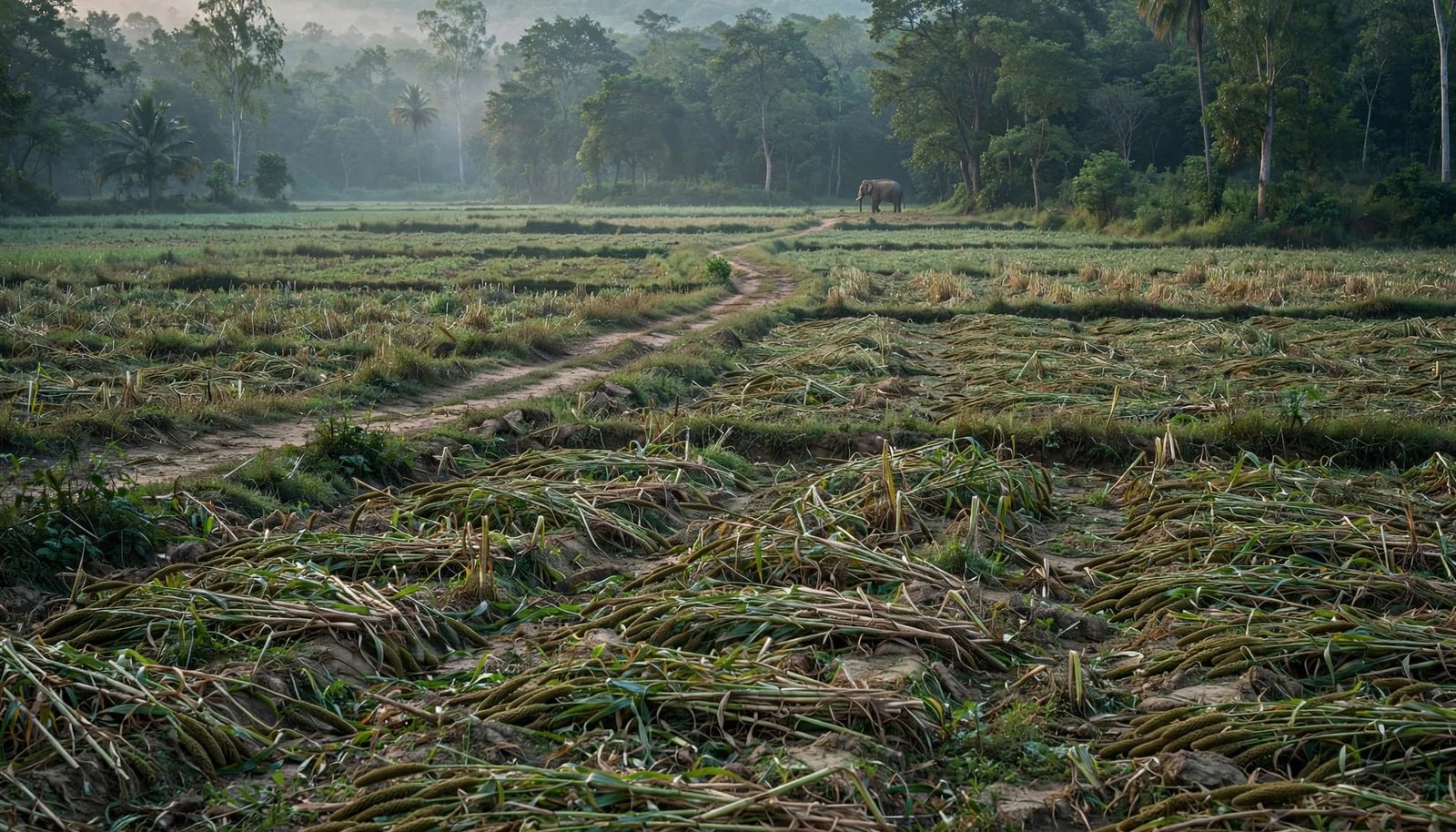
A dead animal or flattened field establishes a loss. The assessment must identify its cause and the category used to calculate relief, including for cattle killings. Accurate, fair reviews are part of mitigating human-wildlife conflict.
For Madhya Pradesh livestock claims, the state scheme lists these amounts.
| Livestock category or loss | Listed relief |
|---|---|
| Milch buffalo, cow, or camel | ₹30,000 |
| Sheep or goat | ₹3,000 |
| Livestock injury | Up to 50% of the relevant category amount |
These are rates under this scheme, not nationwide entitlements or guarantees of full market-value reimbursement.
The scheme requires notification to the nearest forest officer within 48 hours. It also directs claimants not to move a dead animal from the site. Ask the officer about inspection and disposal arrangements, without putting anyone at risk.
For crop damage, ask how the department measures the affected area, verifies the crop, and calculates payment. Report partial destruction accurately; an entire field needn’t be described as lost when only part was damaged.
Before clearing evidence, seek instructions about the required inspection.
The missing costs deserve attention too. Livestock losses can disrupt household income, and scheduled payments may leave replacement costs uncovered. Crop relief may not account for every lost workday or loan repayment. Ask what this scheme covers before treating the announced amount as complete recovery.
What to Do When Payment Stalls
Identify the exact stage of delay
When financial aid is delayed, “Your claim is pending” isn’t enough information. Ask whether the delay concerns inspection, missing documents, eligibility, approval, or payment.
Keep a dated record of submissions and replies. Request the relevant service timeline in writing.
The state’s livestock-loss scheme lists a 30-working-day service period and appeal stages. Don’t apply that timeline to human fatalities, crop claims, or other states without checking their rules.
If a document is missing, ask for a written deficiency notice. A clear request is easier to resolve than repeated visits with no explanation.
Challenge a rejection through the correct route
Ask for a written rejection so wildlife conflict victims can see the reason and applicable rule. Check whether the decision misstates the location, ownership, incident date, or cause of loss.
Find out which appeal or grievance procedure applies, who receives it, and the deadline. Don’t assume a general complaint replaces a formal appeal.
An RTI application can seek recorded information about processing dates and decisions. It doesn’t itself approve compensation.
Transparent decisions and clear appeals strengthen accountability, an important part of mitigating human-wildlife conflict. We should also recognise the burden of this process. Families dealing with grief or injury shouldn’t need repeated travel simply to discover which desk holds their file.
Prevention Needs the Same Accountability as Payment
Compensation responds to damage already done. Public responsibility also includes mitigating human-wildlife conflict and reducing avoidable encounters without cutting communities off from water, grazing, or livelihoods.
Protect movement routes and maintain safeguards
India’s national conflict mitigation strategy provides a framework for coordinated prevention. Local decisions still need evidence about species-specific movement, including that of wild elephants, seasonal patterns, water availability, and recurring conflict locations.
Roads, railways, expanding settlements, and damaged corridors can restrict movement through wildlife corridors. Their cumulative ecological impact deserves assessment.
Wildlife crossings need protected approaches and maintenance. Monitoring wildlife corridors over time helps assess use and identify needed repairs. Camera-trap sightings establish use during observation, but don’t automatically prove fewer collisions or safe movement across seasons.
Fencing needs site-specific design, safe human access, and careful use of electric fences to avoid creating another hazard. Sustainable business models for infrastructure operators should fund long-term monitoring and repairs.
Publish outcomes and listen to residents
Systemic change means tracking how institutions perform. Publish claim-processing times, rejection reasons, overdue payments, recurring conflict locations, and corrective action. Protect sensitive wildlife-location information.
Residents can identify changing routes, damaged fences, and blocked water access that short surveys miss. Record their observations and involve frontline staff in responding. Don’t expect unpaid residents to undertake dangerous monitoring.
I want a compensation record that shows whether families received support, alongside a prevention record that shows whether the same harm happened again.
Urban biodiversity also faces pressure when habitats are disconnected. For community-scale habitat restoration and climate literacy, Explore Our Active Missions. This work complements public action; government agencies remain responsible for claims and infrastructure safety.
Frequently Asked Questions
Is ₹10 lakh a guaranteed national payment?
No. It is the central assistance norm for a wildlife-related death or permanent incapacitation, while state rules and fund availability govern payment.
What should I do first after an incident?
Put safety and medical care first, then report the incident promptly to the nearest forest office. Ask for the applicable deadline and claim instructions, and request an acknowledgement or reference number.
Is there one deadline or document checklist for every claim?
No; requirements vary by state and claim type. For example, Madhya Pradesh’s livestock scheme requires notification within 48 hours, so confirm the rule that applies to your claim.
What can I do if my payment is delayed or rejected?
Ask which stage is pending and request any deficiency notice or rejection reason in writing. Check the applicable grievance or appeal route and its deadline; an RTI request can seek recorded information but does not itself approve compensation.
Make the Claim Traceable, Make Prevention Measurable
Larger announced payouts help only when an eligible family can receive them under the applicable state rule. The practical starting point is prompt reporting and a documented application.
We also owe communities fewer preventable losses. Payment records and habitat safeguards deserve the same scrutiny.
Get your local forest office’s current claim instructions in writing. That one step can replace uncertainty with a usable route to support.