
Solar Panel Waste in India Could Become the Next E-Waste Crisis
 Saket Sambhav
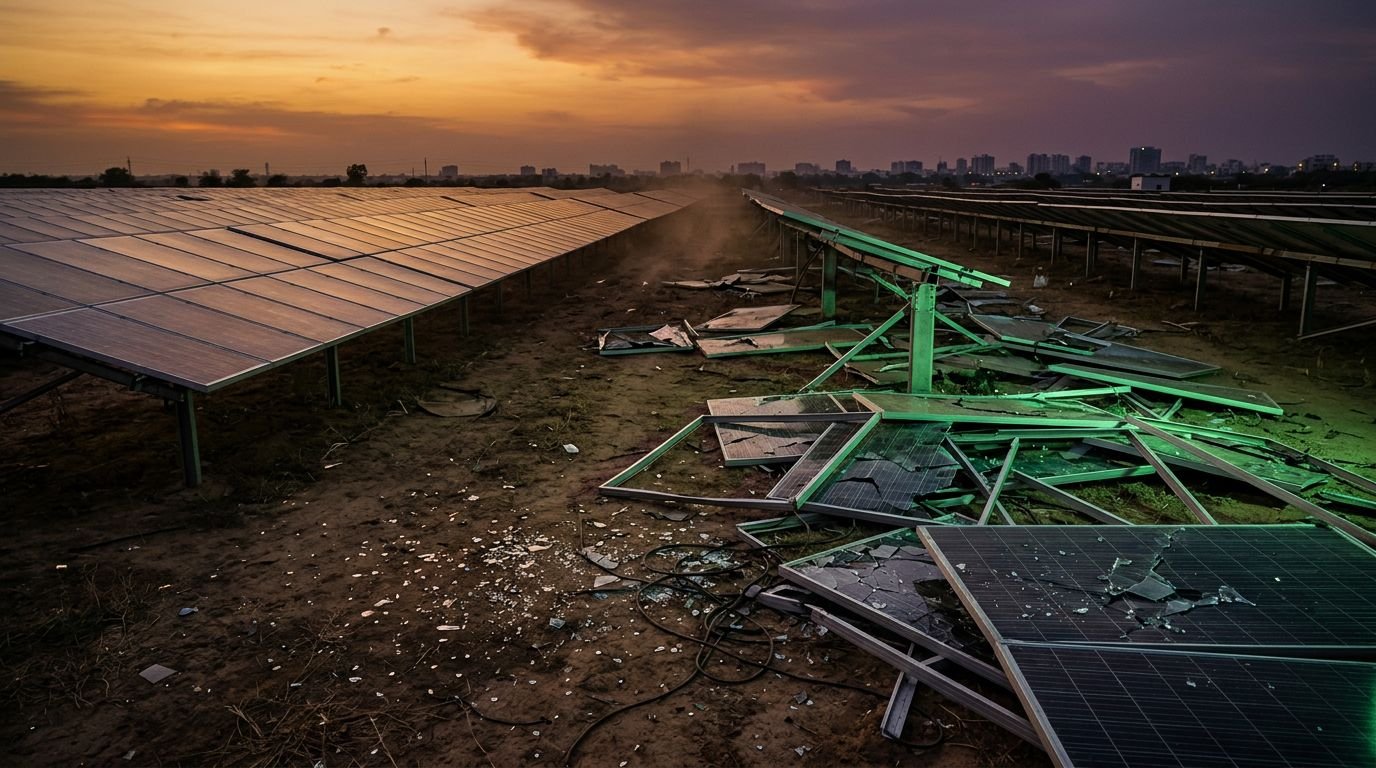
India’s clean-energy push has a dirty blind spot. Every solar installation cuts emissions today, but it also creates a future stream of solar panel waste: broken modules, cracked glass, plastics, and metal residues.
For years, that problem felt far away. It doesn’t anymore. Solar capacity is rising fast, damaged panels are already entering scrap channels, and the country is only now building rules for what happens at the end.
If you care about climate progress, this is where the story gets more honest.
India’s solar boom is also a materials story
India’s solar expansion is one of its biggest climate bets. Large parks and rooftop systems help reduce coal use, ease daytime power stress, and widen access to cleaner electricity. That progress is real.
But clean generation is only half the story. Every panel has a material life, and every material life ends in repair, reuse, or disposal. When that last step is weak, yesterday’s climate fix becomes tomorrow’s waste burden.
For many urban households, climate action has been framed as a personal checklist, from plant-based living to everyday mindfulness about energy use. Those choices matter. Still, they can’t solve a missing disposal system for industrial hardware. Systemic change is the missing piece.
Solar modules do not turn into waste only after 25 to 30 years. Waste starts earlier, because panels crack in transit, fail in the heat, suffer storm damage, or get replaced during upgrades. A utility developer may swap out older modules for more efficient ones long before the original set fully dies. A homeowner may discard one damaged panel with no clear take-back route.
That is why solar waste looks a lot like the early years of electronics. Sales grow fast. Disposal rules arrive late. Informal handlers step in because they are cheaper and closer than formal recyclers.
Research on end-of-life solar PV waste in India warned years ago that weak regulation and limited recycling capacity would create this bottleneck. As of 2026, draft CPCB guidance cited in reporting puts India’s solar PV waste at about 34,600 tonnes by 2030 and around 600,000 tonnes by 2040.
Those numbers matter, but timing matters more. Once bad disposal habits take root, they spread. In India, solar panel waste is no longer a niche policy concern. It is becoming the next test of whether the energy transition can manage its own leftovers.
Solar power cuts emissions during use. Without end-of-life systems, it also creates a waste burden that communities inherit.
Why solar panel waste in India is rising before panels even get old
On paper, most panels last decades. In the field, many don’t stay in service that long. Real-world waste arrives early and in scattered ways.
Heat, humidity, dust, poor storage, rough handling, and weak quality control all shorten useful life. In some regions, floods, cyclones, and hail add more stress. Meanwhile, developers repower projects to squeeze more output from the same land. That creates a strange result: some panels become “waste” because they are old, while others do because they are merely less profitable.
Rooftop solar makes tracking harder. A utility-scale site can record serial numbers and plan decommissioning. A warehouse, school, hospital, or apartment block may have no such system. If a few modules crack, the owner often looks for the fastest fix, not the cleanest aftercare.

This matters because early waste does not arrive as a dramatic mountain of debris. It comes in trickles, panel by panel, site by site. Yet trickles create habits. If the default habit is to dump damaged modules behind a facility or sell them to an untrained scrap dealer, the later wave will follow the same path.
A BBC report on India’s hidden solar waste problem found that damaged or discarded panels often end up in landfills or with unauthorised recyclers. That pattern is familiar across Indian waste systems. Materials flow to whoever will take them quickly and cheaply.
Public perception makes it worse. People hear “renewable” and assume harmless. A cracked panel does not look dangerous in the way a smoke stack or oil slick does. That gap in climate literacy matters, because a solar module is not a benign sheet of glass. It is a layered industrial product with disposal costs that someone will bear, whether the invoice is visible or not.
Why a broken panel is harder to handle than most people think
A solar module is built to survive rain, heat, wind, and ultraviolet exposure for years. That durability is good during use, but it creates trouble at the end. The same design that protects a panel on a roof makes it harder to take apart safely.
Most crystalline silicon panels contain glass, aluminum, silicon, polymers, copper, and small amounts of silver and lead in solder. Some thin-film technologies contain cadmium. Those materials do not separate cleanly with simple tools. Safe recovery needs controlled dismantling, testing, and specialized recycling processes.
The economics are rough. Glass is heavy and low in value. Transport costs rise fast. Encapsulants and backsheets make separation slow and expensive. An informal operator can profit from the aluminum frame and wiring, but the remaining laminate often has little resale value. That creates the worst kind of waste system: one that extracts the easiest value and abandons the rest.
This is why solar waste can copy the logic of electronics dumping. High-value parts get removed first. Low-value residue gets pushed into the cheapest channel. The pattern echoes the toxic environmental impact of e-waste, where the dirtiest stage begins after the device stops working.
The ecological impact is easy to miss because it spreads out. Broken glass, polymer scraps, and trace metals do not create one giant spectacle. Still, poor handling can contaminate soil and water, expose workers to dust, and leave municipalities with cleanup costs they never planned for.
There is also a legal blur. Is a damaged module still under warranty, meant for reuse, or already waste? In weak systems, that ambiguity helps brokers and hurts accountability. Once a panel leaves its original owner without records, tracing responsibility becomes hard.
The rules are starting to arrive, but the system is still thin
India is not ignoring the issue anymore. In 2026, draft CPCB guidance under the E-Waste Rules began setting clearer roles for producers, bulk users, dismantlers, and recyclers. The direction is clear: panels should move through registered channels, and producers are expected to take responsibility through Extended Producer Responsibility, or EPR.
That is real progress. However, a rule on paper does not create trucks, collection centers, trained staff, or recycling plants with enough capacity.
The current picture looks like this:
| What matters in 2026 | What it means |
|---|---|
| Draft CPCB guidance | Safe handling, storage, and recycling rules are being formalized |
| Projected PV waste by 2030 | About 34,600 tonnes |
| Projected PV waste by 2040 | Around 600,000 tonnes |
| Main bottleneck | Collection, transport, and formal recycling capacity |
The takeaway is simple: India now has a policy frame, but it still lacks the operational depth to handle a large waste wave.
EPR can help, but only if it goes beyond paperwork. For brands navigating these rules, a practical EPR guide for small brands shows what tracking and registration actually require. Many modules have unclear ownership histories. Some were imported, relabeled, or sold through installers that no longer operate. Rooftop users may not know where to send damaged panels, and local authorities may not know how to classify them. If those gaps remain, waste will keep flowing into informal channels.
The market is starting to respond. New recyclers, pilot projects, and recovery technologies are emerging. Still, costs remain high, volumes are uneven, and compliance is hard to verify. Without sustainable business models, formal recycling stays fragile and informal disposal stays cheaper.
There is another weak point. Public tenders and private project budgets often focus on the lowest upfront cost. End-of-life handling rarely gets the same attention. That is a serious design flaw. If decommissioning is not priced in at the start, someone else pays later, usually workers, local governments, or nearby communities.
Communities will feel the damage long before national numbers do
Waste crises do not hit everyone the same way. Contract workers, scrap handlers, waste pickers, transport crews, and peri-urban residents absorb the first risks. They work closest to the materials and farthest from the boardrooms that approved the projects.
When panels move outside formal channels, accountability fades fast. A broker can resell damaged stock. A landowner can rent a yard for temporary storage. A facility manager can clear broken modules off-site and stop asking questions. By the time a municipality finds dumped panels, the paper trail may be gone.
This is where the issue connects to urban biodiversity and everyday public health. Dump yards, drainage edges, and vacant peri-urban plots are not empty. Birds nest there. Insects breed there. Soil organisms work there. When mixed industrial waste lands in those spaces, the damage reaches beyond one property line.
The social side matters too. Many climate-anxious young people have been taught that good habits will solve environmental decline. Good habits help, but they have limits. A student can reduce plastic use, choose plant-based meals, and care about clean air. That same student still has no control over where a broken panel from a school rooftop gets sent.
That is why visible, local accountability matters. Readers who want to support measurable, on-the-ground work around urban biodiversity and climate literacy can Explore Our Active Missions. Local environmental repair only builds trust when people can see where action happens and who is responsible.
The same logic applies to funding. Waste collection, worker training, tracking, and site monitoring need steady support, not vague promises. That is why the case for mission-based giving versus general donations gets stronger when environmental harm is dispersed and easy to ignore.
What a circular economy for solar panels would actually require
A real circular economy for solar panels is not one recycling plant on the edge of a city. It is a full chain of responsibility. It starts with product design, continues through procurement and maintenance, and ends with verified recovery or reuse.
Manufacturers should disclose material composition more clearly and make modules easier to disassemble. Project contracts should include take-back clauses, decommissioning funds, and serial-number tracking. Public procurement should score end-of-life plans, not only upfront price.
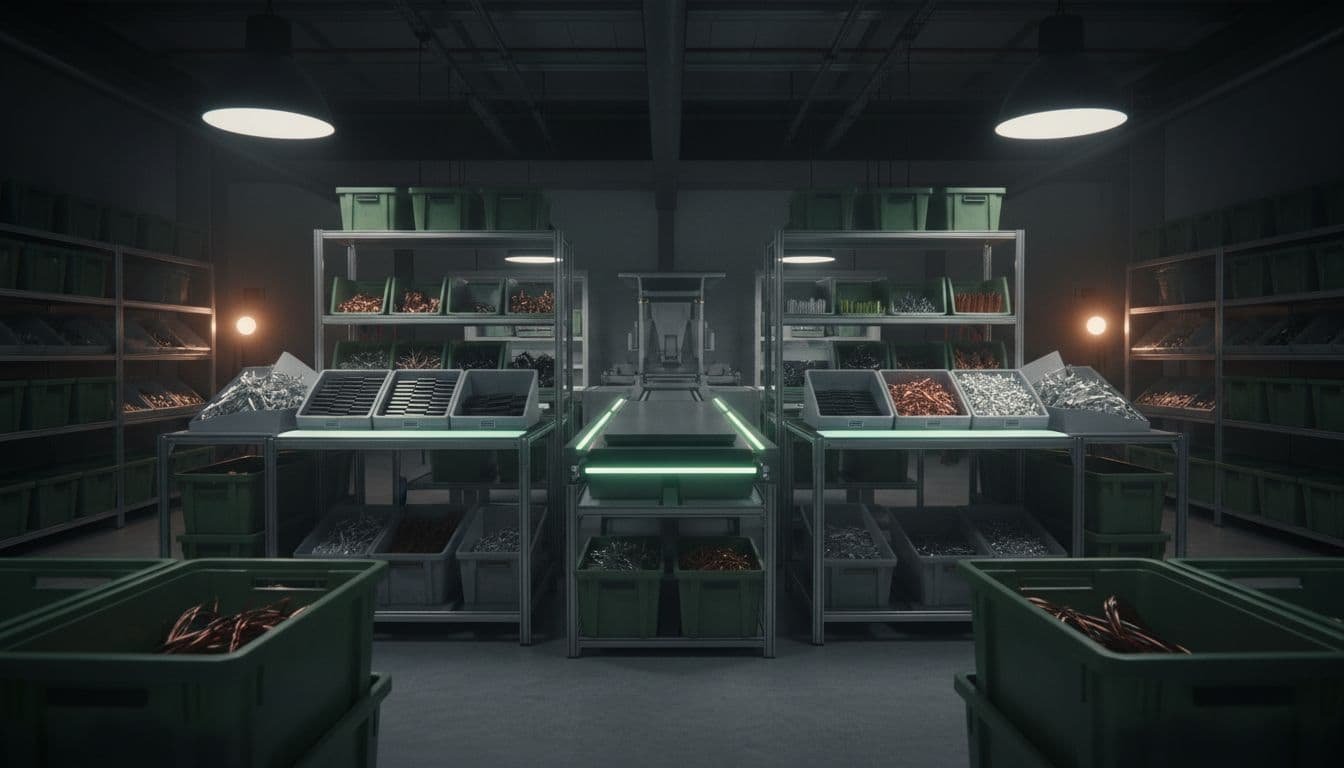
India also needs regional collection networks. Sending bulky panels across long distances can wipe out recovery value. Therefore, pre-processing hubs near major solar clusters would help. They could test modules for reuse, separate reusable frames, and send damaged laminates to specialized facilities.
Reuse has a place, but only with strict standards. Some retired modules may still work for low-load applications after testing. Others should never be resold. Without clear rules, “reuse” becomes a polite label for pushing weak products into poorer markets.
Formal recycling must also become economically viable. Today, too much value sits in materials that are hard to extract cheaply. Therefore, policy should reward verified recovery, not only collection claims. EPR targets should track actual outcomes. Project developers should pay into end-of-life systems upfront. Financial institutions should ask about decommissioning risk before financing large installations.
This is where sustainable business models matter. Recyclers need steady material flow. Producers need clear obligations. Installers need reverse-logistics partners. Municipalities need classification rules and emergency disposal routes. None of that is glamorous, but it is what makes clean energy credible.
Above all, the country needs better public understanding of material systems. Renewable energy is still industrial infrastructure. It uses mined inputs, long supply chains, labor, land, and disposal routes. Better climate literacy helps people see that clean power is not only about what a panel produces, but also about what happens when it breaks.
A cleaner energy future still needs a cleanup plan
India’s solar rise is necessary, but the blind spot is now visible. If waste systems stay weak, a climate solution will leave behind a familiar pattern of informal dumping, worker exposure, and local ecological harm.
Personal choices still matter, from plant-based living to everyday mindfulness about energy and waste. Yet this issue shows where individual virtue stops. Systemic change in design, procurement, take-back, and enforcement will decide whether solar remains clean across its full life.
Clean power deserves a clean exit plan, and India needs that plan before the waste wave gets much larger.