
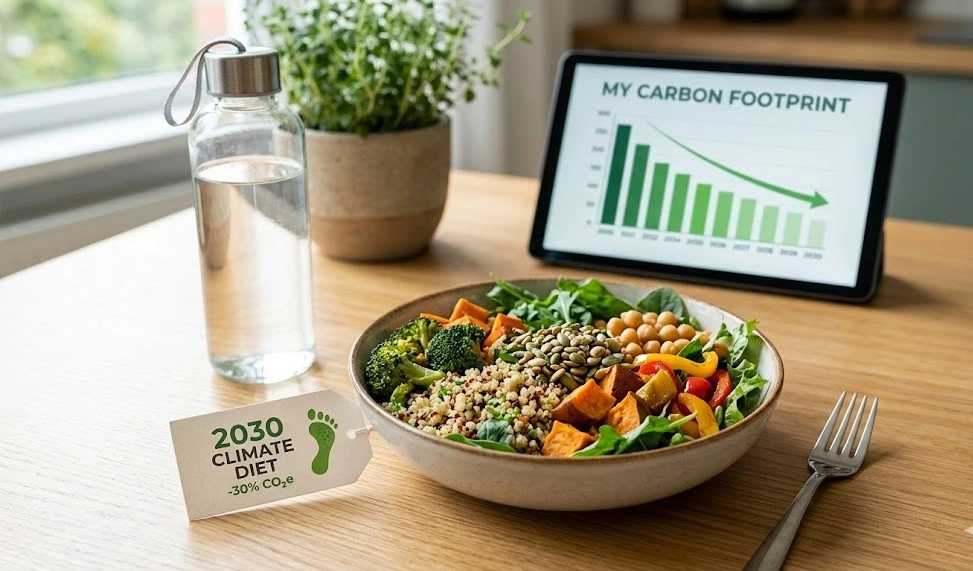
The 2030 Climate Diet: Your Quick Carbon Wins
 Saket Sambhav
-
-
- Take practical, data-driven steps to reduce food-system emissions within 6-12 months by shifting personal diets, collaborating with credible partners, and following clear policy signals.
- Focus on plant-forward meals, reduced meat and dairy, portion control, and waste reduction, with transparent metrics and independent audits to verify progress.
- Build accountable partnerships (cities, institutes, restaurants) that publish dashboards and track lifecycle emissions, enabling real-world impact over rhetoric.
-
A quick carbon win is not possible by wishful thinking alone
You read the headlines, yet the climate crisis isn’t moved by optimism alone. Practical, fast-acting measures exist that compound when we stack them. You can reduce food-system emissions without sacrificing health or budget if you target precise shifts in eating, shopping, and travel choices grounded in data.
We lead with verifiable results. Real-world collaborations prove what works when accountability is built in from the start. Our model at The Better Human emphasizes scrutiny, deployment/audit, and transparent reporting so every dollar translates into on-the-ground progress and measurable outcomes.
3-part action plan for 6-12 months
1) Personal habit shifts with quantified impact
Make changes you can track in weeks, not years. Start with a plant-forward intake that cuts food emissions while maintaining nutrition. Progress toward calibrated portions and a measured reduction in dairy and meat, without an abrupt overhaul. Track these metrics:
-
-
- Daily energy targets aligned with authoritative health guidelines.
- Annual and daily meat and dairy consumption relative to a baseline.
- Household food waste reductions with monthly improvement benchmarks.
-
2) Community and brand collaborations that show transparent metrics
Partner with cities and organizations pursuing credible, auditable impact. Expect dashboards that reveal:
-
-
- Improvements in urban food systems and reductions in consumption-based emissions.
- Lifecycle emissions of foods across supply chains, with progress toward lower beef and dairy footprints in city settings.
- Procurement policies favoring sustainable diets and plant-forward options, with measured uptake and health co-benefits.
-
3) Policy and market signals driving rapid decarbonization
Track governance and industry signals that accelerate change. Look for:
-
-
- Emission pathways aligned with 1.5°C that connect urban food choices to real outcomes.
- Clear targets for beef and dairy consumption in key regions, with accountability from institutions and city coalitions.
- Collaborative frameworks uniting universities and industry designers to optimize food-system sustainability, including nutrient-dense plant alternatives and dairy reductions.
-
What credible partnerships look like in practice
Accountability matters. We spotlight collaborations that publish auditable data, from input sourcing to final outcomes. Look for patterns seen in effective programs:
– Transparent budgets showing donor-to-field flow with assurances that funds reach on-the-ground work. Targets for beef and dairy reduction are paired with measurable health and ecosystem benefits.
– Public dashboards tracking progress on food waste, calorie benchmarks, and the life-cycle emissions of meals.
– City-university collaborations modeling urban neighborhoods to reveal how portion sizes and plant-based options shift consumption patterns.
Expert voices you can trust
We bring rigorous voices who connect theory to practice. Researchers and practitioners have demonstrated how city leadership and thoughtful policy design tilt urban diets toward sustainability. Their work shows governance paired with concrete targets reduces waste and trims emissions across beef and dairy supply chains.
Your next move
You can join a verified initiative that uses a rigorous three-step model: scrutinize, deploy/audit, verify/report. This ensures every dollar moves from concern to measurable impact in the field. Look for programs that publish independent audits and clear progress metrics. We invite you to engage with initiatives that uphold transparency and accountability at every stage.
Closing thought – Call to Awareness
If your daily choices are not informed by transparent metrics, what are you really measuring and why? The climate crisis demands accountable action. Are your actions aligned with a sustainable diet that honors people, forests, and soils while cutting emissions quickly and verifiably?
What will you choose to measure first, and how will you verify the impact in your own community?
Related Video
Food Waste Policy Opportunities – YouTube
… policies. Nina Sevilla Sustainable Food Systems Program Advocate @ Natural Resources Defense Council. … Go to channel Urban Food Systems KSU …
Watch on YouTube →
The climate crisis is not solved by grand promises alone; it lives in your daily plate
You can see real impact when a simple, verifiable shift happens in the next year. The science is clear: consumption-based emissions rise with what we eat, how much we waste, and how we buy. If we pair personal shifts with accountable partnerships and transparent governance, we can reduce greenhouse gas emissions from food by a meaningful margin within 12 months and keep accelerating toward 1.5°C. This guide lays out concrete steps you can start today.
These steps aren’t about sacrifice; they’re about aligning appetite with ecological limits through measurable changes, supported by clear, independent reporting and governance.
What makes a quick climate diet possible in cities and households?
Urban food systems dominate emissions through how food is produced, moved, and wasted. A 60 percent reduction in food related emissions is achievable, not a fantasy, when we align personal habits with verifiable collaborations and policy signals that shift choices. Every recommendation will be grounded in data and real-world outcomes from accountable partnerships.
Personal habits with measurable impact
-
-
- Shift two meat free days per week and cut dairy by 50 percent. Urban consumption data show meaningful drops in consumption based emissions when meat and dairy use meets healthy, recommended levels.
- Adopt plant based substitutes for a portion of meals while keeping nutrition intact. A plant based approach lowers calorie dense, greenhouse gas intensive foods and aligns intake with ecological limits.
- Practice portion control and reduce waste. Targeting a 20 percent reduction in household food waste translates to lower emissions across the supply chain.
-
Expert note: Replacing high emission foods with lower emission options while maintaining nutrient adequacy has the strongest impact.
You and we can move from insight to action by tracking these shifts with simple metrics: meat and dairy servings per week, plant based meal days, and weekly food waste as a percentage of purchase.
How accountable partnerships demonstrate transparent metrics
Change happens when institutions publish verifiable data about their impact. The Better Human coordinates collaborations that ledger funds, track outcomes, and report progress with independent audits. This isn’t charity blur; it’s governance rooted in science and economics.
City-scale collaboration: C40 Cities and urban food systems
-
-
- Cities can set procurement standards that favor sustainable diets. By aligning menus, school meals, and public institutions with plant-forward options, urban systems curb emissions and send a meaningful signal to farmers to adapt rapidly.
- Urban food environments matter. Beyond awareness, policy nudges paired with transparent reporting shift patterns toward lower meat and dairy footprints.
-
Industry partnerships with transparent metrics
-
-
- Restaurants and retailers releasing monthly disclosures on meat and dairy purchases, waste diversion, and sourcing shape consumer choices. Public data makes supply chains compete on real progress, not marketing claims.
- Food service collaboratives can benchmark life cycle emissions from farm to plate and progressively substitute the most carbon-intensive items with lower-emission options.
-
Expert voices insist that momentum survives when partnerships publish accessible dashboards, show year-over-year reductions, and undergo third-party verification. Trust becomes a lever for scale, not a mask for greenwashing.
Policy and market signals driving rapid decarbonization
Policy and market signals determine what is affordable, available, and desirable in daily diets. Without credible rules, personal choices drift. The right policies bend the curve toward a sustainable diet and measurable climate gains.
Procurement rules and nutrition standards
-
-
- Public procurement should prioritize sustainable diet criteria, emphasizing plant-forward meals and reducing red meat and dairy in institutions. This shifts demand and compels producers to adjust practices across the supply chain.
- Nutrition standards linked to climate goals create a credible baseline for healthy, sustainable intake, tying health and environmental outcomes in a single policy frame.
-
Regulatory and reporting frameworks
-
-
- Mandatory disclosures on food-related emissions from major suppliers close information gaps. When data is public, investors and communities can assess progress and hold actors accountable.
- subsidy realignment away from high-emission animal products toward plant-based options accelerates the transition without compromising nutrition or livelihoods.
-
Three-part action plan you can implement in 6-12 months
The plan blends personal, communal, and systemic moves. Each step is quantifiable, auditable, and scalable.
1) Personal habit shifts with quantified impact
Adopt two meat-free days per week and halve dairy consumption. This can shave your annual greenhouse gas footprint by roughly 0.3-0.5 tonnes CO2e, depending on baseline intake. Track meals and dairy use in a simple journal or app to stay accountable.
Institute portion control to align servings with energy needs and minimize plate waste. A notable reduction in home food waste translates into lower emissions upstream in farming and processing.
Make plant-forward meals the default. Record the share of plant-based meals weekly and aim for a substantial increase in plant-forward options within three to six months.
2) Community and brand collaborations with transparent metrics
Join a verified initiative that publishes monthly impact reports. Expect dashboards showing kilograms CO2e avoided, waste diverted, and changes in beef and dairy purchases by region.
Partner with local grocers or restaurants to pilot a plant-forward menu each month, with transparent life-cycle emissions data for each item. Publish a public scorecard detailing supplier improvements and health co-benefits.
Engage universities and think tanks to translate data into actionable policy proposals. Use the findings to advocate for procurement reforms in municipal systems and regional supply chains.
Expert quote placeholder. Transparent metrics from credible labs illuminate what actually moves the needle and where to invest next.
3) Policy and market signals to accelerate decarbonization
Support city-level procurement policies that favor sustainable diets in schools, hospitals, and public facilities. Expect measurable declines in beef and dairy use in public menus within a year.
Push for reporting requirements on food emissions across major suppliers. Public dashboards enable citizens to compare progress and hold entities accountable.
Encourage private investment in plant-based product innovation and supply-chain efficiency. Market signals that reward lower-emission foods drive faster transformation.
Is a sustainable diet a practical weapon against the climate emergency?
You will see that data and governance are inseparable. Our path forward rests on science, accountability, and compassion. The consumption-based emissions lens shows that what you eat, how much you waste, and how markets respond to policy determine the climate trajectory we meet or miss.
Key data pillars
Greenhouse gas emissions from food are driven mainly by meat and dairy intake and waste. When you cut these levers, you unlock near-term gains in your carbon footprint.
Calorie intake must meet health and planetary limits. A sustainable diet provides nutrient adequacy without pushing ecological boundaries into deprivation.
Urban consumption patterns deliver trackable signals for policy and procurement reforms. Cities can move faster than national bodies when data is transparent and auditable.
Governance and accountability
Transparent governance guarantees donor funds reach field projects and that reported outcomes reflect real on-the-ground change.
Independent verification is essential for trust and scale. A verifiable model shows the impact of every dollar spent.
Closing reflections: a Call to Awareness
You are not a passive observer in the climate emergency. Your plate is a decision point that ripples through farms, factories, and futures. The path forward isn’t about shaming choices but about aligning them with verifiable outcomes. If you want a better human future, examine the data, demand transparency, and choose actions that endure beyond trendiness.
To move from rhetoric to impact, you must hold institutions accountable for results. The science shows that reductions in animal-based consumption and food waste cut emissions and free up scarce resources for ecosystems and communities. We can pursue a rational compassion that respects life while confronting hard trade-offs with data-driven clarity. Are you ready to align your values with verifiable change, even when it challenges your tastes?
Frequently Asked Questions
What is the 2030 climate diet?
You are choosing a climate-smart way to eat that lowers consumption-based emissions by 2030. It centers on plant-forward meals, smaller portions, and less food waste. This approach is supported by city-level policies and transparent, accountable partnerships that show real on-the-ground outcomes.
How much can I personally reduce emissions?
Impact depends on your baseline habits. Shifting two meals per week away from beef and dairy, and improving waste management, can yield meaningful cuts within months. Urban programs that track progress and feed data into verifiable dashboards demonstrate tangible declines when households engage with the metrics.
What makes a partnership credible?
A credible partnership publishes auditable data, uses independent verification, and allocates funds transparently to field projects. Donor dollars should be traceable from contribution to measurable on-the-ground impact through clear dashboards and reports.
How can policy signals accelerate change?
Policy signals shape what is affordable and available. Procurement rules, emissions reporting, and subsidies directed toward lower-emission foods create market pull that speeds shifts in production, pricing, and consumer choice.
How do we measure progress?
Progress is tracked with three repeatable metrics: a) share of plant-forward meals, b) per-person meat and dairy consumption, and c) food waste as a percentage of purchase. Independent audits verify reported outcomes.
References
Join the MOVEMENT… 💚