Why Office Green Policies Fail Without Social Norm Design
 TBH Editorial
TL;DR: Most office green policies fail for a simple reason: they tell people what should happen, but not what feels normal. Staff copy visible behaviour, especially from peers and managers. If the social signal says “nobody cares”, the policy won’t survive the working day.
Put up recycling signs, ban disposable cups, send a sustainability memo. A month later, lights are still on in empty meeting rooms, the landfill bin is winning, and someone has ordered plastic bottles for the workshop.
That doesn’t mean people are careless. It usually means the policy was designed like paperwork, not like human behaviour. The real question isn’t “Do we have a green policy?” It’s “What does this office make normal?”
A policy is not a norm
A policy tells people what ought to happen. A social norm tells them what people here do. That gap is where many office green policies fall apart.
Most programmes treat poor adoption as an awareness problem. So they add another email, another training slide, another poster near the bin. But awareness is rarely the bottleneck. Friction, habit, and social permission are.
Office green policies often rely on instruction. Use less paper. Recycle correctly. Switch off monitors. Bring a reusable mug. Fine. Sensible. But in a busy office, people don’t stop to consult the handbook. They scan the room.
If the director prints every draft, if the kitchen is stacked with disposable cups, if nobody sorts waste properly, the live message beats the written one. People follow the strongest cue in front of them, not the noblest sentence in the policy.
Research on green norms in the workplace backs this up. Employees respond not only to formal rules, but also to the behaviour they see from colleagues. Work on cultures of sustainability in offices lands in the same place. Change lasts when the physical setting and the social setting point the same way.
A policy is the sign on the wall. A norm is what happens when nobody’s watching.
That’s why a well-written green programme can still flop. The rule says one thing. The room says another.
What social norm design looks like at work
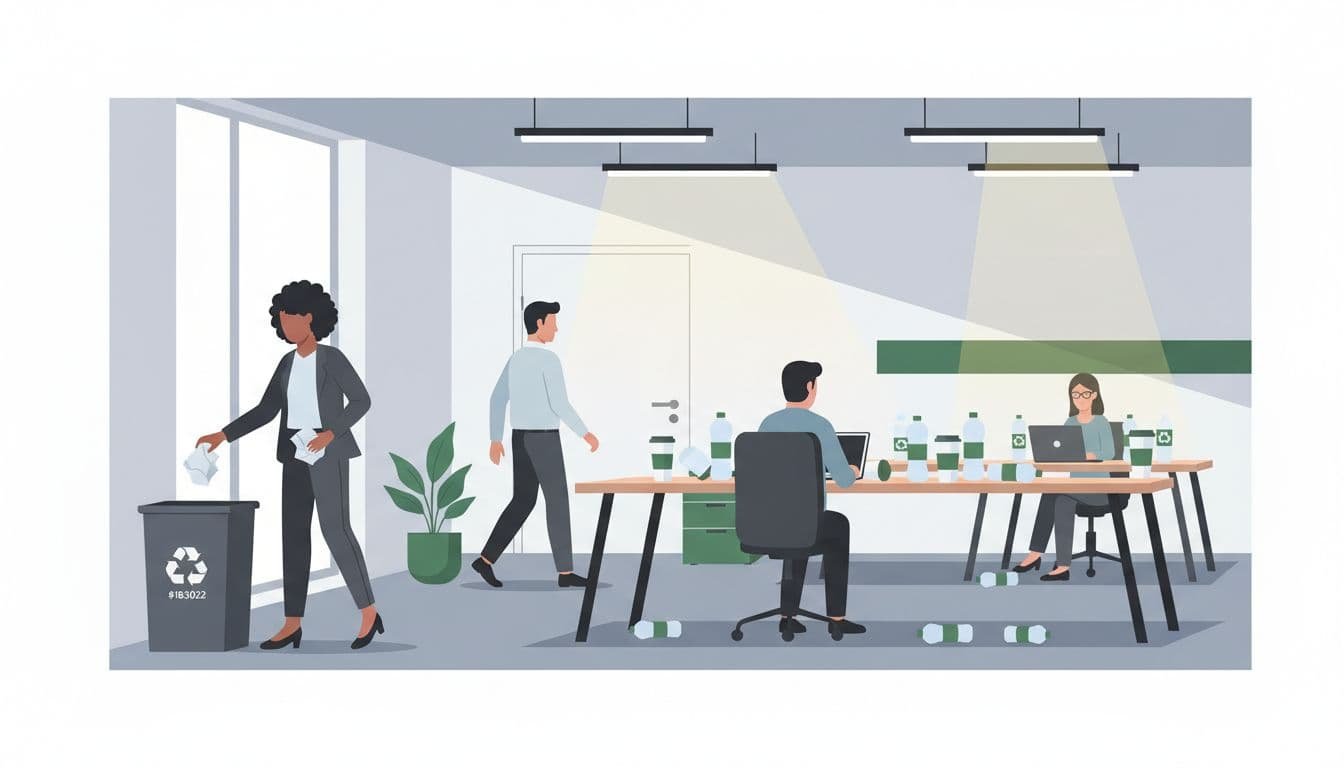
Social norm design isn’t manipulation. It’s good workplace design. You make the wanted behaviour visible, ordinary, and easy to copy.
Managers go first. If leaders leave screens on, take avoidable car trips, or ignore food waste, staff read the room fast. Not because they’re cynical, but because hierarchy teaches what is safe and accepted.
Peers matter too. In shared offices, visible habits carry extra weight because people are constantly taking cues from one another. The energy saving at work study found that descriptive norms matter strongly in shared office settings. That makes common sense. The more public the behaviour, the more social proof matters.
Good design also makes progress visible enough to feel real. A floor-by-floor waste update beats a glossy annual ESG slide. A meeting-room reset routine beats a poster about responsibility. People change when feedback is close to the action.
A few moves tend to work well:
- Put the right bins and reusables where correct use is obvious.
- Ask team leads to model one or two habits first, not ten.
- Share local progress often, so staff can see others are taking part.
- Build simple rituals, such as end-of-day shutdown checks.
The tone matters. Preachiness kills momentum. People don’t want a moral lecture with their lunch. They want cues, clarity, and the sense that “this is how we do things here”.

Building social norms into office green policies
If you’re rewriting office green policies, start with three blunt questions. Who will people see doing the behaviour? Where will they see it? What happens socially when they do, or don’t, follow it?
Those questions are more useful than another poster campaign.
Start small and local. One team, one floor, one habit. Publicly visible actions work best first, recycling, reusables, switching off lights, printing less. When a few habits become normal, broader culture starts to move with them.
This is where policy teams often get the sequence wrong. They write the rule first and hope behaviour catches up. Better to design the behaviour path first, then write the policy around it. Put sustainability cues into onboarding, procurement, meeting-room routines, kitchen setup, and office layout. If suppliers keep sending disposables and bins are hidden behind doors, the building is undermining the policy.
Research on organisational climate and pro-environmental behaviours shows that workplace climate shapes personal norms, which then shape behaviour. That’s the bit many sustainability plans miss. People don’t act in isolation at work. They act in a culture.
One warning, shame is lazy design. If staff feel judged, they push back or switch off. Better signals are peer examples, sensible defaults, shared ownership, and visible recognition from managers. The aim isn’t to turn everyone into full-time campaigners. It’s to make the greener action the easier action, the visible action, and the expected action.
The bit that makes the policy stick
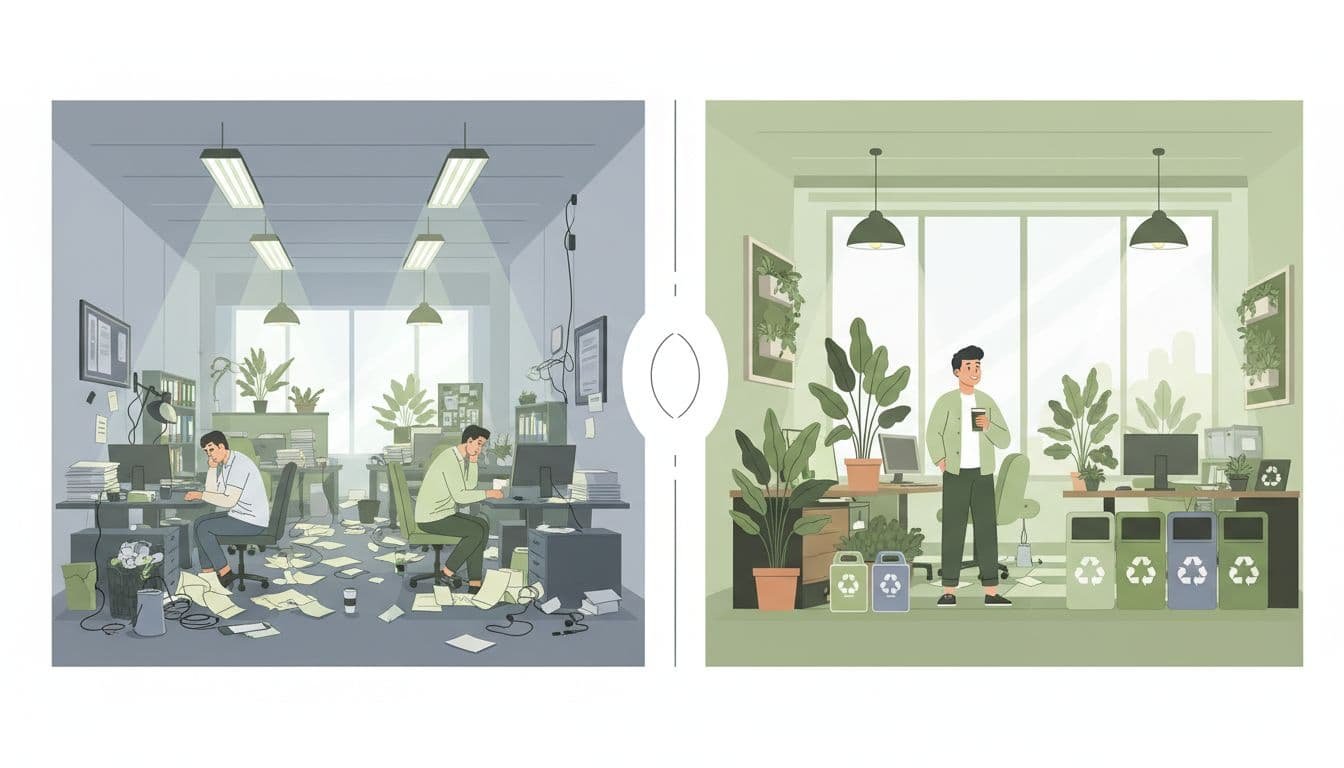
The offices that cut waste and energy aren’t always the ones with the thickest handbook. They’re the ones where everyday behaviour lines up with the rule. When staff can see colleagues and leaders doing the right thing, office green policies stop feeling optional.
The same logic works beyond the building. Visible action builds belief, which is why projects like Contribute to Active Missions matter. If you want the policy to last, don’t only write it. Design the norm around it.